


Vulnerability & Masculinity
Martin's perspective on vulnerability challenges the cultural armor placed on men, arguing that emotional honesty is not weakness but the foundation of authentic leadership, genuine connection, and personal growth. Rather than viewing vulnerability as a gendered liability, he frames it as humanity itself—the capacity to feel, set boundaries, own mistakes, and show up authentically with others. This isn't therapeutic abstraction; it's his lived experience of crisis, recovery, and the transformation that follows when armoring is shed.
Emotional Authenticity as Strength
The need for emotional expression is universal, not gendered. Martin reframes what others call "masculinity work" as fundamentally human: ▶ 23:59 "humanity rather than masculinity. It plays no role whether one is a woman or man or something else. It's not a specific male trait to need to be in contact with those feelings." He learned this through decades of emotional suppression that eventually triggered an existential crisis—what he describes ▶ 20:03 as "death anxiety." The irony is that suppression of anger, fear, and sadness created more suffering than feeling them ever could.
Family became his anchor against the consuming intensity of building companies. Breakit ↗ quotes him: "running a company involves periods of intense anxiety and worry," yet family "serves as a major shield against that intense stress, requiring one to be home and present." He translates this into daily practice: ▶ in Swedish he describes how becoming a parent forced him into a positive pattern and protected him from being consumed by work. When traveling for business, he handles all school pickups and drop-offs upon returning home, treating parental presence as non-negotiable rather than optional.
Presence matters more than appearance. Martin notes Onemanandhisblog ↗ that "you need colourful socks. You need something beyond black and white socks—you need joy in life." This isn't fashion advice; it's a rejection of colorless conformity that masks the person beneath.
Boundaries, Ownership, and the Honesty of Crisis
When co-creation breaks down, leaders must own the failure and transparently rebuild boundaries—not quietly reclaim control. ▶ 20:39 Martin and Rasmus discuss a foundational principle: "If you've failed to establish boundaries, then you need to own that and re-establish boundaries so that it doesn't become taking back ownership, it becomes clarifying ownership." This philosophy draws from ▶ 23:45 the Navy SEALs' "Extreme Ownership" culture, where the starting point is taking responsibility rather than assigning blame—because ▶ 24:56 "the starting point of ownership is so much more positive than pointing the finger at others."
Martin himself failed to establish clear boundaries in an early co-creation workshop. He acknowledges ▶ 11:07 that "we came in with a very firm idea after months of work of what" the outcome should be, leading to ▶ 12:14 "our really failed attempt to hide that we already had an idea of what direction we wanted to go." Rather than defending it, he uses it as a teaching example of what true co-creation cannot be.
Self-Knowledge as Foundation for Relationships
Martin's entry into polyamory became a mirror for examining who he actually was. ▶ 3:53 He describes gaining "a much clearer picture of who I actually am and how I actually function in relationships. And that has been to great joy." The catalyst was forced honesty: he had been avoiding acknowledging attractions outside his relationship, and the polyamorous structure required him to either live dishonestly or grow. His partner became a guide ▶ in Swedish, showing him that he didn't need to carry responsibility for others' feelings and could set genuine boundaries.
A boundary-crossing crisis became the turning point. ▶ in Swedish About a year into polyamory, Martin encouraged his partner to be intimate with his metamour despite her unease, minimizing her concerns. When it happened, he was overwhelmed by abandonment and exclusion. This triggered ▶ 20:03 what he calls "death anxiety"—an existential crisis that forced him to confront his patterns.
Recovery required a year of reorienting his sense of safety inward. ▶ 29:07 Martin shifted from placing "my entire confirmation in which relationships I have and the quality of them and wellbeing in them" to placing "my safety and confirmation in myself, in who I am." This wasn't about abandoning relationships; it was about no longer anchoring his identity to their stability. By August 2022, he reported genuine openness and curiosity rather than desperation in dating.
Martin was conflict-avoidant, wanting to be friends with everyone. ▶ in Swedish He reflects: "I'm someone who I think is this conflict-avoiding person. Or was. I want to be friends with everyone. I want to feel love toward everyone and it really grates in me when a relationship isn't good with other people." He attributes this to externalizing his sense of self-worth, and recognizes that he values being surrounded by people who authentically reflect their genuine feelings, as this helps him stay in contact with his authentic self.
The Mankind Project: Structured Vulnerability
Martin invested in the Mankind Project retreat as one of the most valuable experiences of his life. ▶ 22:16 He describes it as "one of the finest gifts" in his life, a men's organization with transformative processes developed over 30 years. He found the retreat after a friend named Gustav recommended it on Facebook more strongly than anything else he recommends—Martin trusted the recommendation despite no initial connection to the description.
The all-male setting was essential because it removed performance pressures. ▶ in Swedish Within the retreat, "strong, secure men could be emotionally vulnerable without performing for women." This doesn't express gender essentialism so much as acknowledging a specific social dynamic: where heterosexual men navigate cultural pressure to appear strong and protective, removing that audience changes what becomes possible.
At the retreat, Martin symbolically forgave his late father. ▶ 23:33 He was able to ▶ in Swedish speak to his father, tell him he loved him, and "hear back from him that he loves me too." This was less literal communication and more a ritual space that allowed Martin to process a loss that occurred when he was 22—a loss that shaped his obsession with memory.
Martin now advocates expanding these spaces beyond men alone. He recommends the Mankind Project's Gender Inclusive Facilitator Training to make such transformative processes available to anyone who needs them, not just men.
Vulnerability as Leadership Strength
Authentic vulnerability attracts talent in ways that false confidence cannot. ▶ 36:49 Martin describes the contrast: "If you talk from your heart, people will want to help you." When founders say "if everything goes right, maybe I'll do this," people hear uncertainty and stay away. When a founder shows they're "jumping off the cliff right now," people get engaged because vulnerability signals genuine commitment. Half of his initial Narrative team quit their jobs based on a PowerPoint and a 3D-printed prototype—not because he pretended certainty, but because his clear investment was visible.
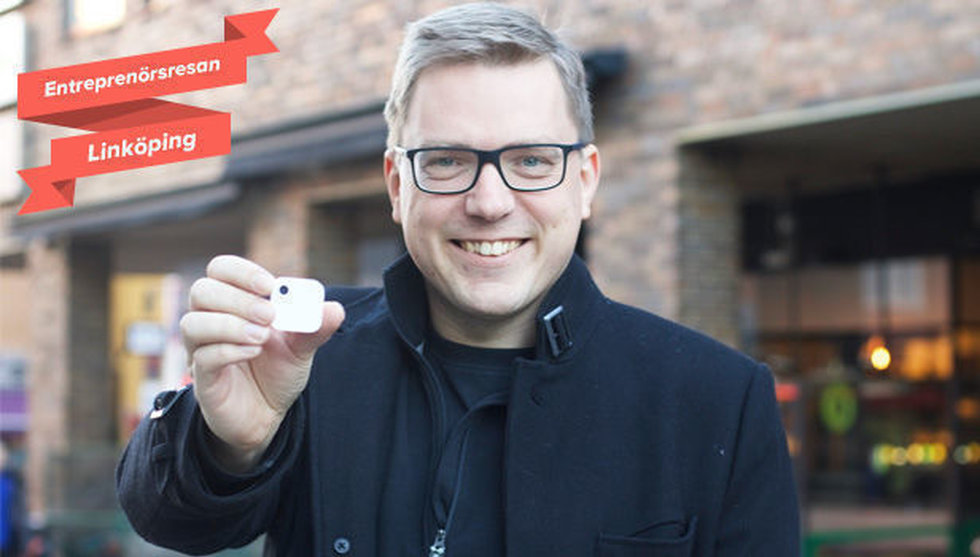
Success is measured by individual lives changed, not units shipped. Slashgear ↗ quotes him: "if there's one user in Minnesota, whose life we have thoroughly changed, that's enough, then we're successful." This isn't modesty; it's a fundamental metric of impact distinct from business success.
Co-Creation: Individual Agency Within Togetherness
Co-creation means creating moments of flow with diverse others—a practice, not a technique. ▶ 6:34 Martin says: "co-creation quite literally means to me to create with others. That's been all that I've been doing for my entire adult life, striving for those moments of flow when I really feel I'm creating together with others...having creativity as the driving force of everything I do...doing that together with people that are sometimes like-minded, sometimes have completely different perspectives, allows me to grow and learn and create something that is so much bigger than only who I am."
True co-creation preserves each person's individual motivations, not just alignment. ▶ 13:38 Rasmus articulates the distinction from mere collaboration: "having their own goals and motivations, right? But deciding to do something together that allows for those individual drives and motivations to exist at the same time." The metaphor is dancing—only works if both people bring their own moves, not if one follows choreography.
Personal Development Through Mirroring
AI can serve as a mirror for personal development by deliberately reflecting user patterns. ▶ 24:14 Martin proposes a thought experiment: "I could instruct Steve to...get help identifying what areas do I want to develop as a person... Steve can help me with the personal development by also always being late to meetings and mirroring my behavior." An AI that mirrors human flaws (tardiness, poor grammar) enables meta-awareness without judgment, letting the user consciously choose which behaviors to work on.
Accountability and Attention in Collaboration
True accountability requires acknowledging that humans are imperfect creatures—not robots. ▶ 39:48 In discussing why co-location matters for teams, Martin notes: "compared to a robot, we suck at accountability. We do, because we need to go to the bathroom and we need to eat, and then we have our emotions...there's so many things poking at our attention, not speaking of how consumerism and stuff works today. Like, everything is trying to disturb us." This isn't an excuse but an honest acknowledgment that human accountability is relational, embedded in presence and shared attention.
Technology and Ethics
AI's capacity to amplify human intention demands intentional choice about what to build. ▶ 31:27 Martin acknowledges the darker possibility: autonomous coding could enable spam "at scale, putting apps, SaaS services, games into the world." But he frames this as a moral choice: "carefully select what apps to build and put into the world to do good for humanity." The democratization of development is neutral; intention is not.
Sensitive data (health, neural) intuitively demand different treatment than generic training data. ▶ 18:41 Martin admits his own internal conflict: he holds that copyright doesn't logically apply to model training on images and text, yet feels visceral conflict about health data or brainwave data being used for training. He concludes: "I feel conflicted"—an honest acknowledgment that legal principles and moral intuition sometimes diverge, and both matter.
AI laggards will shift from denial to fear as capabilities become undeniable. ▶ 10:52 Martin predicts that skeptics currently claiming "AI models are just parrots...just quoting phrases from the training data...it's not really any reasoning going on" will eventually be "proven wrong and...instead of being in denial, they will move to being perhaps scared." This shift requires companies to communicate AI's human value more effectively.
AI should remove developer gatekeeping, not replace humans with better coding. ▶ 42:26 Martin argues: "AI is so interesting because it has the power to make things so much simpler for anyone to be a co-creator of the product they're using, of their software, et cetera... with a natural language interface, which is...maybe the most beautiful thing about AI, is that it can understand just a normal person speaking or writing and thereby allowing them to be a co-creator." Unlike tools that perpetuate developer hierarchy, this vision empowers users themselves to evolve software without gatekeepers.
AI memory preserves unchanged facts while humans emotionally rewrite them. ▶ 19:31 Rasmus observes that AI "can remember without changing it. So it can stay much more objective than us subjective human emotional beings are, because it can encode things based on, for example, purpose." AI can add reflection without destroying original facts—a unique capability humans lack due to emotion-filtered recall.
Privacy and Presence
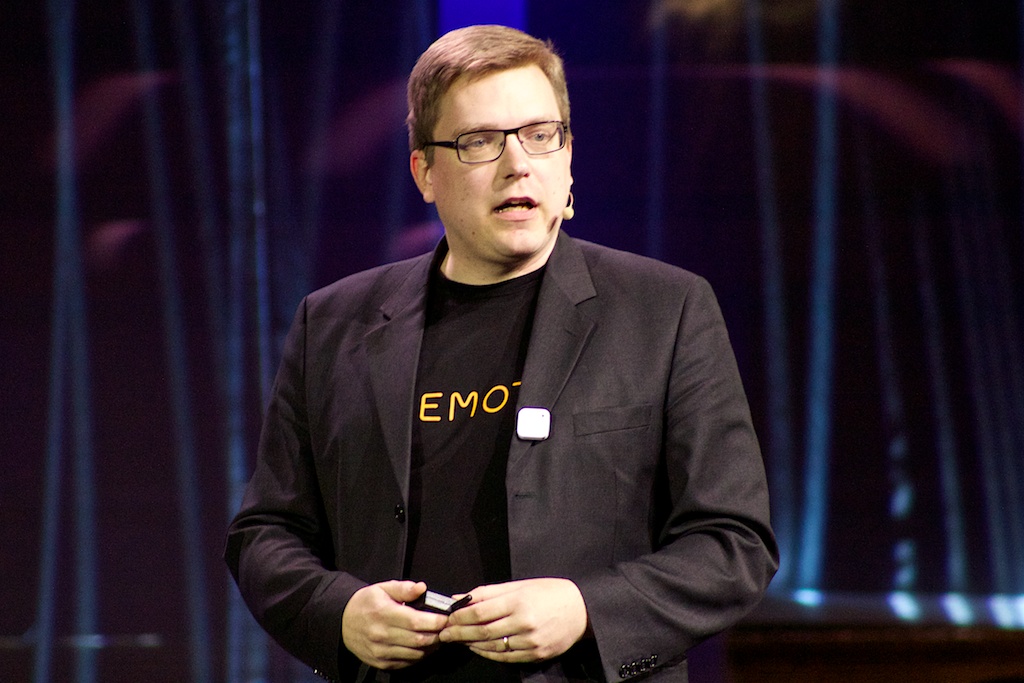
Personal discomfort about photography often precedes others' objections. When wearing the Narrative Clip, ▶ 19:12 Martin noticed: "when I'm wearing and sitting down right in front of someone and you're going to eat or something, then you start—like, I start to get uncomfortable before the other person does." This internal signal—not external judgment—shaped his relationship with lifelong capture.
Humans need machines to handle processes so they can return to what makes them human. ▶ 30:49 Martin observes: "with all of this, what we end up with is having a lot to do with the machines, handling the machines, which would leave a lot more time and energy for us humans to be human."
Worth Remembering
The thread connecting all of Martin's work on vulnerability is this: armor is supposed to protect, but it protects against the world by cutting you off from yourself. Shedding it doesn't make you weaker—it makes you more available: to feel, to lead authentically, to co-create with others, to know what you actually want and need. The Mankind Project, polyamory, the boundary failures and recoveries, the loss of his father—these aren't digressions from his work. They're the same work: learning that honesty, presence, and the willingness to look foolish are the actual tools of impact.