Alversjö & The Borderland
The Borderland is the Nordics' largest co-created participatory gathering — what its own community insistently calls a "burn," never a festival, because there are no vendors, no headline acts, and no audience: "There is no central production team — only participants actively shaping the experience. There are no stages, no vendors, and no spectators. You don't buy a ticket, you are joining as a co-creator" talk.theborderland.se ↗. Founded in 2011 with just 46 participants, it now draws well over 5,000 annually talk.theborderland.se ↗. It is organized by Gränslandet Ideell Förening, a Swedish nonprofit "where every participant is an equal member" talk.theborderland.se ↗, and runs — per a research compilation — with a total absence of sponsorship, corporate partnerships, or conventional marketing revenue Research ↗. Since 2023 the event has a permanent home: the 100-hectare Alversjö farm outside Eksjö, owned by Alversjö Natur AB, the land company Martin Källström co-founded and later stepped back from in 2025 Wikipedia ↗.
Origins and the nomadic years (2001–2020)
Borderland's organizational DNA traces to FutureDrome, a "legendary" 2001 live-action role-play event that some of Borderland's founders attended at age 15 — an amazing but exhaustingly top-down, production-heavy event that burnt everyone involved out. Borderland inherited specific elements from it, including the name and function of its "Clown Police," while deliberately rejecting its top-down production model ▶ 31:37.
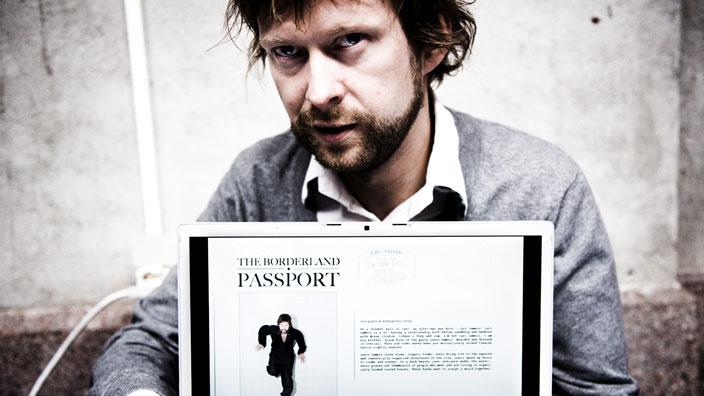
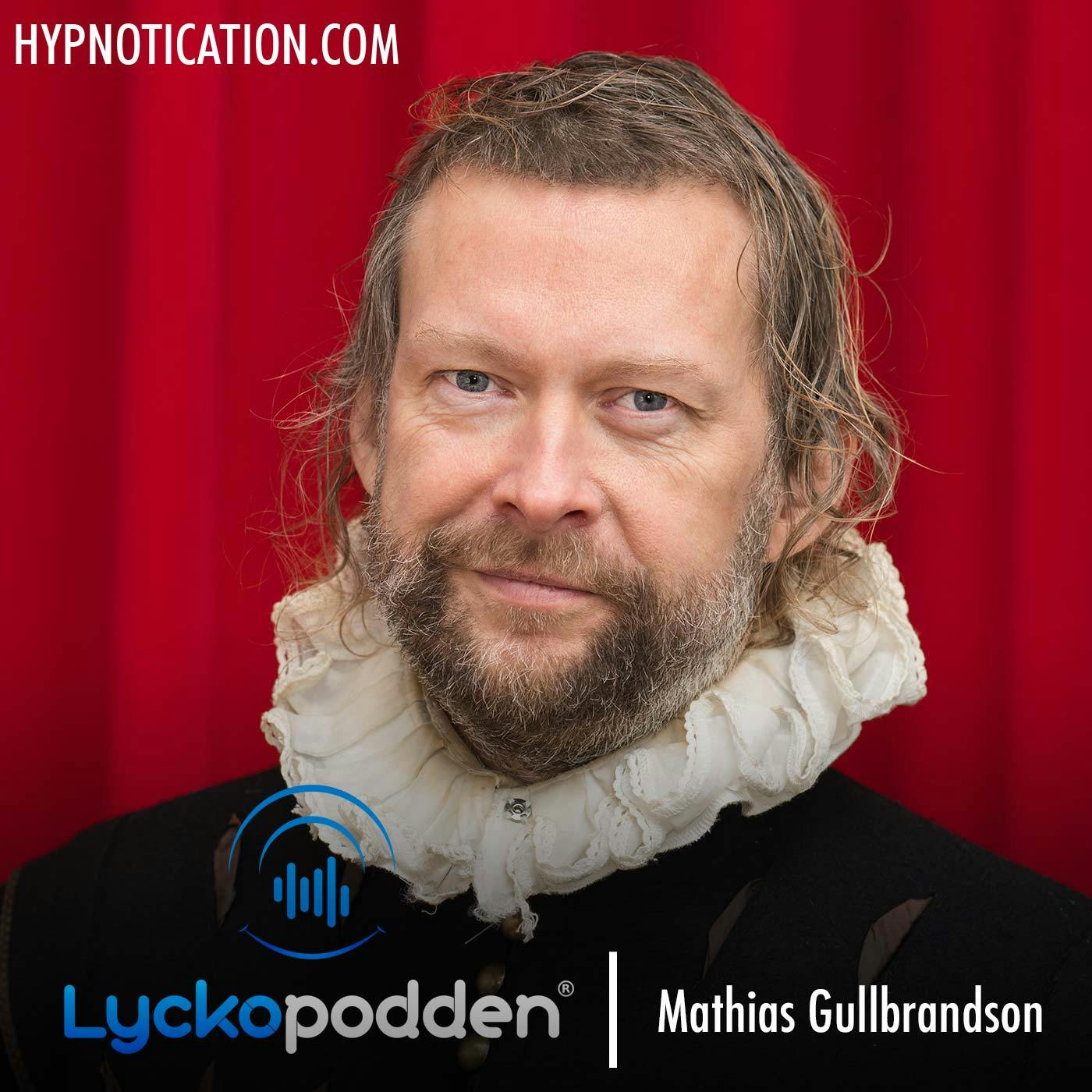
- A "proto-Borderland" began in 2010, when Hampus Lindblad joined ten people on a Swedish beach for a weekend to envision what could happen the following year ▶ 31:37. The same year the project got its first press: Mathias Gullbrandson, then CEO of The Story Lab, described a two-year feasibility study — run with Region Skåne — of "Gränslandet"/The Borderland as a computer-and-mobile game whose culmination would be a Burning Man-inspired festival at Ravlunda skjutfält in August 2011, citing Burning Man's importance to Silicon Valley and a 1,500-person 2002 precursor event in Västergötland trelleborgsallehanda-se ↗. Lyckopodden later introduced Gullbrandson as "one of the initiators" of the festival poddtoppen-se ↗. The event proper launched in 2011 with 46 participants talk.theborderland.se ↗, grew to ~150 by 2013 ▶ 31:37, and originally wasn't conceived as a physical-only event at all — the early idea was a 51-weeks-a-year online platform where members developed an "avatar" persona, with one week a year devoted to bringing that character into physical contact with other players ▶ 30:46.
- Borderland formally adopted Burning Man's principles in 2012, after early participants started attending the Nevada event and recognized the overlap: "Then that one week became the whole thing. And after a few years, people started going to Burning Man in 2012. Then there was this like, why don't we just like combine forces?" ▶ 31:11.
- The event was genuinely nomadic for its first ~15 years: an initial venue at Ravlunda skjutfält, then near Hjo, then Hide kulturbrott — an abandoned limestone quarry turned stage on Gotland — and stints in Denmark, Norway, and elsewhere in Sweden Wikipedia ↗. Related but distinct: Urban Burn, an indoor winter burn Hampus Lindblad launched in Stockholm in 2016, drawing 800–900 people in its first year into what was then the world's largest indoor burn, in the same warehouse that later hosted the 2017 ELS (European Leadership Summit) conference Burning Man LIVE ↗.
- Borderland spent its last five pre-Alversjö years at Boesdal, Denmark. In 2018, the event lost that venue only six weeks before it was due to happen. Rather than centralize crisis response, leadership fully empowered decentralized teams to scout new locations and negotiate contracts across Northern Europe on the community's behalf — the whole event was relocated and its contracts signed within weeks: "We managed to actually find and sign all the contracts, get everything done, and move the whole event within a few weeks' time. And we did this by fully trusting the community, fully empowering decentralized teams to go scouting for locations, to negotiate on the behalf of the community" ▶ 13:27. The crisis was later studied by outside organizational-theory researchers ▶ 13:27, and it was the moment that pulled Liselotte Norman into board-level involvement for the roughly seven to eight years since.
The pandemic pivot: buying land (2020–2023)
The dream of owning land had existed since Borderland's earliest years, but stayed abstract until COVID forced the cancellation of a sold-out 2020 event. Someone's spontaneous chat-group suggestion — "A member of the community just posted, I think it was a very spontaneous suggestion in the group: 'How about buying land?'" ▶ 4:26 — became a real proposal: ask members to forgo their membership-fee refund and put it toward a land fund instead, in what Hampus Lindblad calls an "Aikido move," redirecting the pandemic's negative energy into forward motion. A quarter of the community agreed, yielding €100,000 in seed money ▶ 4:52. What began as a plan for a modest summer cottage snowballed over several years — one more €50,000 always bought one more hectare, or two houses instead of one ▶ 5:42 — until the group had purchased the full 100-hectare Alversjö farm.
- Borderland tested the Alversjö site for the first time in 2022, with roughly 1,000–2,000 participants Research ↗, and Swedish Wikipedia independently confirms the same year and a similar figure ("omkring tusen deltagare") Wikipedia ↗.
- The land was purchased by the newly formed Alversjö Natur AB, with the final legal transfer completed on March 31, 2023; full detail on the company, its founders, and its finances lives on Alversjö Natur AB.
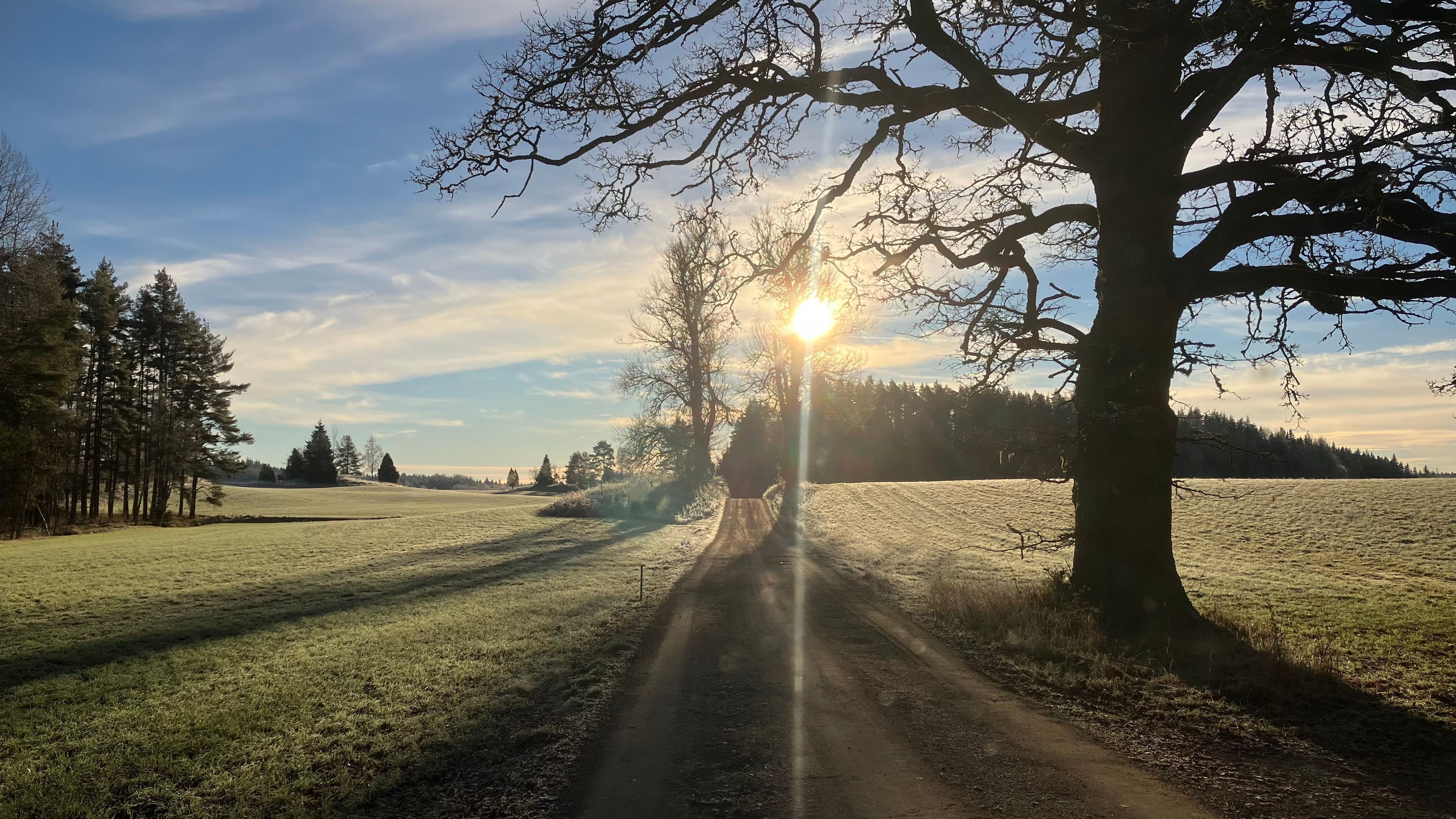
- The farm's name — Alversjö — is said to mean "the land of the 11 lakes," though "nowadays, six would be more accurate" ▶ 9:11; the property had sat abandoned for decades and includes a burnt-down mansion whose ruins, per Hampus Lindblad, still held "a made bed, an old Steinway piano" — burnt down by local teenagers roughly five years before Borderland moved in ▶ 8:46.
- Participation has kept growing since the move: from ~4,000 attendees by 2024 Wikipedia ↗ to Borderland's own current claim of "over 5,000 participants annually" talk.theborderland.se ↗, and 4,379 memberships sold for the 2026 fall phase — the same figure as the prior year's attendance talk.theborderland.se ↗.
Governance: trust as infrastructure
Borderland runs on what Hampus Lindblad calls a Teal-organization model: totally flat, with decisions made through "advice processes" — anyone proposing action seeks input from stakeholders and the wider community, then moves forward as the person best positioned to decide, rather than waiting for top-down approval ▶ 10:48. The board exists only as "the last line of defense in case all other systems fail" — a resiliency and redundancy model, not an operating body; it handles legal and administrative framework and exclusion-case decisions, presenting those at the annual general meeting, while the community makes everything else ▶ 11:48. The whole system runs on a customized forum platform called "Talk," built in collaboration with Loomio, purpose-designed for decentralized decision-making and — per Lindblad — studied academically for how efficiently it adapts under pressure ▶ 12:17.
- Do-ocracy is the community's own term for its operating principle: "Leadership through action. See a need? Don't complain — do it!" talk.theborderland.se ↗. There is no central committee — self-organizing "realities" (working groups) take responsibility for different aspects of the event talk.theborderland.se ↗.
- Membership has historically been allocated by lottery with a "plus-one" system — a form of built-in "nepotism," in Lindblad's own words, deliberately accepted to preserve community cohesion ▶ 17:01. Not everyone who attends takes part in governance: "not all 5,400 participants to the event partake in the decision-making process, because you still need to know something about... the community and how the whole event is run" ▶ 16:07. For 2026, the lottery was replaced with a two-phase sale — a non-transferable, non-refundable "all-in" fall membership window, followed by a transferable spring window talk.theborderland.se ↗. Prices are tiered by ability to pay: 1,234 SEK (low income), 2,222 SEK (baseline), 3,000 SEK (higher) talk.theborderland.se ↗.
- The organization is candid about the limits of its own principles in practice. On radical inclusion: "I think for now we struggle a little bit with the radical inclusion principle because there's also this thing when you try to include everybody, you also include people who might take out a lot of resources from the community" ▶ 22:39. And the community added its own 11th principle, Consent, specifically to manage tensions that didn't exist when Borderland was a one-week temporary gathering rather than a permanent, year-round community on owned land — "we also call ourselves a 10+1 event since we've added consent around the tension between being in a permanent place, the year-round community, and then the 10 principles" ▶ 23:47.
- Lindblad reads Burning Man's principles as a deliberate cultural counterweight for Scandinavia: communal effort has long been "second nature" there, at real cost to individual self-expression, so importing "radical self-expression" and "don't be shy" operates "like a vitamin injection into Swedish culture" that balances the two traditions against each other ▶ 25:04.
The 11 principles
Borderland states its governance runs on Burning Man's 10 Principles plus a self-added 11th — "guided by Burning Man's 10 Principles plus an essential 11th: consent" talk.theborderland.se ↗. In brief: radical inclusion, gifting (no transactions), decommodification, radical self-reliance, radical self-expression, communal effort, civic responsibility, leaving no trace, participation, and immediacy, plus Borderland's own addition of consent — treated as a living framework the community actively revisits and amends rather than fixed scripture Wikipedia ↗, ▶ 23:47.
Dreams and Realities: the funding split
Borderland's own name plays on this split — "the space between dreams and realities" Open Collective ↗ — and its budget is organized the same way. Roughly 50% of membership fees go directly to art and participant-driven experiences through the "Dreams" grant system, rather than to overhead: "Approximately 50% of membership fees go directly towards supporting art, projects, and participant-driven experiences... Because no one is on payroll, we have more money to give back to the community!" talk.theborderland.se ↗. "Realities" is the other half — the non-negotiable infrastructure a temporary city of thousands needs to survive a week in the forest: drinking water, toilets, the on-site power grid (unusual among burns), gate logistics ("The Threshold"), and emergency medical/psychological care ("The Sanctuary") Research ↗.
The Dreams funding platform has its own origin story. It began as a conventional small art committee deciding where limited money went, until community pushback produced an alternative: "kind of like a very, like a community Kickstarter page in a sense" ▶ 19:55, where members allocate their own account credits to proposed projects. Developers from Israel's Midburn burn — a team of 40 — adopted the open-source tool, extended it, and handed it back improved the following year: "It was kind of like this pimp my car experience, you know, like you come in with this thing and you get it back" ▶ 20:16. After a Swedish Innovation Agency grant funded further professional development, the tool became the standalone platform CoBudget, now wired directly to Open Collective for direct artist reimbursements — infrastructure Lindblad credits directly with letting Borderland run at scale without paid staff: "allows us to also not have paid staff. Like it goes into like the bigger picture of why Borderland can also manage to be this large and without having anyone paid on staff" ▶ 21:35.
Within the Dreams budget, Fund 33 earmarks 33% specifically for large, ambitious, or semi-permanent art, and a rule caps transport costs at 20% of any project's budget — forcing local sourcing over shipping in materials talk.theborderland.se ↗, Research ↗.
On-site culture
Nothing is bought or sold on site: "No money or bartering at the Borderland. Give freely - no strings attached" talk.theborderland.se ↗; Swedish Wikipedia independently confirms "det sker inga ekonomiska transaktioner under hela veckan" — no economic transactions occur during the whole week Wikipedia ↗. Internal order is kept not by security guards but by the Clown Police — sober, friendly, often costumed participants who offer "a listening ear and a helping hand," inherited directly from FutureDrome talk.theborderland.se ↗, ▶ 31:37. The Sanctuary provides medical and psychological care, and a designated sober operations lead called the Helm coordinates any serious incident talk.theborderland.se ↗. Since owning permanent land, Borderland has extended Burning Man's "Leave No Trace" into its own "Leave a Better Trace" (LBT) ethic — some art and infrastructure is now deliberately left standing for future use, alongside continued vigilance against MOOP (Matter Out Of Place) talk.theborderland.se ↗. One long-term ambition growing out of this: a permanent sculpture park, extending the lifecycle of Borderland's best art installations to 5–10 years, modeled on a prototype built in Denmark — the Temple of Tokamak, designed by Annie Locke Scherer, which still stands as a local tourist attraction ▶ 35:05.
Media coverage of the event in Sweden has repeatedly focused on reports of drug use and public nudity, including in Aftonbladet and Smålands-Tidningen/Smålands Dagblad Wikipedia ↗. Organizers respond by pointing to strict internal zoning — separating rave-, art-, and family-themed camp areas, with content explicitly tagged "NOT kids-friendly" where relevant — and argue their consent culture makes the event safer than conventional commercial venues; a research compilation notes that despite the media attention, police reports from the surrounding area describe minimal actual disorder Wikipedia ↗, Research ↗.
The trust thesis
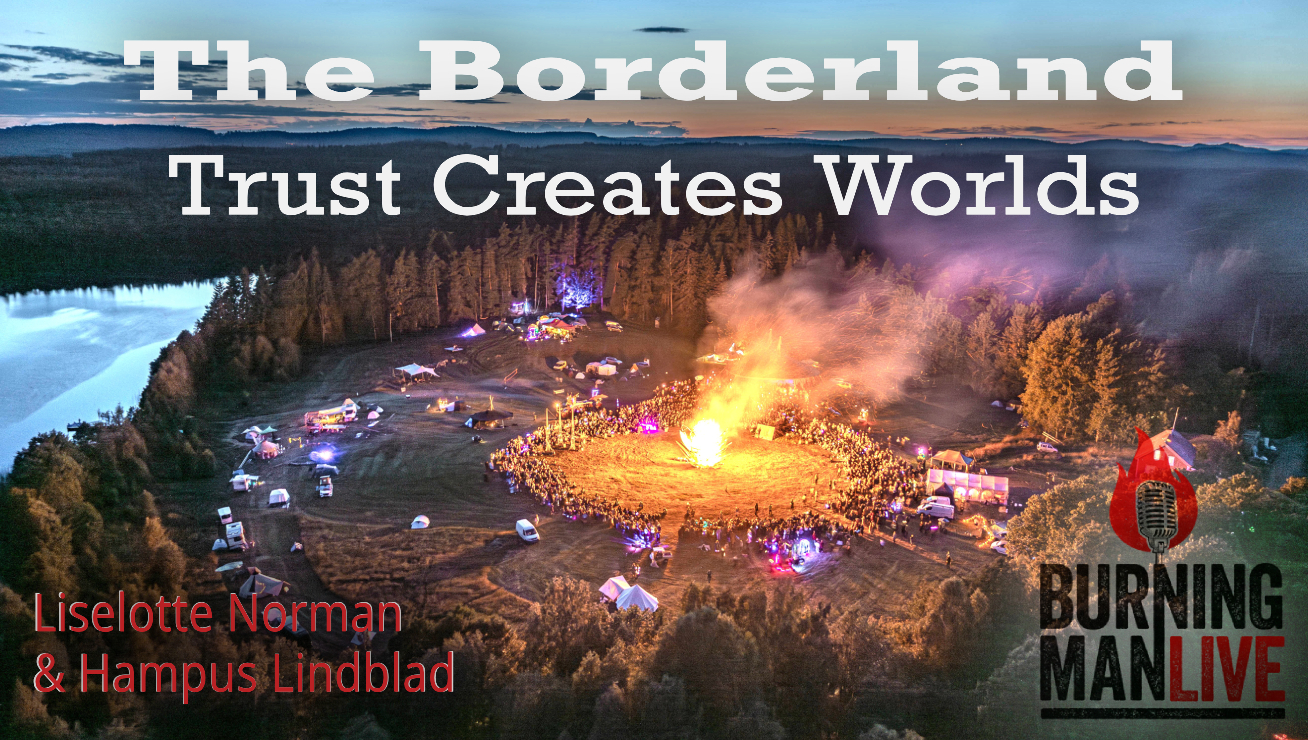
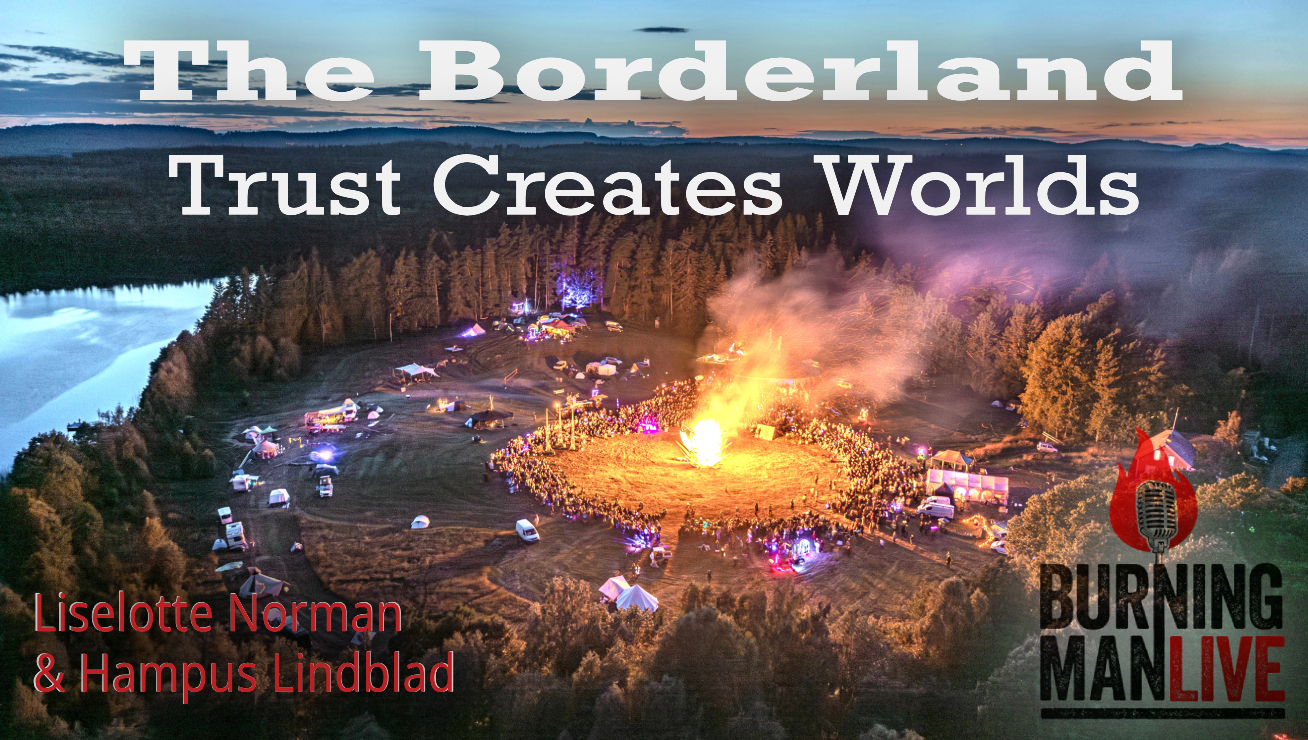
Across the Burning Man LIVE episode "The Borderland: Trust Creates Worlds," Hampus Lindblad and Liselotte Norman build a consistent argument: that radical, designed-in trust — not scale, funding, or central planning — is what actually holds a 5,000-person, staff-free, land-owning organization together. Lindblad states the thesis directly at the top of the conversation: "It's really trust-based. I would say that's the one factor that separates Borderland from a lot of other Burns, organizations in general — the general level of trust between members is very high, and it's designed that way... it also creates resiliency because there's so much also loyalty among the members, and the actual belief that their opinion matters" ▶ 0:00. The 2018 Danish relocation crisis is the thesis's proof case — full trust in decentralized teams under real deadline pressure, with a whole event rebuilt from scratch in six weeks ▶ 13:27. The community's decision, in 2020, to forgo refunds and fund a land purchase on faith extended that same trust to a multi-year, six-figure capital commitment ▶ 4:52. And the Dreams/CoBudget story shows the same instinct compounding technically — trusting a grassroots tool, iterated on by outside communities, over a professionally built one ▶ 20:16. Liselotte Norman closes the episode with the thesis distilled to a line — "Dreams come true. You can make it happen if you have a good group of people that actually go for it, dedicate their time and their energy, and that an awesome thing can happen" — while Lindblad's own closing counsel to other Burning Man Regional organizers is blunter still: "go back to the trust, dare to trust more. And then you will be handsomely rewarded" Burning Man LIVE ↗.
Martin's role
Sweden's Wikipedia article on the Borderland festival identifies Martin Källström as a Borderland board member who founded Alversjö Natur AB, the land-owning company — while noting plainly that he was only one of four co-founders, and that he withdrew from the company's leadership in 2025 Wikipedia ↗. A research compilation adds that Martin also served informally as the network's PR-responsible during the same period Research ↗. Full detail on the company he co-founded, its finances, and the specifics of his 2025 withdrawal lives on Alversjö Natur AB.
People
- Hampus Lindblad — Borderland co-founder and longtime organizer, present since the 2010 proto-Borderland beach gathering ▶ 31:37; attended Burning Man in Black Rock City only once, in 2015, and also founded Blivande, a Stockholm makerspace and event venue explicitly inspired by Borderland, and launched Urban Burn, Stockholm's indoor winter burn Burning Man LIVE ↗. As of the September 2026 registry snapshot he also sits on Alversjö Natur AB's board Allabolag ↗. Company-side detail on Alversjö Natur AB.
- Liselotte Norman — discovered the Burner community in 2015 through a post-Burning Man gathering in Copenhagen, attended her first Borderland events at Boesdal, Denmark, and was pulled into board-level involvement by the 2018 relocation crisis — work she has continued for roughly seven to eight years since ▶ 13:27, Burning Man LIVE ↗.
Full biographical detail on Martin's role within the Borderland network, drawn from outside research, lives on Alversjö Natur AB and People & Partners.