
Presence & Attention
Martin Källström's central preoccupation, running from Memoto's first camera pitch in 2012 through a decade of AI podcasting, is that technology keeps inserting itself between people and the moment they're in — and that the best technology is the kind that gets out of the way. He built a wearable camera specifically so people would stop thinking "how am I going to describe this on Facebook" and start just being there ▶ 22:04; he later applies the same test to voice assistants, VR headsets, and AI agents. The thread runs personal too — a formative memory of watching his dying father, and a habit, learned in intimate relationships, of "disappearing" mentally when he should be present in his body.
Presence over performance — the founding idea
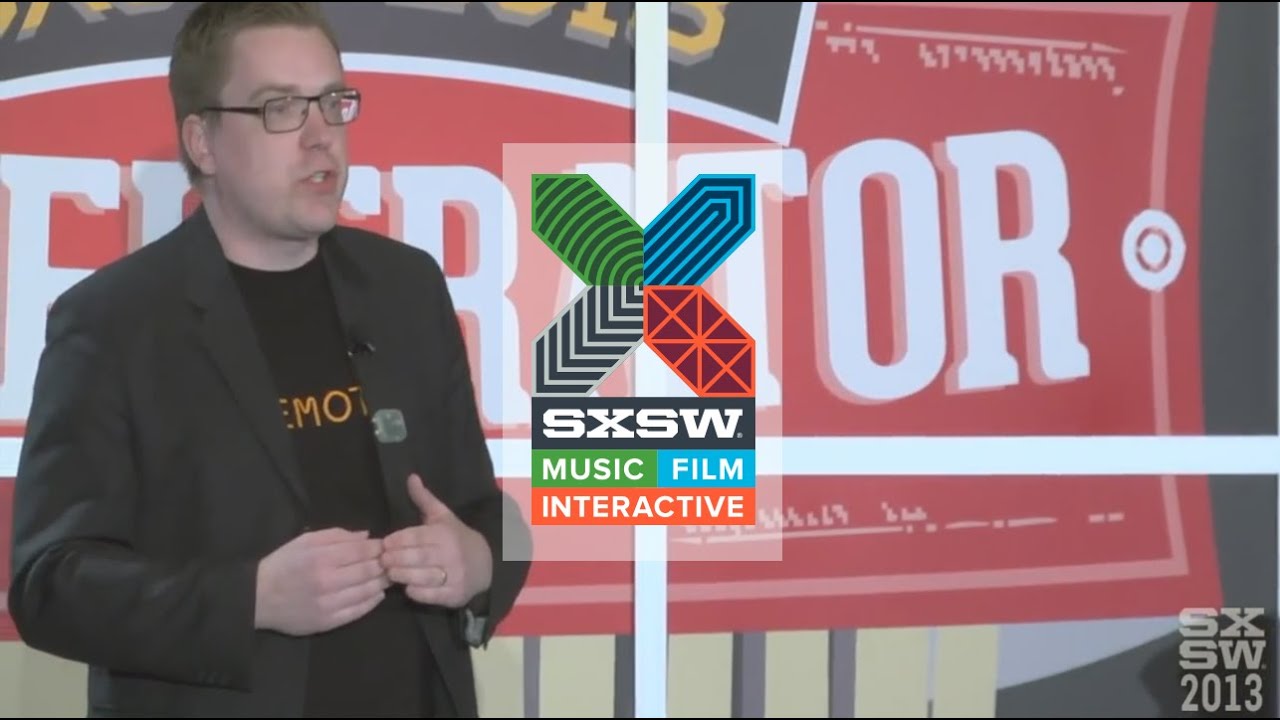
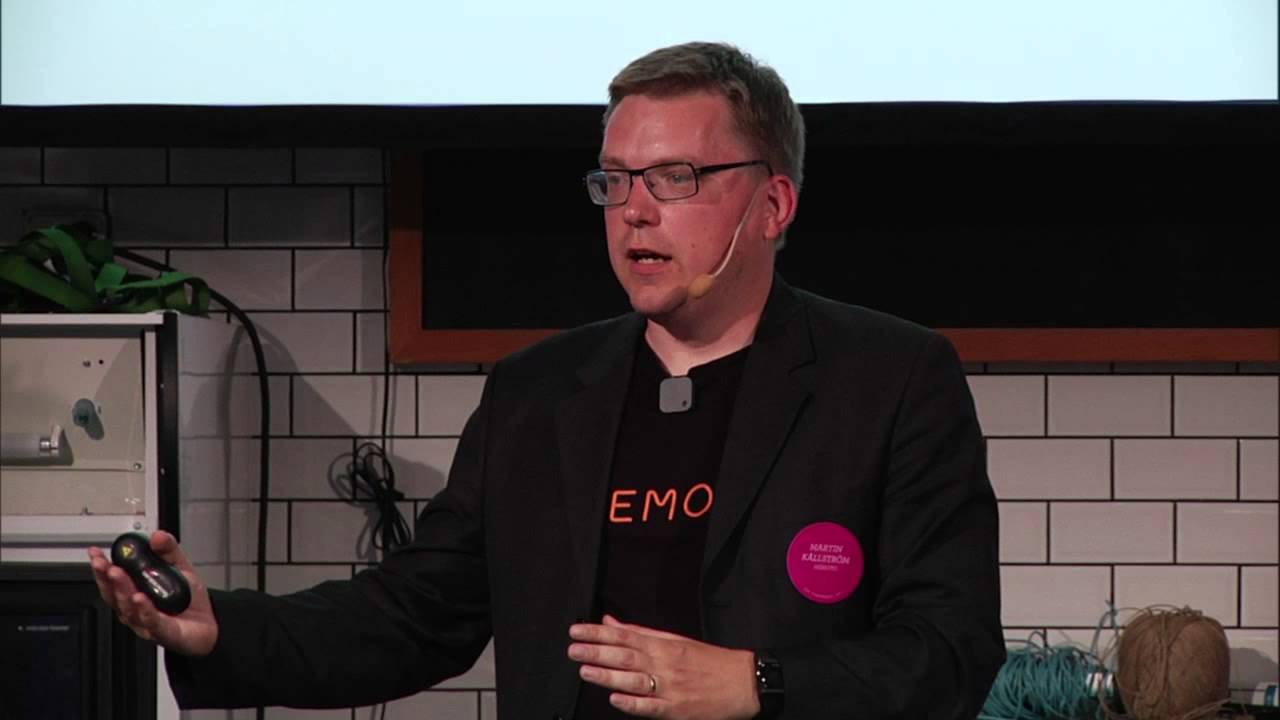
"The one thing I would like to contribute to society is to allow for people to be present in the moment instead of thinking, how am I going to present this to my friends on Facebook." ▶ 9:10 That is Källström's own summary of what Memoto (later Narrative) was for. Its Kickstarter framed the goal as helping people "relive more of our lives in the future — and enjoy the present as it happens" kickstarter-com ↗, and its philosophy blog line was blunter still: "avoid falling into a trap of tracking more than you're living" spiegel-de ↗.
The enemy, in his account, is a very specific kind of intrusive thought — not distraction in general, but the impulse to narrate an experience for an audience while it's still happening: "you start thinking about, not about how beautiful it is, but rather, how am I going to describe this on Facebook? ... in that moment I don't want to have those thoughts at all, but just be there and be in that moment" ▶ 22:04. A camera that captures automatically removes the need to choose what to document, which is what he means by presence "without having to think about how can I capture this moment" ▶ 5:56. Marketing copy translated this into an "effective mindfulness" pitch fastcompany-com ↗ and, more cheekily, into "FOMOOCE" — fear of missing out not on an experience, but on the opportunity to capture one fastcompany-com ↗.
He traces the motivation to two personal experiences that predate the company: a formative encounter in Tokyo with a girl shivering alone on a train platform, where he felt powerless to help ▶ 0:54, and — more directly — his final weekend with his dying father, spent on nothing more than breakfast, small talk, and looking out the window. He realized only afterward that this was how his father's life-wisdom had actually been transmitted: "what matters are those everyday conversations that we have together" ▶ 15:26. Memory is the original motivation, he says elsewhere — capturing the mundane and the rainy matters as much as the highlight reel ▶ 5:48. His co-founders arrived at the same place from different directions, all wanting more photos from their lives without "having to disturb the moments we were in" ▶ 3:06.
The design principle that follows: "you can capture those photos without having sort of a gadget between you and reality. You can be in the moment, but you can still capture the memories from that moment" ▶ 21:28. In practice that meant no phone between him and his kids while he's with them ▶ 1:27, and a broader creed that technology should enhance life "but not have it in the way of everyday life" ▶ 1:02.
Not everyone bought it. A Fast Company reporter who lived with the camera pushed back hard: "when you want to 'be present,' it turns out that capturing every moment is not very helpful. As we fold our hands in prayer to start class, I'm hoping that the camera gets the shot" fastcompany-com ↗ — and noticed a stranger side effect, a new desire to do more exciting things purely to look better to himself inside an app only he could see fastcompany-com ↗. It's a fair tension in Källström's own philosophy: a tool built to remove self-consciousness about capture can quietly reintroduce a private version of the same performance anxiety it was meant to cure.
Calm technology: designing a camera that disappears
Källström names his design lodestar directly: "I was inspired a lot by a principle for product design called 'Calm Technology.' You build technology that doesn't demand your attention all the time, it just exists" ▶ 41:59, or in his other phrasing, "products that don't bring so much noise to our presence so that we have to spend too much time thinking about them" ▶ 0:26.
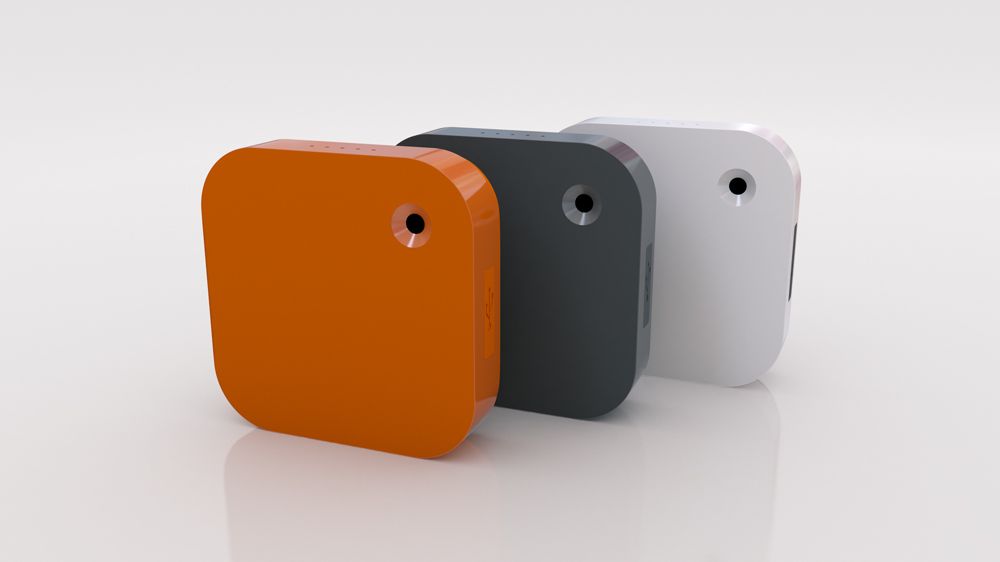
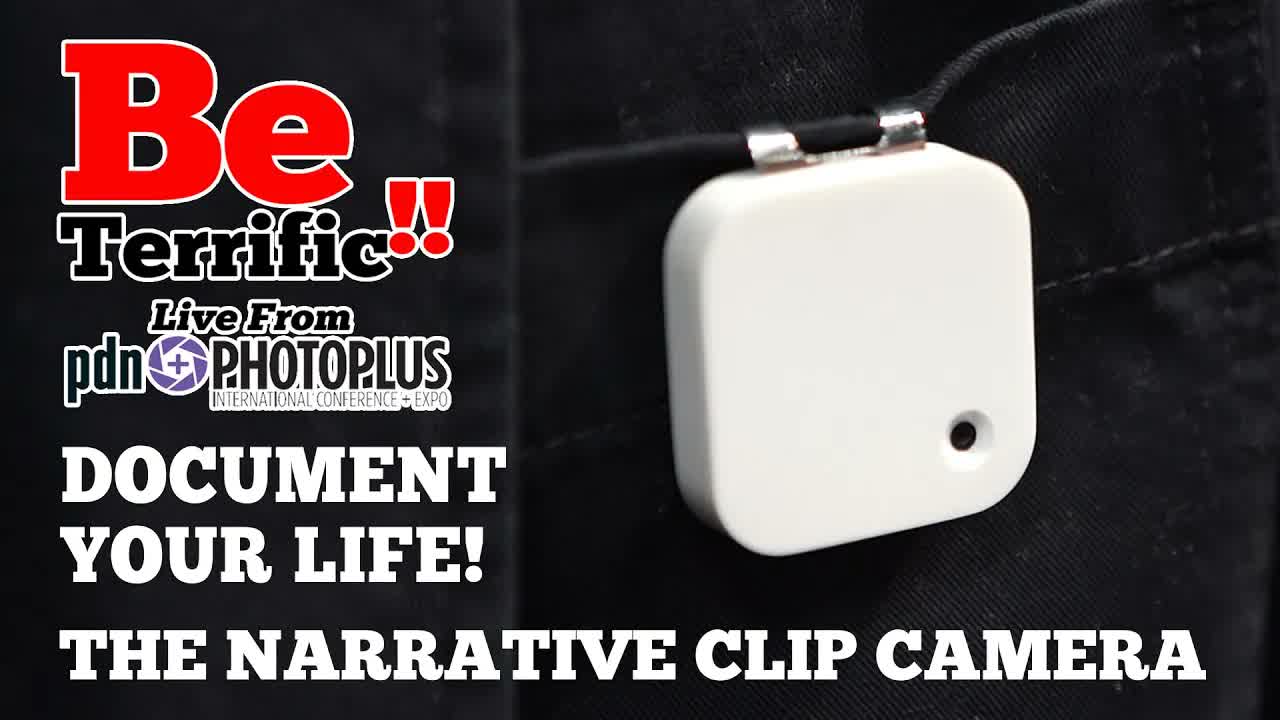
Two concrete choices followed from that. First, the Clip shipped with no on/off switch — a deliberate omission. "We want our users to get into the habit of actually taking the camera off if it's not appropriate or comfortable to take photos in a situation" ▶ 18:04, which meant social discomfort resolves through a visible, physical act (removing the camera) rather than through a hidden toggle. Second, hardware design had to balance two things in tension: being "honest" — recognizably a camera, not a hidden surveillance device — while also being unobtrusive enough to disappear into daily wear ▶ 19:56. The lens started life as a circle before being redesigned into a rounded square with an off-center lens specifically so it would stop resembling a human eye, which had been making people stare at it fastcompany-com ↗.
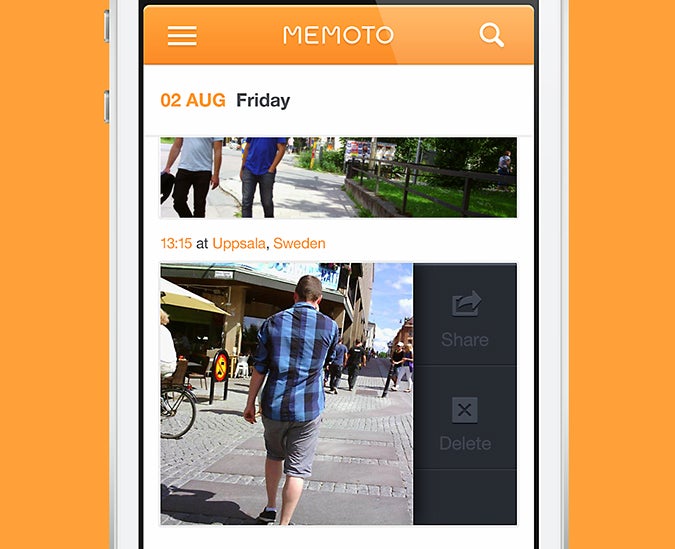
The payoff, per an early hire: people get used to wearing it fast, and so does everyone around them — "in a meeting, someone might ask what the camera is, and after a few minutes it's all forgotten" forbes-com ↗. The Clip needed no user intervention beyond wearing it; the system organized photos automatically ▶ 0:32. Källström generalizes the same aesthetic well past cameras — he cites his Tesla's interface, which "disappears" rather than drawing attention to itself, as an example of good UI design in general ▶ 16:37▶ 15:29.
Why not Google Glass
Källström returns often to Google Glass as the design road not taken, and the contrast sharpens his own philosophy. Where Glass kept its screen running while the wearer's attention visibly drifted to it, Narrative's bet was that the problem with Glass was never really the camera — it was that "glassholes" kept using the device as a screen, ignoring the person in front of them, while Narrative's lack of a switch forces an explicit, visible act of removal that resolves discomfort immediately ▶ 18:29. He offers two competing theories for why Glass drew so much more public backlash than his own camera: that its robot-like, uncanny-valley appearance was itself unsettling ▶ 20:24, and — separately — that it's simply "very rude to ask someone to take off their glasses" in a way that isn't true of a clip-on camera ▶ 19:59.
Not every outside observer agreed the Clip came out ahead. One reviewer argued the opposite: passive, always-on recording without any interaction is arguably a worse experience than Glass, since "as long as it is worn, it is always recording at a set interval without any interaction or control, until it is put in a bag or placed face down" istartedsomething-com ↗. A SXSW judge pushed the same worry from a different angle, invoking the Heisenberg uncertainty principle — does continuous observation itself change the behavior being observed? — a question Källström answers by insisting Narrative does the opposite of Glass: it enables authenticity rather than performance. The underlying phenomenon is real regardless of camera design: "being on camera makes you act differently because you know you're being watched" ▶ 6:24, and reviewers noted people's behavior visibly shifting the moment they clocked the device as a camera thenextweb-com ↗. Privacy concerns from early users were real too, and Martin's answer was pragmatic rather than dismissive: "privacy concerns are something we're going to have to deal with" ▶ 10:11.
Who it's for: archetypes and realistic use
Källström was consistently unromantic about adoption. At SXSW in 2013 he predicted roughly 5% of users would wear the camera daily, while most would treat it as an occasion device — birthdays, parties, concerts ▶ 12:28, and years later described two durable user archetypes: "the collector who saves and organises the memories, but only shares them with a small circle" — his own type — and "the social" user aiming to broadcast a creative life across platforms phys-org ↗. He rejected the idea of total lifelogging outright: "people will always need to take time off from being connected or recorded" kaptur-co ↗; most people, he said, used Narrative "for weekends, travel or sports activities. It's not for everybody to take lifelogging to the extreme" kaptur-co ↗. Kickstarter backers' own stated motivations echoed this — "memory," more pictures in order to remember more, ranked among eight core drivers Memoto's user research identified kickstarter-com ↗, and Memoto published explicit consent guidelines up front: don't photograph anyone who's asked you not to, and use judgment where they haven't kickstarter-com ↗.
He was also candid that this would likely stay a niche product rather than a mass-market disruption: "it's unlikely that products like Memoto will become popular enough to interrupt the normalcy of everyday life" betakit-com ↗. One workshop experiment pushed the concept into an unexpected direction — Källström ran sessions with teachers using the Narrative Clip 2, asking them to set privacy worries aside and brainstorm only positive uses ▶ 3:24▶ 3:49; ideas ranged from a teacher reviewing whether her own speech patterns held students' attention to face-and-audio analysis of which students she was and wasn't reaching ▶ 4:40. The most affecting single use case he's recounted came unsolicited, in an email from a photographer left unable to operate professional equipment after a wheelchair-confining traffic accident, who saw the Clip as a way to "express herself with her photos again" slashgear-com ↗.
The camera as mirror
Beyond capture, Källström frames lifelogging as a tool for self-knowledge: "with a lifelogging camera, the photos become a mirror of your life. So you can look at what people am I meeting, where and when and how do I spend my time, and am I happy with that" ▶ 20:38. His own recurring finding, reviewing his photo stream: life contains more variety and more people than memory alone preserves. "I appreciate that I have much more diversity. I see much more people in my life than I actually believed when I started ... because you forget so much about what you did" ▶ 17:00. He frames this as the direct answer to the objection "my life is too boring to lifelog."
He's explicit that this is qualitative, not quantitative, self-tracking — closer to a photo album than to a step count ▶ 2:50, and just as explicit about why your own lifelog is uniquely compelling: "the most boring thing in the world to look at is someone else's lifelog images, but the most amazing thing to look at is your own ... we're all sort of egotistical animals" ▶ 16:31 — egotism, in his telling, is the actual adoption engine. Elsewhere he points to visual-log cousins of the idea doing real work: a physician's inflammation data, five times normal despite feeling fine, dismissed by her own doctor for lack of symptoms — the kind of truth objective tracking can surface that subjective feeling misses ▶ 12:26. His own Fitbit is a smaller-scale example: "my posture improves because I'm out running around" ▶ 16:33 — quantifying not just images but, as he put it elsewhere, "quantifying your life and what you're seeing around you" uxpodcast-com ↗. None of it requires conscious effort; the system clusters a day's worth of frames automatically rather than asking the wearer to compose 30 intentional photos ▶ 11:05.
Photography in crisis, and the case for passive capture
At SXSW 2014, Källström argued photography-as-a-medium was in trouble: mass authorship and abundance had stripped photos of the "inherent objective truth they once held," leaving subjectivity in charge ▶ 6:23 — a crisis he saw Memoto positioned to answer, at the intersection of "the Instagram movement and the wearable technology movement" only just converging ▶ 8:12. His counter-claim for passive, wearable capture specifically: it "can surface the visual grammar of daily life, the pauses, the cracks, and the in-between states of our lives," yielding accidental, unposed photos a photographer would never consciously compose ▶ 5:57▶ 0:31. The intellectual lineage he cites is Steve Mann's "learning by being" — the idea that quantification can drive self-actualization ▶ 2:33 — with roots going back to Mann at MIT and to Gordon Bell at Microsoft, whose research grew out of his wife's Alzheimer's and the idea of a wearable visual-memory aid ▶ 24:26▶ 11:27. Not every moment matters equally, and that's the point: "you don't know in advance which moments will be important in the future" phys-org ↗.
Voice as the next calm interface
Years after Narrative, Källström carries the same anti-friction instinct into voice AI. Typing, he argues, is "really micromanagement ... first comes letter A and then comes letter B," an unnatural adaptation to machine constraints rather than an expression of anything human ▶ 30:54; voice, especially hands-free and ambient, is the more natural interface — the one that lets you "invite AI to participate in a meeting" or talk to it while biking, without ever touching a screen ▶ 7:13. He points to the minimalist voice-first UI in the film Her as the design target: almost no visible controls at all ▶ 15:46.
Making that work naturally, he argues, requires more than language understanding — it requires modeling the mechanics of human conversation. He calls out "floor-holding": the "um" and "uh" sounds people use to hold a conversational turn while thinking ▶ 28:42, plus the subtler, largely unconscious "floor-giving and floor-taking techniques" people use to hand a turn over or seize one ▶ 29:08. Voice AI needs equivalents — a canned opening line to cover latency while the model formulates a real answer ▶ 28:02 — and the first behavior any talking AI has to learn is "how to also shut up and let the human speak" ▶ 13:53. Group conversation is the frontier still unsolved: "there's still no product" that lets one AI speak naturally to a room of people ▶ 28:46, a gap he expected voice companies to spend "at least 6 to 12 months" closing ▶ 30:03. He also flags a gap in off-the-shelf tools of the era — VAPI and Retell, he notes, have no emotional-understanding layer of their own; they just defer entirely to the underlying LLM ▶ 22:33. Some of this is infrastructure-driven: he moved toward self-hosting less for cost than for the fine-grained control APIs wouldn't give him — he wanted "a millisecond by millisecond map" of a conversation ▶ 6:36 — on the view that for real fluidity, shaving response latency matters more than any UI trick used to paper over a delay ▶ 20:26.
Co-creation, flow, and mastery
Källström's definition of creation is deliberately stark: "when you create something valuable, that is creation ... anytime you are not creating something valuable, then you're not engaging in creation" — the opposite is destruction, regardless of how an activity feels ▶ 2:20. Co-creation, in turn, is "a collaborative state of presence where the combined activity of the people involved produce something valuable that comes from them, from their inner life" ▶ 12:16 — presence and awareness are, for him, definitionally part of what creation is ▶ 7:16. He and his co-host argue mastery isn't incidental to that state but a precondition for it: flow requires that "you need to be good at what you do... and continuously learn" ▶ 31:26.
This connects to a preference for volition over raw autonomy: engagement comes not from unlimited freedom but from "purposeful autonomy" aimed at something meaningful ▶ 32:10. Applied to AI, this becomes the line between co-creative AI, where human and model iterate together in a loop, and generative AI, where a user submits a prompt and takes whatever comes out ▶ 12:15 — and it extends into entertainment, where he and a co-host argue that rich, easily-produced co-creation could finally let active, creative play out-compete passive consumption ▶ 21:49▶ 20:55▶ 21:20, letting someone "be creative at the same time as you're consuming" ▶ 21:49. Underneath all of it sits a claim about memory itself: "memory is the fundamental basis for learning, for communication, for relationships" ▶ 1:46.
Multimodal AI and shared perspective
The wearable-camera instinct resurfaces almost unchanged once multimodal AI enters the picture. Shared visual context between human and AI, he argues, "multiplies the effectiveness of co-creation" simply by removing the need to explain: "I don't have to explain the situation and the context. I can just learn that" ▶ 7:32▶ 7:58. He treats multimodal capability as the thing that finally makes AR/wearable computing concrete rather than speculative — reading a Thai menu, following a bike-repair manual, or recognizing a person in front of you are no longer science fiction ▶ 9:08▶ 4:18 — with particularly hopeful implications for Alzheimer's patients specifically ▶ 4:43. The real bottleneck for VR/AR adoption, in his view, was never the technology but social awkwardness: bulky headsets are usable only alone or with people you trust completely, which is why he floats "VR booths" — private, enclosed spaces — as an interim social fix ▶ 18:09▶ 19:08. He's clear-eyed that the payoff of always-on wearable sensing plus AI personalization could be enormous, but only if data ownership and platform control get settled first — otherwise the same technology that enables presence becomes the thing that surveils it ▶ 24:42.
The autonomy paradox
Källström's sharpest tension surfaces when he pushes his own logic to its limit. If an AI, given a complete lifelong record, starts predicting your choices correctly 99% of the time, "how will you know then, am I picking this because I trust the AI or because this is the AI predicting what I wanted? ... how much autonomy will we lose?" ▶ 21:37 — a scenario he sketches through "AI-native" children who grow up with AI holding a complete record of every decision they've ever made ▶ 21:12. His co-host reaches for WALL-E as the cautionary image: humans reduced to passengers, "just being driven around watching some screen" ▶ 22:43. Källström's own proposed resolution isn't to refuse AI guidance but to make intentions explicit up front — telling the AI what direction you want nudged toward, so that following its suggestions stays aligned with values you set rather than values it inferred ▶ 24:41. He's genuinely drawn to the alternative too: describing a real trip where he let an AI plan and narrate the day, he calls it "surrender to the flow created by an AI," like having "a tourist guide... working full-time" to engineer an "11 out of 10 experience" ▶ 21:11 — built, concretely, by feeding ChatGPT stacks of Wikipedia pages about the castles and towns he was passing through ▶ 17:36.
Practically, he argues for plural rather than singular AI relationships — multiple specialized agents for different contexts rather than one do-everything assistant ▶ 28:33 — paired with the promise of a personal assistant that holds enough context (memory, location, preferences, sensors) to remove friction from everyday decisions like shopping ▶ 6:33. He also notes, approvingly, that OpenAI's own product choices — a chat interface, a turn-structured API — read as a deliberate effort to keep a human in the loop rather than let agents run autonomously ▶ 26:09. Zooming out, he thinks AI's arrival is doing something crypto never did: dragging genuinely existential and philosophical questions into mainstream conversation ▶ 6:41.
Presence in relationships and the body
The presence idea extends past cameras and screens into how Källström talks about intimacy. On relationship structure, he distinguishes intensity of connection from its label: "love is in a way infinite. Even if I have a relationship that's outwardly just friendship, the love in that relationship is infinitely valuable. If a relationship is sexual, that doesn't mean it suddenly has to be much more important" ▶ 36:01. On sex specifically, he describes it as requiring — and training — total embodied presence: "I need to be 100% present for it to work sexually. If I drift off in thought, my body disappears completely too. So having sex is actually a really good mindfulness exercise for me" ▶ 59:01▶ 59:27. He traces this insight to being caught in the act, so to speak: a partner once called out, without embarrassment, the exact second his attention left the room — "where did you go just now?" — a moment he describes as a genuine revelation, since she'd noticed before he had ▶ 60:34. His primary love language, he says, is physical touch: "I feel very affirmed and feel love through touch" ▶ 58:10.
Media, attention, and society
A 2010 talk shows an earlier version of the same argument aimed at internet culture broadly. Källström argued the categories "work, school, and leisure" no longer describe how people actually live — the same tabs (Hacker News, industry newsletters, a company dashboard) serve both professional learning and idle browsing ▶ 7:42. On the "is the internet making us dumber" debate, he sided with neither camp: brain-imaging research shows web-surfing and reading activate different regions, meaning the internet reshapes cognition rather than degrading or improving it outright — "every medium develops some cognitive skills at the expense of others" ▶ 18:06, citing Nicholas Carr's The Shallows on the risk that "skimming is becoming our dominant mode of thought" ▶ 8:58 and brain researcher Small's scanner studies of surfers versus readers ▶ 10:16, alongside a nod to Ellen Key's older worry about disappearing capacity for deep thought ▶ 11:58. His conclusion was not to resist the shift but to track its consequences: "it's about constantly keeping an eye on the consequences ... that consequence-analysis counters the bad forces and strengthens the good ones" ▶ 18:31. He extends the same non-nostalgic stance to specific worries — that parents are unconsciously teaching kids to communicate differently than they themselves learned ▶ 18:06, offset by a belief that kids should be active participants in their own media and learning, not passive recipients ▶ 20:16 — and to a genuinely 2010-flavored optimism that remote conference participation was becoming "nearly equivalent" to being there in person ▶ 20:42. He also observed, almost in passing, that almost nobody watches television without doing something else at the same time — attention was already split well before smartphones ▶ 6:01. It's worth noting the tension this whole cluster sits inside: he's separately conceded that always-on lifelogging "doesn't fit into our modern society where everybody tries to portray their best image" on curated social feeds ▶ 8:16 — the same forces reshaping attention are the ones his camera was built to resist.
Worth remembering
- Memoto's own teaser distilled its whole pitch to four words of imagery: "breakfast with my girlfriend... seeing my nephews... just hanging out with my friends. That's what life is really all about" ▶ 1:16, and its founding tagline aimed at "a true photographic memory" small enough to never get in the way ▶ 0:28.
- Källström described his own creation, without much hedging, as "creepy and interesting" allthingsd-com ↗ — and separately said Narrative's real bar for success was never sales, but whether it meaningfully changed even one life: "if there's one user in Minnesota whose life we have thoroughly changed, that's enough" slashgear-com ↗.
- He's had "the urge to document my life" for a long time, by his own account, without much success until the Clip europeanceo-com ↗ — a vision he once summed up as "imagine if you could capture and re-live every memorable moment of your life" europeanceo-com ↗.
- Not every design choice worked: reviewers who wore the Clip at chest height got days full of photos of trees and clouds, sometimes half-obscured by their own hair, since the fixed camera angle struggled with people at different heights researchgate-net ↗.
- A skeptical reviewer's rebuttal to the whole premise is worth sitting with: most of daily life really is boring, and "even the most exciting moments in life seem a little underwhelming when reduced to a photo or video" ▶ 1:21.
- Off camera, the same minimalism shows up in how he manages physical belongings: wallet merged into his phone case, no keys carried at all — "I only have one thing now to keep track of" ▶ 22:34.
- Third-party experiments with the same idea existed well before Narrative shipped — a DIY lifelogger captured 3,500+ images over three days at the 2013 Bay Area Maker Faire, condensed into a four-minute timelapse ▶.
- A 2013 documentary on the broader lifelogging movement framed the stakes in almost utopian terms — a medium, like the printing press or the internet before it, that "gives people a chance to create meaning for themselves. And that is hugely empowering" ▶▶ 21:48▶ 22:17.