Narrative
Narrative — born as Memoto — was Martin Källström's second company: a Swedish startup that spent 2012 to 2016 trying to give everyone a photographic memory. The idea came out of grief. After losing both parents to cancer within a decade of each other, Martin realized no one was left to tell him about his own childhood, and that the photo albums he had only ever held the curated, happy moments — never the ordinary ones that actually make up a life (▶ 39:16, breakit-se ↗). He built a tiny wearable clip camera that photographed automatically every 30 seconds, no shutter, no framing, no off switch — and it went from a Kickstarter campaign that funded in five hours to a company with offices on two continents, roughly $12.5 million in venture capital, 40,000 cameras shipped, and, in September 2016, bankruptcy — a casualty of investors deciding, almost overnight, that wearable hardware was dead. Martin has called the walk out of that bankruptcy one he could make with his head up, because by the time it happened the team had tried everything.
Origins: a camera born from grief
Martin spent six years building Twingly before restlessness set in — the company had shifted from invention to sales and maintenance, and he'd stopped learning (▶ 24:29). He negotiated down to four days a week at full salary, using the fifth day to search for what came next.
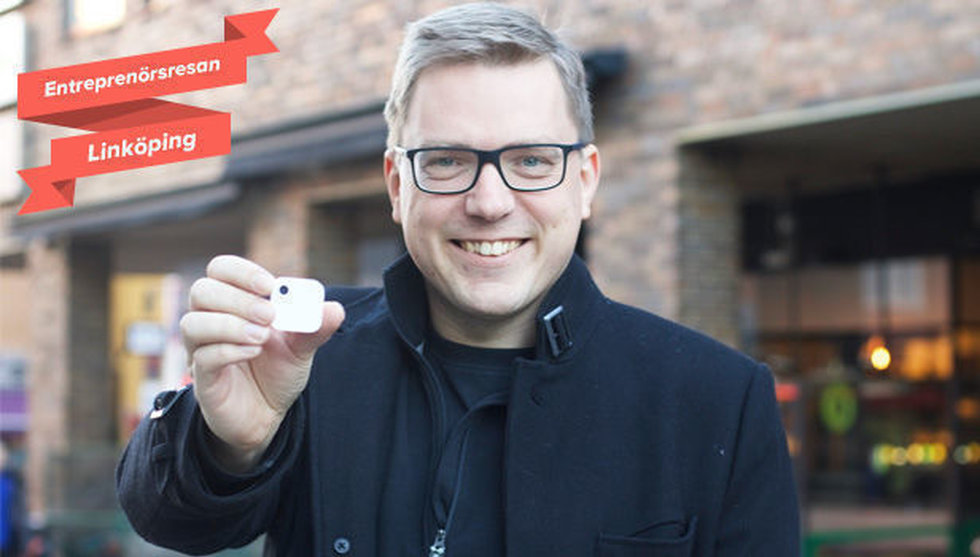
The Spreadsheet That Couldn't Commit. Over nine months, one day a week, Martin kept a Google Spreadsheet of business ideas — eventually 45 to 50 of them — and "burned" for each one for a couple of days before moving on. It got bleak enough that he worried he could never start a company if two days was his limit. The pattern broke when he saw a teardown of a Finnish Wi-Fi SD card and it sent him back to an idea he'd earlier dismissed as too bulky: a camera worn on the body. This time it stuck — for weeks. ▶ 35:51
- Martin founded Memoto in 2012 as one of six Swedish serial entrepreneurs, shaping the wearable-camera concept after leaving his CEO role at Twingly. kickstarter-com ↗
- Over roughly a decade Martin lost both parents to cancer — his father around 2000, his mother around 2010 — and each loss crystallized the same insight: life is finite, and no one remained to tell him about his own childhood. breakit-se ↗
- Looking back at family photo albums after losing both parents, Martin felt that only the happy, curated moments had ever been captured — never the ordinary ones — and that conviction became the premise of the product. ▶ 39:41
- The deaths of his parents, alongside the births of his daughters, together motivated the idea: capturing the everyday moments that otherwise vanish. webit-org ↗
- The name Memoto was chosen to allude to "memory + automatic" — automatic memory capture. getnarrative-com ↗
- Martin co-founded Memoto with fellow Linköping and Norrköping students; the founding team of six included two software developers and a product manager alongside Martin, Oskar Kalmaru, and Björn Wesén. ▶ 1:06:43
- Martin's original vision for Memoto included unlimited battery life and unlimited photo storage — both had to be compromised once real hardware constraints set in. ▶ 3:23
- Through early user research, the team identified eight distinct needs the product had to serve: memory, re-experience, surprise, presence, life improvement, preservation, control, and convenience — a scaffold that shaped the whole concept. kickstarter-com ↗
Reaching Björn Westin: network momentum and a surprise yes. Needing a hardware co-founder, Martin asked a former Axis employee not for himself but for a referral — and got pointed to Björn Wesén, Axis's own R&D head, someone Martin didn't expect to land. He drove to Lund, showed Wesén the prototype, and days later Wesén called to say he'd talked it over with his brother and was in. Martin's read on it: luck is having all your tentacles out. ▶ 45:15
From Memoto to Narrative: a trademark forces a rebrand
Motorola's trademark enforcement and the rebrand to Narrative. Motorola objected to "Memoto" over the "moto" fragment. Rather than rush a fix, Motorola and the startup took time to find the right identity — and the name that emerged, Narrative, better captured what the company had actually become: a platform and app ecosystem, not just a clip-on camera. slashgear-com ↗
- Memoto was forced to rebrand after Motorola's cease-and-desist over the "moto" trademark. gizmodo-com ↗
- The Memoto name was also considered confusing on its own merits, which reinforced the case for changing it. mobilesyrup-com ↗
- Martin later said good relations with Motorola developed after the conflict — Motorola gave the company time to choose a new identity rather than forcing an immediate change. slashgear-com ↗
- The rebrand was announced in October 2013 alongside $3 million in funding and a scheduled November 2013 shipment. nbcnews-com ↗
- Oskar Kalmaru, as VP of Marketing, was the one who publicly explained the rebrand strategy. engadget-com ↗
The Kickstarter that funded everything
See Memoto Kickstarter Campaign for the full story.
The Kickstarter Launch. Martin set an alarm to publish the page at 7am from his sister's Stockholm apartment. Within a minute — too fast to have even watched the pitch video — the first backer came in; then they poured in continuously. The $50,000 goal fell in five hours; by one month later the campaign had raised $500,000, with another half-million in pre-orders on top. ▶ 8:30
- The Memoto Kickstarter ran October 23 to November 21, 2012 and raised $550,189 from 2,871 backers against a $50,000 goal — over 11 times the target. kickstarter-com ↗
- The team had spent a full year developing the camera and app before launching, and had grown to 14 people by the time the campaign went live. kickstarter-com ↗
- Launch-day momentum was engineered: a mailing list, a Facebook event with 2,500 people waiting, and nine tech blogs coordinated to publish simultaneously. ▶ 18:03
- Martin later framed crowdfunding as more than financing — it also revealed the exact production quantity to manufacture and matched capital to that run precisely, reducing inventory risk. ▶ 6:34
Narrative Kickstarter and the customer-support crisis. The campaign's success brought an unanticipated wave: the team worked around the clock just answering messages. Martin later named this a blind spot — he had planned the product, the supply chain, and the campaign mechanics, but not the operational demands of sudden success. ▶ 9:09
The Train Conductor's Immediate Buy-In. On a train from Stansted to London with prototypes on the table, a conductor stopped, sat down for five minutes, and immediately volunteered a use case: he faced harassment on his commute and wanted proof of his presence on record. He suggested pitching it to his employer, Greater Anglia. ▶ 11:09
- Martin observed that once a Kickstarter campaign launches, the product becomes almost impossible to change — backers inevitably disagree about what they want. ▶ 15:50
- The Memoto team got national attention beyond tech press, including a segment on The Colbert Report. kickstarter-com ↗
- Financing for Memoto was layered: Martin's ongoing Twingly salary, a 200,000 SEK validation grant from Innovationsbron, a 300,000 SEK innovation loan from Länsstyrelsen Östergötland, €500,000 seed funding from Passion Capital, and then the Kickstarter campaign itself. ▶ 29:15
Funding & investors
The lucky Passion Capital pitch. In 2012, short on travel budget, Martin's team implied to a London VC that they had other meetings lined up — mostly by accident, their first pitch meeting even happened almost as a fluke. Passion Capital sent a term sheet within a week. Martin later reflected on the paradox: he could never know what he might have missed by moving that fast, even though speed itself was part of what won investor confidence. ▶ 9:40
- Passion Capital was the first VC to invest, putting in €500,000 (roughly 4.5 million SEK) in Narrative's seed round. breakit-se ↗
- A $3 million Series A closed in October 2013, led by True Ventures (previously a backer of MakerBot and Fitbit), with LDV Capital and Passion Capital participating; it gave the company roughly eighteen months of runway regardless of sales. slashgear-com ↗, allthingsd-com ↗
- An $8 million round led by Khosla Ventures closed in September 2014 — Narrative's first outside capital since the Series A — bringing total funding to $12.2 million and funding a San Francisco office. techcrunch-com ↗
- Swedish firm Creandum invested nearly 6 million kronor at the end of 2014; government agencies Almi and Vinnova, plus angels Peter Read and Felix Petersen, also backed the company. breakit-se ↗
- Total lifetime funding came to roughly 100–106 million SEK (about $12.5 million). breakit-se ↗
- At bankruptcy, the cap table read: Khosla Ventures over 25% (the largest shareholder), True Ventures 22%, Passion Capital 13%, with Martin the fourth-largest owner. breakit-se ↗
- The board included Keith Rabois (Khosla Ventures), Om Malik (True Ventures), Björn Wesén, Oskar Kalmaru, and Martin. getnarrative-com ↗
- Narrative deliberately planned each funding round to last exactly six months, forcing continuous pursuit of the next round to stay ahead of market timing — a policy Martin later saw as part of the problem. ▶ 4:15
- Looking back, Martin thought a fundraising round that covered 24 months should have covered 36 — more runway would have bought room to adjust. breakit-se ↗
- Revenue: roughly 8 million SEK in fiscal 2013–14, reported as "at least double" that (16M+) in 2015 by one account — while a separate account states 2015 sales under 10 million kronor against a 25 million kronor loss. breakit-se ↗, nyteknik-se ↗
- By July 2016 the company had 22.5 million SEK in debt against only 421,000 SEK in liquid cash, and Martin was in Singapore chasing capital to save it. breakit-se ↗
Product & technology
Full detail lives on the dedicated pages: Narrative Clip 1, Narrative Clip 2, and Narrative App & Platform.
The GPS Antenna Echo Chamber. The team designed a tiny 2×3mm GPS antenna using the PCB itself as the antenna — flawless in the lab. Inside the actual camera casing, the metal shell turned into a perfect echo chamber and killed the signal outright. They rebuilt around a wire antenna with Swedish antenna specialists, moving PCB components iteratively until the interference cleared. slashgear-com ↗
The Complete Rebuild: throwing away a year of code. By October 2013, a year after the team started, not one line of the original software remained and none of the original hardware prototype survived either — the early builds couldn't scale to a workable product, so the team rewrote everything gradually, without ever formally deciding to. slashgear-com ↗
Building a camera around a 6.5-year-old sensor. Asked how startups pick hardware, Martin explained it's less about the best spec on paper and more about what a small company can actually get supported. The Clip 1's image sensor was already about five years old when design started in 2012, and roughly 6.5 years old by ship date — a technology-access penalty he said closed only once Narrative became a recognized brand. ▶ 36:21
The Launch Decision: shipping "ready enough" versus perfect. At launch, search was pulled because it didn't work yet, the Windows uploader was unfinished, and GPS browsing was deferred. Martin chose to ship anyway — hardware deadlines don't move the way software feature lists do, and real users would teach the team more than more months in the lab. slashgear-com ↗
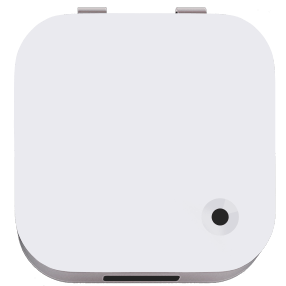
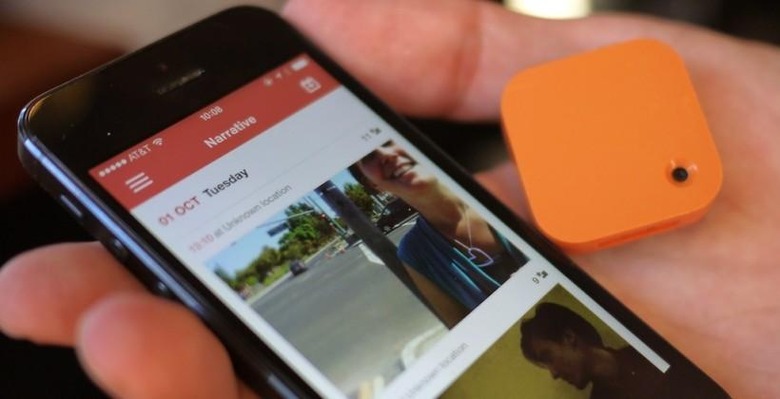
- Clip 1: 5-megapixel sensor, GPS, accelerometer, magnetometer, 8GB storage (about two days / roughly 4,000 photos), no wireless — sync was via micro-USB only. engadget-com ↗
- Clip 1 launched at $150 (later $279 retail as Narrative Clip); the redesigned Clip 2 (CES 2015) moved to an 8-megapixel sensor with a wider 90° field of view, Wi-Fi and Bluetooth sync, adjustable capture intervals, a removable clasp, and $199 pricing. engadget-com ↗
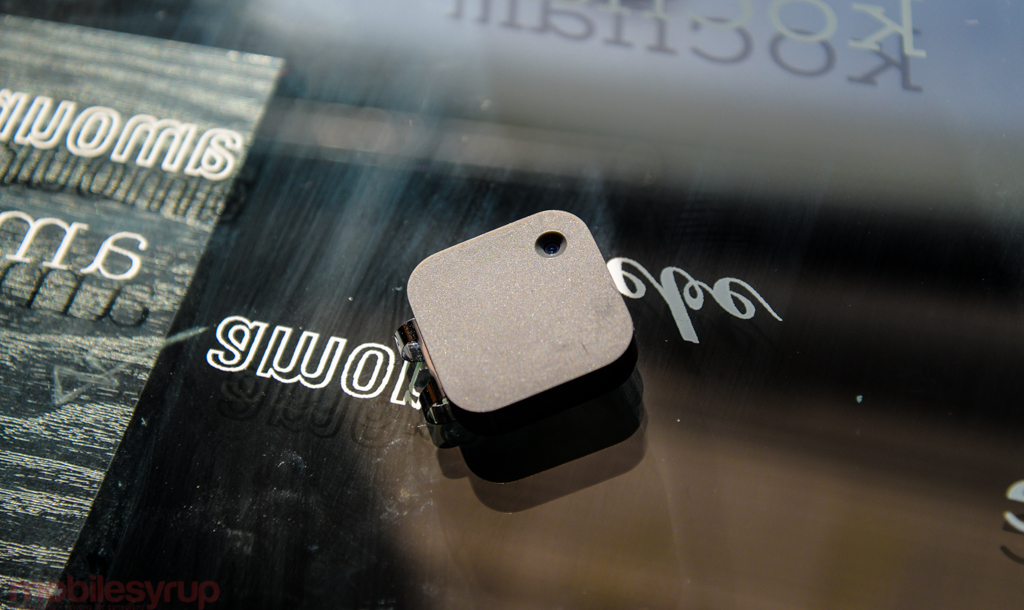
- The camera's silver lens ring deliberately referenced the iPhone 4 (later the iPhone 6 for Clip 2) so bystanders would instantly recognize it as a camera; an early circular prototype was redesigned to a rounded square after users started staring at what looked like an eye. fastcompany-com ↗
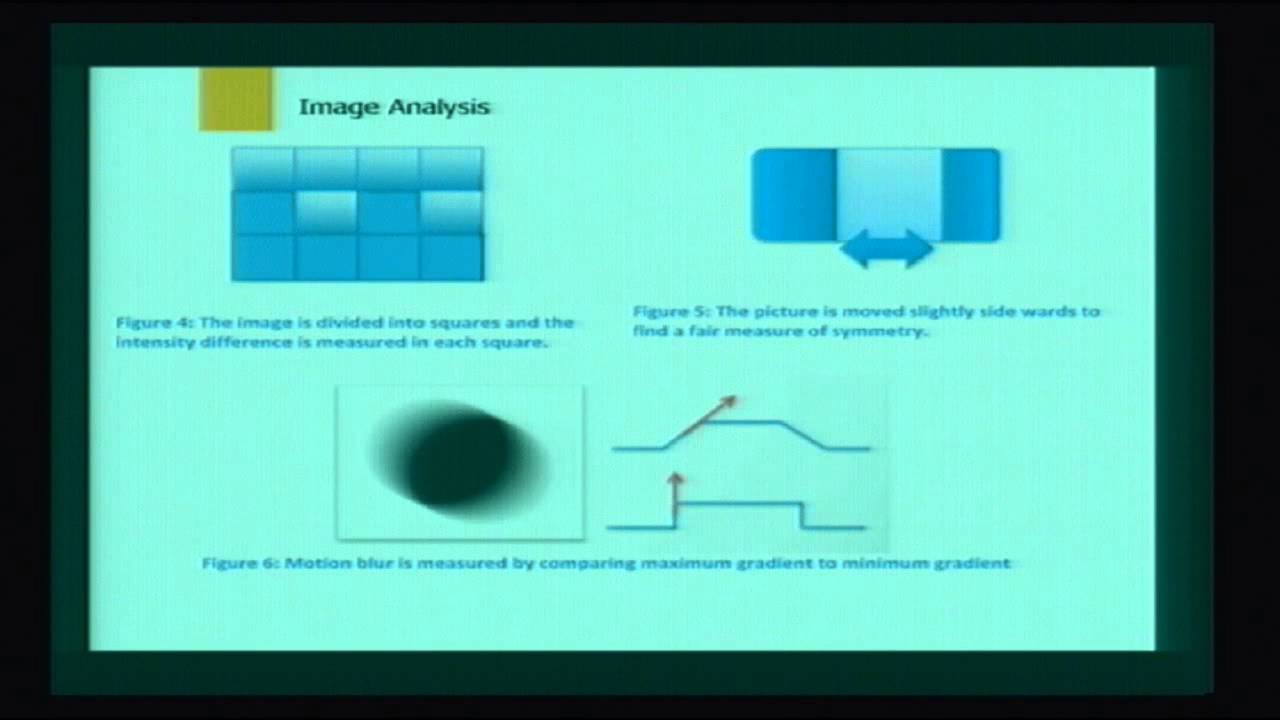
- The software's "moments" algorithm segmented each day into roughly 20–30 activity blocks using light, color, and GPS, then surfaced the best photo per segment by sharpness, color, face detection, and a custom symmetry score. fastcompany-com ↗
- Narrative's turnaround plan after the 2016 near-collapse had three stages: preserve user data on company servers, restart Clip 2 production, and develop a Clip 3 only if the business proved profitable. engadget-com ↗
Growth, team & culture
- Memoto had 17 full-time employees from Sweden, Singapore, and the US by mid-2013; the four founders had collectively started six companies before this one, with two exits. spiegel-de ↗, ▶ 4:04
- By February 2014 headcount reached 23 across offices in Lund, Linköping, and Stockholm; by late 2014 the company had added 8 people that year with plans for at least 20 more. ▶ 1:09:41, ▶ 2:20
- At its peak, Narrative reached 55 employees plus contractors, with offices in Linköping (HQ), Stockholm, Lund, and San Francisco — and half the initial hires had quit their existing jobs on the strength of a PowerPoint and a prototype. ▶ 17:19
- Distributed teams ran on HipChat for searchable chat and file sharing across three Swedish offices plus San Francisco; Martin kept at least one day a week in the Stockholm office. ▶ 1:10:00
- Co-founders: Björn Wesén (CTO, hardware — had built digital cameras for a decade before joining), Oskar Kalmaru (CMO/marketing, based in Stockholm), and Sebastian Björkelid (UX/growth — founder of Bilddagboken, Sweden's largest online photo diary, later sold twice before Björkelid left a product-manager role he hated). breakit-se ↗, ▶ 32:12
- Building culture inside a fast-growing company was, in Martin's own words, very difficult — employees often didn't know priorities or what to do. ▶ 8:58
- Narrative is Martin's second startup by name but his fourth venture overall. ▶ 2:07
- After Twingly's long B2B sales cycles, Martin was drawn to Narrative specifically as a consumer product. ▶ 5:15
The spoof-email attack on Narrative. Around 2014–2015, attackers made dozens of calls into the company posing as vendors, mapping out who approved payments and how. They then sent the controller a spoofed urgent email, apparently from Martin, requesting a large transfer to a new foreign account. It failed because Narrative was flat enough that the controller knew to check with Martin directly before acting — a structural defense against social engineering that Martin later connected to broader thinking about fraud and AI-era deepfakes. ▶ 22:45
Privacy by design
Privacy wasn't an afterthought bolted onto a camera that recorded everything — Martin has described it as central from Memoto's very first sketches.
Designing a camera that looks honest, not hidden. Asked what would happen if police wanted to use the Clip, Martin described a genuine enterprise variant — a two-camera rig streaming over LTE — then pivoted to the deeper point: the Clip's visible, unashamed look was the product of deliberate focus-group work, so bystanders, not just wearers, would feel comfortable around it. He pushed back explicitly on press coverage that lumped Narrative in with Google Glass, arguing Glass never achieved that same feeling of honesty. ▶ 13:59
Privacy by design vs. streaming. Martin contrasted Memoto with Google Glass point by point: Glass streamed to the web by default, risking accidental capture of private moments; Memoto stored everything in a private diary by default, with publication requiring an explicit, conscious choice each time. ▶ 25:33
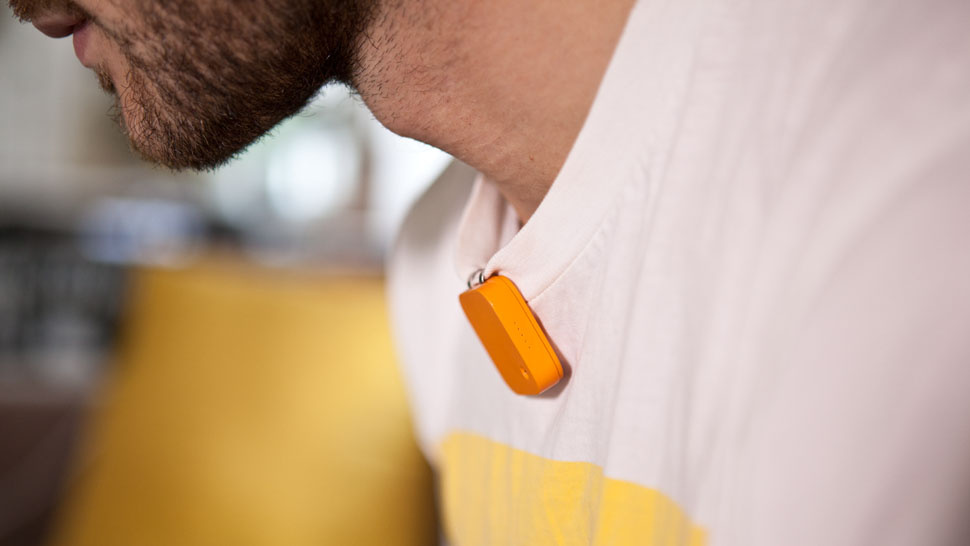
- The camera had no off switch by design — the only way to stop recording was to physically remove it or place it face-down, forcing a deliberate, visible choice rather than a silent toggle. fastcompany-com ↗
- Photos were encrypted, private by default, and never accessed by the company or shared with third parties without explicit user consent — the stated model was "users as customers, not products." ▶ 7:04
- The device also went dark automatically in low light, so its recording state stayed visible to the people around the wearer. techcrunch-com ↗
- Even so, Martin acknowledged the wearer's own judgment about when to remove the camera was fallible and could be forgotten — the privacy model had to account for human error, not just good intentions. ▶ 26:59
- Legal scholars later flagged that the Clip 2's inconspicuous form could run afoul of California's wiretapping law by recording confidential conversations without consent — a risk the company's design philosophy never fully resolved. sfchronicle-com ↗
- Property owners could ban photography on their premises but couldn't compel deletion of already-captured images — a legal gray zone the Clip never solved, since it kept recording in venues like cinemas and galleries where photography was forbidden but unenforceable. ▶ 20:25, ▶ 8:55
Privacy Concerns and Social Friction (Arthur Guy's review). After an enthusiastic unboxing, Arthur confronted the social cost head-on: his girlfriend refused to be in the same room while he wore it, and he recognized the device could trigger the same fear Google Glass had. He tried rationalizing it as personal-use-only, while admitting society's discomfort was legitimate. ▶ 8:55
Five years of wearing the Narrative Clip. Over five years of intermittent use, Martin built an intuitive social sense of when photography felt appropriate — and only twice in five years did anyone explicitly ask him to turn it off, far fewer times than he'd expected. He removed it himself around others more often than they asked, feeling more self-conscious about photographing them than they seemed to feel about being photographed. He theorized Google Glass failed partly because it felt socially rude to ask someone to take off their glasses — whereas asking someone to unclip a camera felt normal. ▶ 19:12
Real-world impact: what the camera was actually for
The Photographer Email. Asked what success looked like, Martin didn't reach for a sales number — he described an email from a photographer left in a wheelchair after a traffic accident, unable to operate her professional gear, thrilled that the Clip let her express herself through photography again. That single email meant more to him than any revenue figure. slashgear-com ↗
The Autism Son's Communication Gateway. A family wrote in about their autistic son, who couldn't describe his school day in words and rarely used a digital camera they'd given him. With the Clip taking a photo every 30 seconds automatically, the family finally had the everyday conversation — what he did, who he played with — other families take for granted. ▶ 12:01
The Police Officer Scenario. Martin recounted a YouTube comment from a Black man in America describing how the Clip could protect him during a police stop — showing his location history on his phone if asked where he'd been the day before. The commenter's own words: "boom, life transformed." ▶ 13:45
Sofia's Lifelog: love and care through documentation. In the Lifeloggers documentary, a mother describes her daughter Sofia's diagnosis with a fatal genetic disease — one of only 8–10 children worldwide living with Niemann-Pick type A at any time. The family built a Narrative Scrapbook and systematically documented Sofia's life through photos, notes, and video, turning grief into community and care into meaning, through to the day of her death. ▶ 14:10
Cathal's eight-year devotion to the Clip. Years after Martin left the company, he got an email from Cathal Gurrin, deputy head of Dublin University's School of Computing, revealing he was still using his Narrative Clip seven or eight years on. For Martin it reframed the whole venture — not a failed startup, but a prescient data-collection platform whose real value modern AI was only now positioned to unlock. ▶ 0:58
- Roughly 25,000 first-generation Clips were manufactured before the run ended; combined Clip 1 and Clip 2 shipments totaled around 35,000–40,000 units. fastcompany-com ↗, techcrunch-com ↗
- Martin sketched hardware scaling in orders of magnitude — 25,000 units for the first generation, ideally 250,000 for the second, 2.5 million for the third — with no clean line marking the transition between phases. ▶ 19:48
- Eight months after Clip 1's launch, users had uploaded over 100 million photos; Clip 2 achieved a 40% long-term retention rate among owners. arcticstartup-com ↗, fastcompany-com ↗
- Roughly 60% of users wore the device about once a week, producing over 1,000 photos per session; about 30% used it every other day or more — engagement Martin said outpaced typical GoPro ownership. kaptur-co ↗
- Users found their own uses well beyond lifelogging-as-diary: recording pets, travel, kayaking, climbing, family outings — and reviewers noted the device drew curiosity from strangers more often than suspicion. ▶ 3:30, slashgear-com ↗
- Martin explicitly stated Narrative's success should be measured by whether the product deeply improved someone's life, not by unit sales. slashgear-com ↗
The wearables market dies: decline and bankruptcy
See Narrative bankruptcy for the fuller account.
Narrative's Rise, Delays, and Letting Go. Martin built the company to 55 people plus contractors, hit real milestones, and watched half the early hires quit stable jobs for a prototype. But margins stayed thin — engineers wanted perfection, investors wanted lower prices — and when the market declared wearables dead after GoPro's crash, fundraising simply stopped. Martin says he systematically worked through five or six potential rescues — acquisition conversations with Apple, Google, Amazon, Snapchat — each its own extended process. When all of them failed, he felt no regret, because he knew he'd exhausted every option. ▶ 17:19
The bankruptcy reckoning and the walk through the wreckage. In September 2016, after months of trying every rescue scenario with investors and bankers, Narrative filed for bankruptcy. Martin describes it not as a sudden crisis but as the conclusion of exhaustive, honest problem-solving — the moment came when the team could no longer credibly believe in a viable recovery. Having done that work first, he could walk out with his head up, without regret or paralysis. ▶ 22:10
- The proximate trigger was a January 2016 collapse in investor sentiment toward wearables: Silicon Valley cited a struggling Apple Watch as proof the category was dead, and GoPro released a catastrophic earnings report the day before Narrative's own Series A meetings were scheduled to begin. ▶ 20:01, ▶ 20:27
- Narrative Clip 2's development ran far longer than planned, forcing an immediate new funding round right after launch — with only one month of post-launch data to show investors, a red flag Martin recognized only in hindsight. ▶ 14:58, ▶ 16:14
- Martin later named the deeper failure: not enough profit margin was built into the product despite the promise, because investors kept pushing for lower prices over healthier unit economics; changing a company's core strategy mid-course is extremely hard, which is partly why the original strategy held even as market signals deteriorated. ▶ 18:09, ▶ 26:12
- Björn Wesén, then CTO, later put the blame partly on investor pressure that had forced unsustainably aggressive growth. techcrunch-com ↗
- The team laid off three-quarters of what had been a 40-person headcount before the end; only around 10 people remained across Linköping, Stockholm, and San Francisco at the time of filing. fastcompany-com ↗, breakit-se ↗
- Bankruptcy debt totaled roughly $2 million, with Silicon Valley Bank as the largest creditor at $2 million loaned. breakit-se ↗
- Before the filing, Martin visited Snapchat's Los Angeles offices three or four times in spring 2016, meeting its CTO and a special labs division, as one of the acquisition avenues he explored. breakit-se ↗
Aftermath: bought back, and echoes in later work
- Six people — including co-founder and CTO Björn Wesén, plus Martin — bought Narrative's assets out of the bankruptcy estate and formed a new company to keep the service and Clip 2 production alive. techcrunch-com ↗, ▶ 25:14
- Martin chose not to commit another five years to the revived company, preferring to put his time into a new startup instead — he stayed available to advise the new tech lead but didn't take an operating role. breakit-se ↗
- As of the Co-Creating with AI podcast in 2024, the service was still running and users could restore old cameras — and Martin floated a $2.5 million plan to restart Clip production at 10,000 units for the AI-enthusiast market that never existed the first time around. ▶ 27:48
From Heywear to Meta: the full circle of wearable vision. Martin later connected his own history — Narrative Clip and, in 2019, Heywear — to Meta's AI glasses finally fulfilling the vision both attempted: hardware that captures your life and runs AI on top of it. Where Google Glass failed by feeling nerdy and invasive, Meta succeeded by getting the form factor right and shipping capable multimodal AI alongside it. ▶ 2:41
People
- Martin Källström — founder and CEO, previously founder/CEO of Twingly.
- Björn Wesén — co-founder and CTO; a decade of digital-camera engineering experience before joining; later bought the company's IP out of bankruptcy to continue development.
- Oskar Kalmaru — co-founder and CMO/VP Marketing, based in Stockholm; explained the Memoto→Narrative rebrand publicly.
- Sebastian Björkelid — founder (UX/growth); founder of Bilddagboken (Sweden's largest online photo community), sold twice before joining Narrative.
- Board: Keith Rabois (Khosla Ventures), Om Malik (True Ventures), plus Wesén, Kalmaru, and Källström.
- Investors: Passion Capital, True Ventures, LDV Capital, Khosla Ventures, Creandum, Almi, Vinnova, and angels Peter Read and Felix Petersen.
See people & partners for fuller profiles.
Worth remembering
- Memoto was presented to the public at TechCrunch Disrupt San Francisco in 2012 — before Google Glass was even announced, though press would spend the next four years comparing the two anyway. istartedsomething-com ↗
- The lifelogging idea behind Narrative traces back to Steve Mann's work at MIT and Gordon Bell's at Microsoft — Bell's own interest partly motivated by his wife Gwen's Alzheimer's and the hope that continuous photos could support failing memory. ▶ 24:26
- Leo Laporte's secret month with the Clip. Laporte revealed on-air that he'd worn a Narrative Clip on his shirt for four weeks and no one on the show had noticed. Paging through his own photo stream, he was visibly let down — dull, low-res shots, permanently tilted toward the ceiling because of his belly — and gave the product a hard "don't buy" on cost and quality, while still saying he was glad he'd backed the Kickstarter and believed in the underlying idea. ▶ 23:09
- Tech investor and Narrative backer Evan Nisselson predicted wearable cameras and camera phones would replace 99% of digital SLRs within 5–10 years — a prediction that, a decade later, reads as directionally right about phones and wrong about dedicated wearables. ▶ 3:25
- Wired rated the Clip 7 out of 10 and called $280 expensive for what it did; CNET's verdict was that it lacked the flexibility, affordability, and image quality to meet its own promise as an always-on memory recorder. wired-com ↗, cnet-com ↗
- A CNET reviewer's wife made him take the camera off and put it away the moment he brought it home while wearing it — a small, telling data point on the device's social "creep factor" even inside the reviewer's own household. cnet-com ↗
- Martin's read on why lifelogging never went mainstream: it collides head-on with social-media culture's preference for curated self-presentation, where an authentic, always-on record is close to the opposite of what people actually want to post. ▶ 8:16
- The company briefly detoured into hardware most founders never touch: a $79 Wi-Fi dock complex enough to function almost as its own standalone computer, and a planned $35 waterproof case for swimming and scuba diving — both promised as Kickstarter stretch goals. kickstarter-com ↗