
Narrative Clip 1
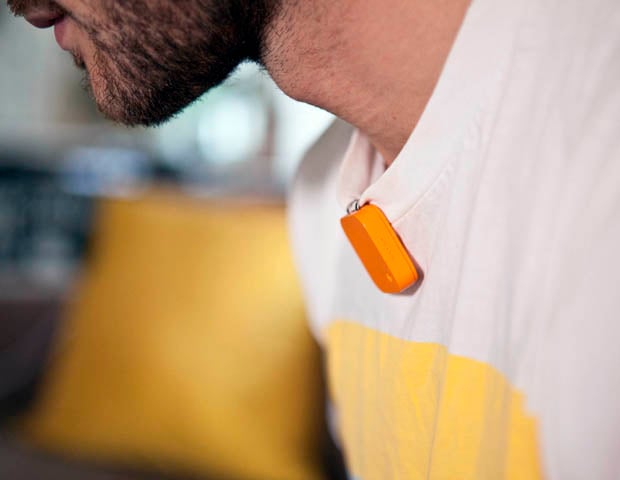
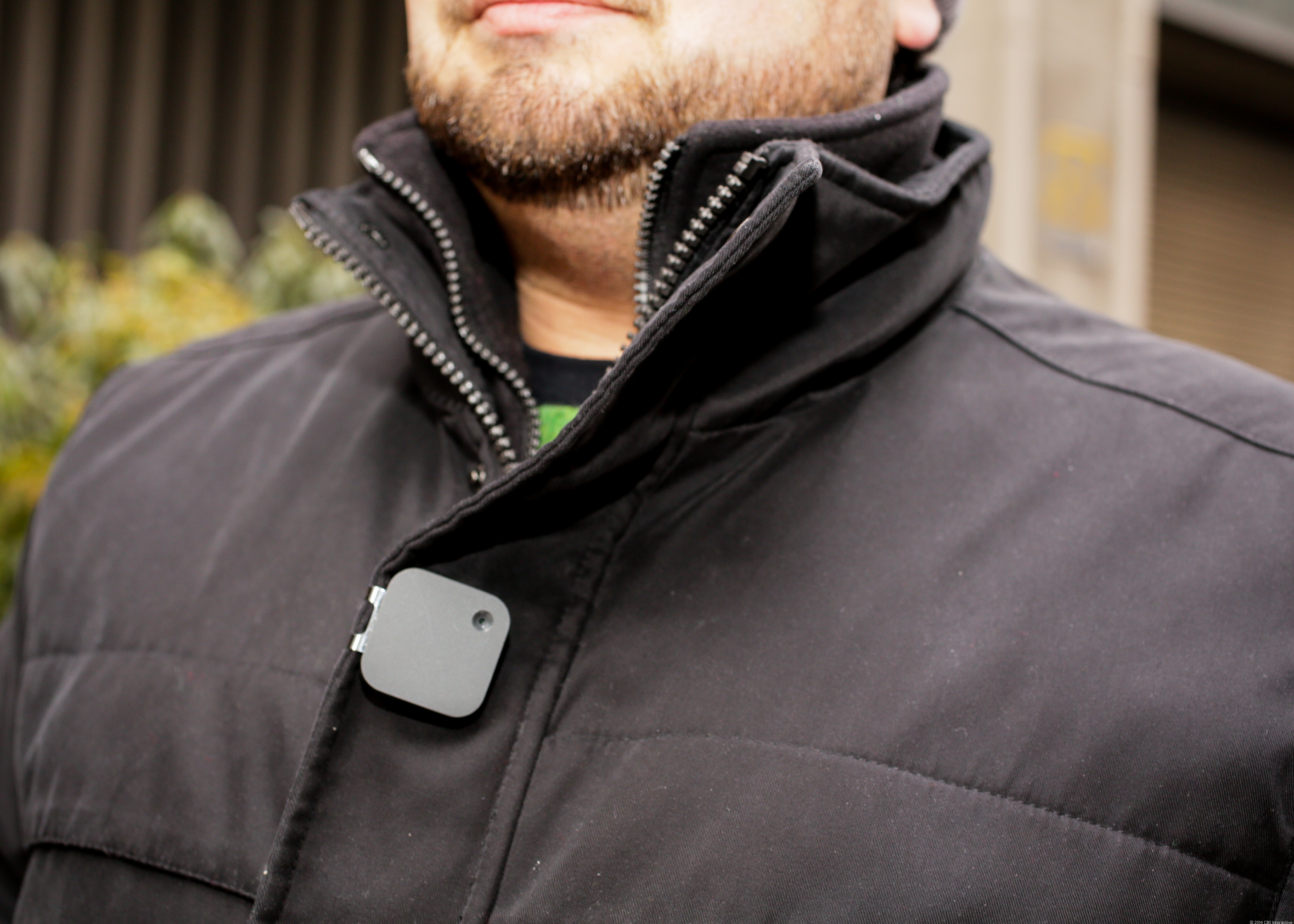
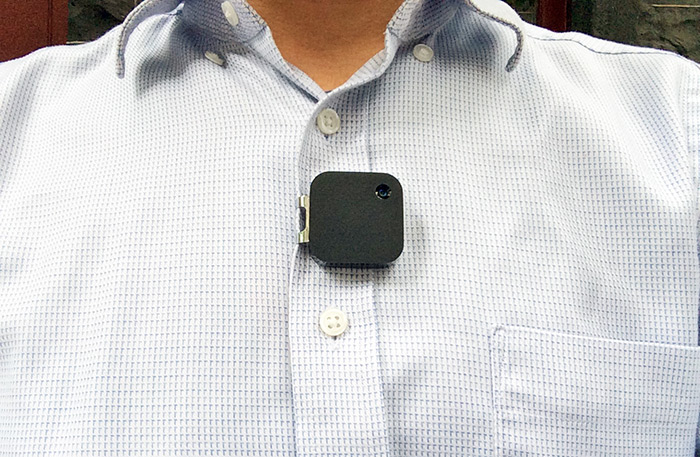
The Narrative Clip 1 — born as the Memoto camera on Kickstarter in October 2012 — was a postage-stamp-sized, 5-megapixel wearable that clipped to a shirt and took a photo automatically every 30 seconds, with no shutter, no viewfinder, and no off switch beyond removing it or turning it face-down (kickstarter-com ↗, petapixel-com ↗). It shipped to backers in late 2013 after nearly a year of delays, retailed at $279 in white, gray, and orange, and by the time production stopped had been built in exactly 25,000 units (techcrunch-com ↗, ▶ 19:48). Reviewers were consistently torn on it — genuinely charmed by the idea of an automatic photographic memory, consistently let down by grainy low-light photos, a narrow field of view, and a battery that rarely matched the spec sheet (wired-com ↗, cnet-com ↗) — while the device itself became a small, contested object in the culture's early argument about wearable cameras, privacy, and what "always recording" should look like. For the company-level story — funding, the Memoto→Narrative rebrand, the 2016 bankruptcy — see Narrative.
Specs at a glance
- Sensor & lens: 5-megapixel OmniVision sensor (the same sensor used in the iPhone 4), F2.8 aperture (later F2.4 as a Kickstarter stretch goal), no flash, no focus control, roughly 70° field of view — about half of human peripheral vision. ▶ 1:18, istartedsomething-com ↗
- Sensors: GPS (CellGuide one-chip receiver), LIS3DH triple-axis accelerometer (also used to auto-orient photos and to trigger a manual shot via double-tap), and a magnetometer/compass. ▶ 3:20, cnet-com ↗
- Compute & storage: Atmel SAM1891 ARM processor, SRAM buffer, 4GB (later 8GB) flash soldered directly to the board — enough for roughly two to three days of continuous shooting, generating about 2GB of photo data per user per day. ▶ 1:40, ▶ 1:24
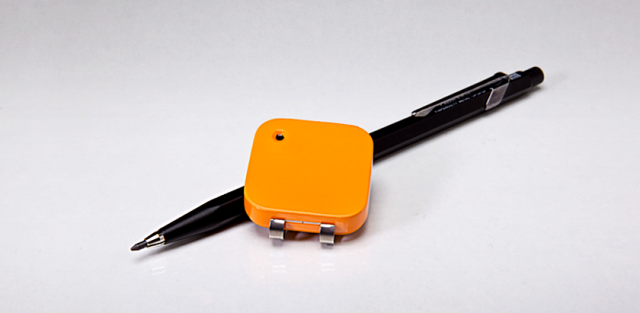
- Body: 36×36×9mm, weather-resistant, no physical buttons beyond the double-tap trigger, four status LEDs, charged and synced over micro-USB only — no Wi-Fi or Bluetooth, and deliberately no GSM chip, to protect battery life. ▶ 2:57, ▶ 4:27
- Battery: rated for roughly 30 hours / two days per charge; several reviewers found real-world life fell short of that. fastcompany-com ↗, mobilesyrup-com ↗
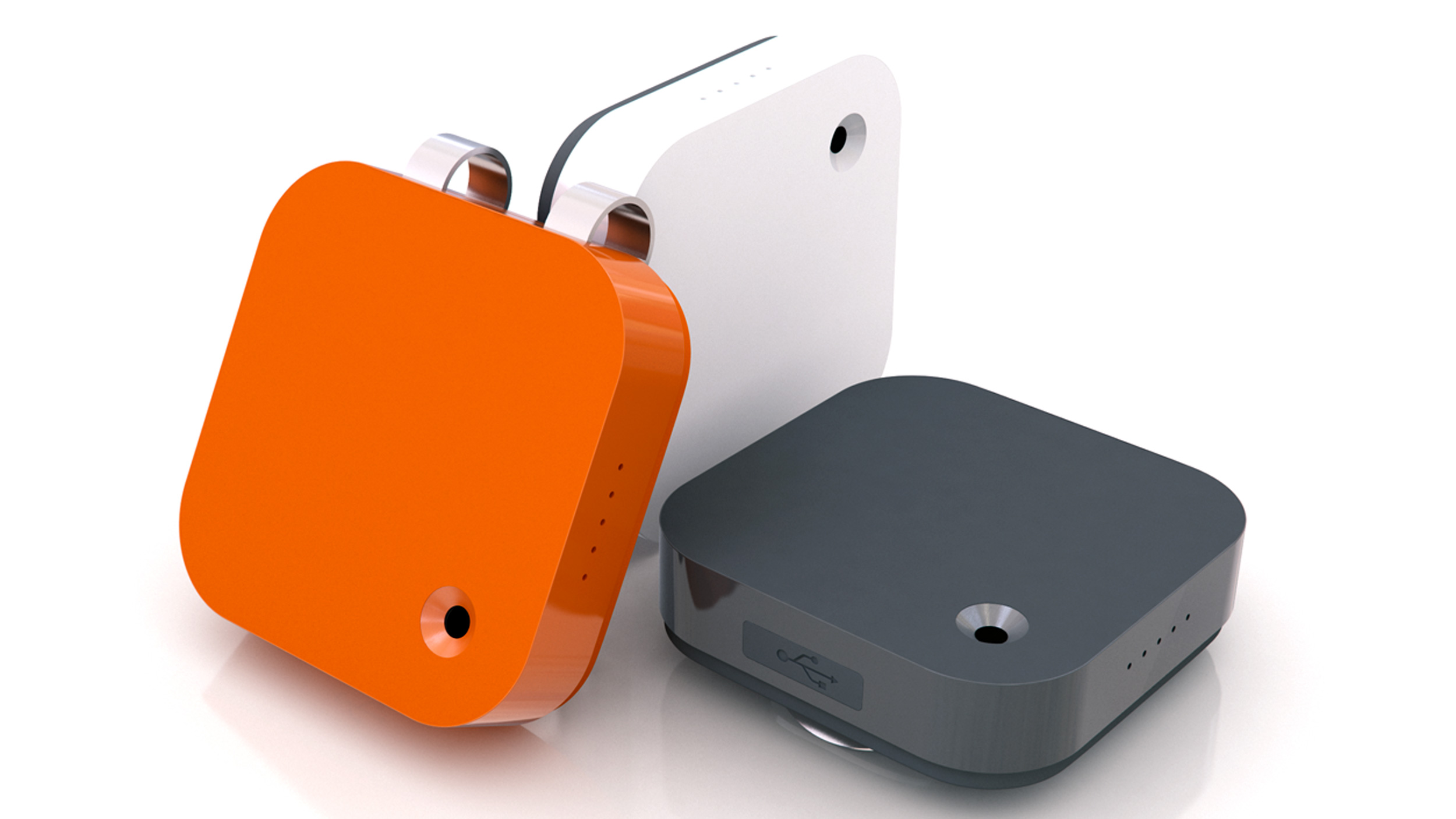
- Price & colors: launched at $279 (backers sometimes cited $150 pre-order pricing), in Arctic White, Graphite Grey, and Memoto/Narrative Orange — Kickstarter backers got black by default. kickstarter-com ↗, engadget-com ↗
Inside the box: engineering under real constraints
The GPS antenna's echo chamber. The team's first GPS antenna was a 2×3mm design etched directly onto the PCB — flawless on the bench. Sealed inside the actual camera casing, the metal shell turned into a resonant echo chamber and killed the signal outright. Swedish antenna specialists were brought in to redesign around a wire antenna, and components were shuffled iteratively across the board until the interference cleared. slashgear-com ↗, allthingsd-com ↗
A camera built around a 6.5-year-old sensor. Answering a question on how startups choose hardware, Martin explained the choice is less about the best spec on paper than what a small company can actually source and get supported. The Clip 1's image sensor was already about five years old when design started in 2012, and roughly 6.5 years old by ship date — a technology-access penalty he said only eased once Narrative became a recognized brand able to reach newer components. ▶ 37:45
- The mechanical design took two engineers and one industrial designer four months to finalize into a production-ready, weather-protected casing, using an 8-layer high-density-interconnect PCB with laser-drilled vias to pack fine-pitch components into the tiny body. kickstarter-com ↗
- The team commissioned outside expert reviews of the PCB from specialists in power management (the Anoto pen's creator), build quality (a Mutewatch engineer), and GPS/antenna design. kickstarter-com ↗
- A supplier's chip-installation error pushed the promised February–March 2013 delivery to April, one of several slips backers absorbed before the camera actually shipped that November. forbes-com ↗, ▶ 2:45
- CTO Björn Wesén later said the software — specifically the cloud algorithms sorting through thousands of daily uploads to pick the best shots — proved harder to build than the hardware. blogs-wsj-com ↗
- By October 2013, not one line of the original prototype code or hardware remained; the team rewrote the whole stack gradually as the early builds proved unable to scale, without ever formally deciding to start over. ▶ 54:12
The software: turning random photos into "moments"
Two photos a minute, all day, produces something closer to raw material than a photo album — Narrative's answer was a cloud pipeline that clustered roughly 2,000 daily images into 20–30 "moments" per day using light, color, and GPS signals, then surfaced one representative photo per segment. fastcompany-com ↗, slashgear-com ↗
- Photo selection ran on a custom scoring stack: sharpness, color saturation, face detection, and a bespoke composition/symmetry score, plus color-histogram clustering to separate one event from the next. ▶ 11:44, ▶ 10:19
- The app presented photos as a flipbook-style timeline with timestamps and geotags, synced only when connected — not a continuous stream the way Google Glass worked. wired-com ↗
- The Android app trailed the iOS build, delayed by limited software engineering resources at the time. betakit-com ↗
- Martin deliberately shipped without search, a finished Windows uploader, or GPS browsing rather than delay further — hardware deadlines don't bend the way a software feature list can, and he judged real users would teach the team more than more months in the lab. slashgear-com ↗
- The algorithm's picks didn't always match what a wearer actually remembered as significant — a mismatch one Fast Company reviewer felt directly, concluding after weeks of use that she preferred her own memory to the algorithm's. fastcompany-com ↗
Designing an honest camera
Solving the third-eye problem. Early prototypes centered the lens on the device, which testers instinctively read as an eye — people found it distracting and some avoided conversation with whoever was wearing it. The team's fix was to shift the lens into a top corner, which read as far less confrontational and was "much more pleasing to people." ▶ 21:38, fastcompany-com ↗
That single redesign carried the whole philosophy behind the object: a circular, centered-lens prototype had actually been chosen first because it made recording obviously visible and hard to disguise as covert surveillance — the eye problem was an unintended side effect of trying to be honest, not of trying to hide. The corner-lens rounded-square that shipped kept a silver ring around the lens deliberately styled after the iPhone 4 (and, for Clip 2, the iPhone 6) specifically so bystanders would recognize it as a camera on sight. fastcompany-com ↗
- The industrial designer came from Nokia, with prior wearable-device experience; Martin later described the whole exercise as service design — treating the full experience, not just the object, as the design problem. ▶ 20:47, ▶ 7:38
- Color choice doubled as a privacy dial: white was highly visible and easy to spot, darker orange/black versions could be worn more discreetly — buyers picked their own point on the subtle-to-honest spectrum. ▶ 23:21, slashgear-com ↗
- Martin later argued explicitly that press comparing Narrative to Google Glass got the honesty comparison backwards — his read was that Narrative's visible, unashamed design achieved a feeling of honesty Glass never did. ▶ 15:35
- Design cost real money: a 300,000 SEK grant from Innovationssystemet covered part of it, and Martin also paid the industrial designers close to 1 million SEK under a revenue-share arrangement. ▶ 33:14
From Kickstarter to shelf: a year of delays
Memoto's $50,000 Kickstarter closed at $550,189 in November 2012 — full story at Narrative — but shipping the camera took nearly a year longer than promised. An original February–March 2013 delivery slipped repeatedly: a chip-installation error pushed it from February to April, the company spent that spring rewriting software and re-engineering the GPS antenna, and the Memoto→Narrative rebrand (forced by a Motorola trademark dispute) landed in the middle of it. nbcnews-com ↗, gizmodo-com ↗
- Hardware was finally complete and factory-ready by November 2013, with backer units shipping that autumn and general pre-orders going out at $279. ▶ 3:14, en-wikipedia-org ↗, allthingsd-com ↗
- By June 2014 roughly 7,500 units had shipped; Martin later said both Narrative's hardware generations ran about a year behind their original schedules. ▶ 6:25, ▶ 17:19
- Martin openly wished the Clip had shipped sooner, given how much attention Google Glass's own rollout was pulling toward wearable cameras at the same time. allthingsd-com ↗
- By 2014 the Clip was being written about alongside the Basis watch and Moves app as part of a recognized, mainstream wave of self-tracking wearables. researchgate-net ↗
The reviews: charmed by the idea, frustrated by the object
Coverage split cleanly in two: genuine warmth for what the Clip was trying to do, and consistent disappointment in the photos it actually produced.
- Wired gave it 7/10, calling $280 expensive for what it delivered but crediting the wear-anywhere design and offline-first syncing as real departures from Glass. wired-com ↗
- Engadget rated it 3.5 out of 4, praising build quality while flagging real-world limitations. engadget-com ↗
- CNET's verdict was blunter: the Clip lacked the flexibility, affordability, and image quality to fulfill its promise as an always-on memory recorder — no flash, no focus control, and photo quality the company's own materials compared to an iPhone 4. Battery life fell short of Narrative's 30-hour claim in real use, and — a small, telling data point — the reviewer's wife made him take it off the moment he walked in the door still wearing it. cnet-com ↗
- New Atlas called the concept good but execution wildly uneven: photos that blurred easily and turned grainy in anything but good light, despite marketing claims of smartphone-camera quality. newatlas-com ↗
- MobileSyrup found the battery ran shorter than spec and the OS X uploader unreliable enough to repeatedly fail mid-sync. mobilesyrup-com ↗
- One hands-on reviewer argued the Clip's passive, always-on capture actually made for a worse social experience than Glass's on-command recording, precisely because there was no obvious moment when the camera "activated." istartedsomething-com ↗
- Digital Trends' reviewer lost his unit when the clip detached mid-review — the encrypted storage meant no one could access the photos on it — and still came away emotionally attached to the device after it helped him recall forgotten moments from a CES trip. digitaltrends-com ↗
Leo Laporte's secret month with the Clip. On his TWiT.tv show, Laporte revealed he'd quietly worn a Narrative Clip on his shirt for four weeks and no one on the show had noticed. Paging through his own photo stream on air, he was visibly let down — his belly kept the camera permanently tilted toward the ceiling instead of what was in front of him, and the shots themselves struck him as dull. He called the always-recording concept potentially "worse than Google Glass" on privacy, gave the Clip a hard "don't buy" on price and image quality, and said so alongside genuine praise for Narrative's founders and real gratitude that he'd backed the Kickstarter. ▶ 23:09
Living with the camera: privacy in practice
Privacy wasn't bolted on after the fact — Martin built the case for it point by point against Google Glass: Glass streamed to the web by default, risking an accidentally-public bathroom moment, while the Clip stored everything to a private diary with publication requiring an explicit, conscious choice each time. ▶ 26:07
Five years of wearing it. Martin himself wore the Clip on and off for roughly five years and was asked to turn it off only twice in that whole span — far fewer than he expected. He theorized Google Glass provoked stronger reactions partly because it felt rude to ask someone to remove their glasses, whereas unclipping a small camera felt socially normal. ▶ 19:27
Arthur Guy's review arc. A backer's own video review traced the same emotional path in miniature: delight unboxing a nicely packaged camera, then friction — GPS that didn't work indoors, gigabyte-scale daily files with no wireless sync, a wearing position that pointed the lens down when seated and up when standing, never quite forward. That gave way to real discomfort: his girlfriend refused to be in the same room while he wore it, and he acknowledged the device could "really freak people out" even while defending it as fundamentally personal-use technology. ▶ 2:07, ▶ 8:55
- No off switch by design — the camera stopped only when removed or set face-down, forcing a visible, deliberate act rather than a silent toggle. fastcompany-com ↗
- In practice, most strangers reacted with curiosity rather than suspicion when they noticed the Clip — though wearing it in intimate spaces like locker rooms bothered wearers themselves, independent of how anyone else felt about it. slashgear-com ↗, fastcompany-com ↗
- Multiple commentators flagged the same structural risk from the other direction: the Clip recorded continuously in bathrooms, gyms, cinemas, and bedrooms with no obvious external cue that it was doing so — a bigger blind spot, in their view, than a device like Glass that at least looked like a recording gadget. ▶ 26:42, ▶ 20:25
End of the line: 25,000 units
From 25,000 units to a succession of tens. Asked what happened after the Kickstarter-funded first product shipped, Martin revealed the first-generation Clip was manufactured in exactly 25,000 units before the company closed the line down and moved to Clip 2. He framed hardware startups as moving from an R&D phase into a sales-driven one, sketching an implicit roadmap in orders of magnitude — 25,000 for generation one, ideally 250,000 for generation two, 2.5 million for generation three — with no clean line marking when that transition actually happens. ▶ 19:48
- Combined, Clip 1 and Clip 2 sold roughly 35,000–40,000 units before the company's 2016 near-collapse. techcrunch-com ↗, engadget-com ↗
- Clip 2 (CES 2015) directly answered the Clip 1's most-repeated complaints: the sensor jumped from 5 to 8 megapixels, the field of view widened to 90°, and it added Wi-Fi/Bluetooth sync, adjustable capture intervals, and a removable clasp at $199. See Narrative Clip 2.
Worth remembering
- Memoto debuted publicly at TechCrunch Disrupt San Francisco in 2012, before Google Glass was even announced — press would spend the next several years comparing the two anyway. istartedsomething-com ↗
- The lifelogging idea the Clip commercialized traces to academic prior art — Steve Mann's work at MIT and Gordon Bell's SenseCam project at Microsoft, the latter partly motivated by his wife Gwen's Alzheimer's and the hope continuous photos could support failing memory; researchers explicitly framed Memoto, Autographer, and Glass as the first consumer generation of that lineage. ▶ 24:26, researchgate-net ↗
- The moment you want to describe. Martin illustrated the whole premise with a beach scene: you're somewhere beautiful, but instead of experiencing it, you're already composing how to describe it on Facebook — pulled out of the present by the very act of trying to remember it. The Clip's promise was to remove that tax, capturing the moment automatically so a person could just be in it. ▶ 22:04
- A physical Narrative Clip now sits in the Victoria and Albert Museum's permanent collection, catalogued as a white, rounded-square camera with a black back, silver clip, and no physical buttons. collections-vam-ac-uk ↗
- One reviewer's flattest one-liner still captures the tension the device never resolved: most of daily life is boring, and reducing even the exciting parts to a photo taken automatically every 30 seconds can leave both halves feeling underwhelming. ▶ 1:21