
Memoto Kickstarter Campaign
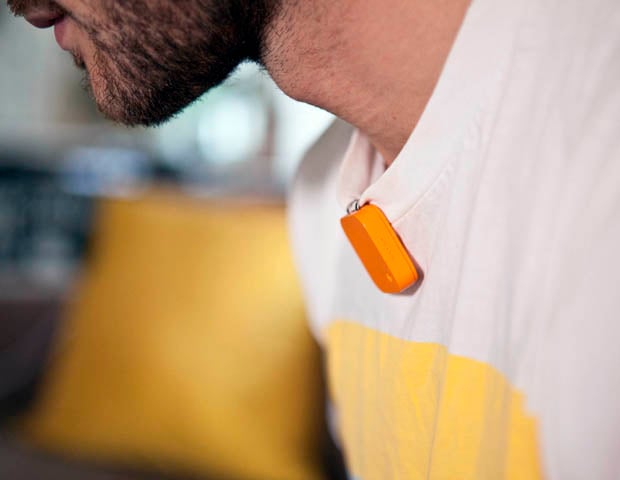
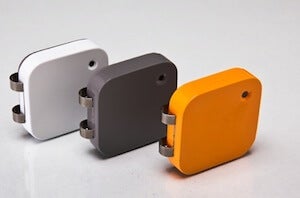
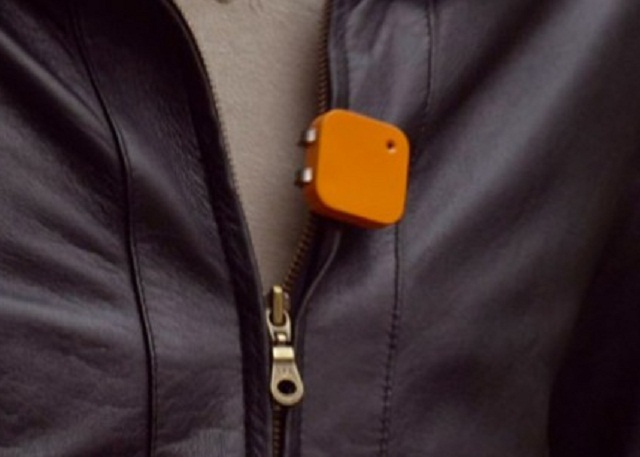
In October–November 2012, Martin Källström launched Memoto — a tiny wearable camera that would later be renamed Narrative — on Kickstarter with a modest $50,000 goal. The goal fell in five hours. A month later the campaign closed at $550,189 from 2,871 backers, more than ten times the target, and it became one of the notable hardware-crowdfunding stories of that Kickstarter era. What Martin took from it wasn't just the money: it was a lesson in multi-channel launch coordination, in how little Kickstarter money actually buys you in a hardware business, and — the hard way — in what "success" costs the day after the campaign ends.
The numbers
- Memoto's Kickstarter ran October 23 – November 21, 2012, seeking $50,000 and closing at $550,189 from 2,871 backers — about 11x the goal. Kickstarter ↗
- The $50,000 goal was reached in roughly five hours on day one. Narrative ▶ 9:48 · SlashGear ↗
- Within the first 24 hours the campaign had passed $200,000 — four times goal before day one was over. PetaPixel ↗
- Two weeks in, 1,103 backers had pledged $205,681 with 36 days still to run; by the two-week mark overall pledges reached $400,000. Singularity Hub ↗ · Kickstarter ↗
- The campaign crossed 1,000% funding on November 21, triggering a $700,000 stretch-goal push, and closed with roughly 2,800–2,871 backers depending on the count used. Narrative Blog ↗ · European CEO ↗
- Counting Kickstarter plus continued Memoto.com pre-orders that followed the same terms, total commitments approached $1 million. GMA News ↗ · Narrative ▶ 9:48
Launch day
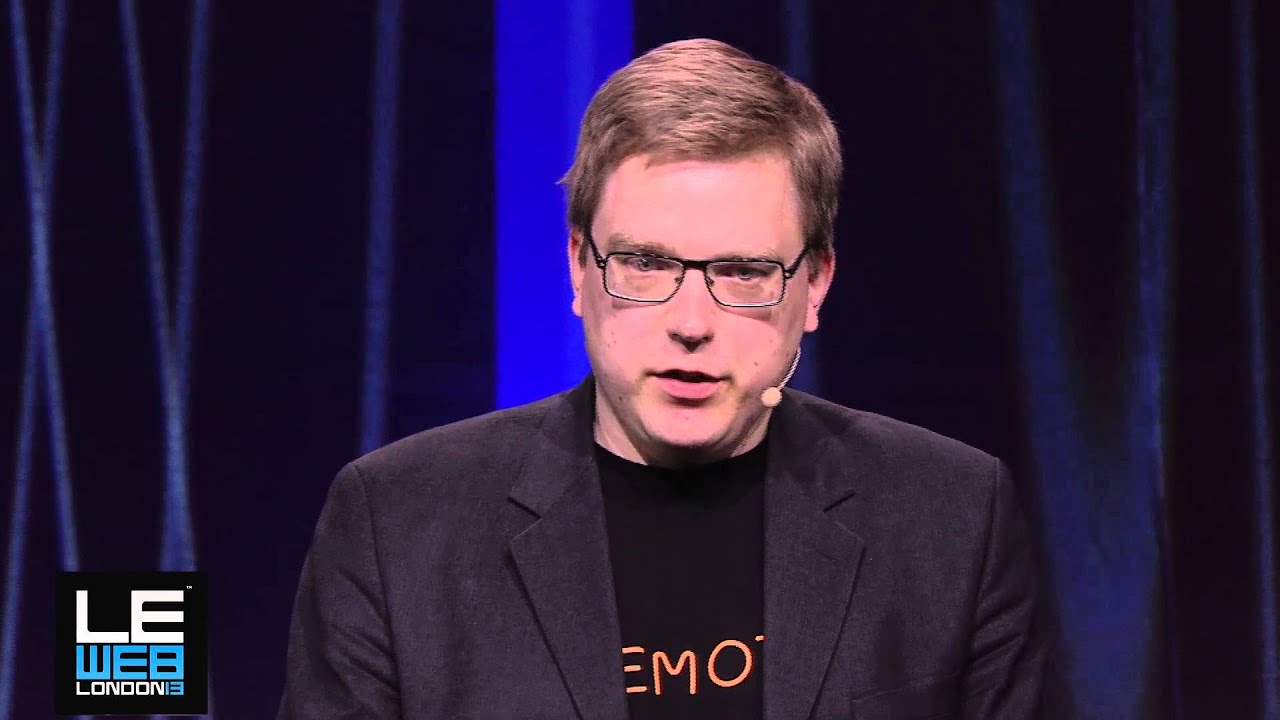
The Kickstarter Launch. Martin describes setting an alarm to publish the campaign page at 7am from his sister's apartment in Stockholm while the team gathered elsewhere. Within a minute of going live he got an email announcing the first backer — so fast he was surprised, since it seemed too quick for anyone to have watched the pitch video. Backers then kept arriving continuously; the $50,000 goal fell in five hours, and by a month later the campaign had raised $500,000 on top of another half-million in pre-orders. ▶ 8:30
Built for momentum: the pre-launch groundwork
The speed of the launch wasn't luck — it was assembled in advance:
- A year of product and app development preceded the campaign; Kickstarter's job was to fund manufacturing of the first 1,000 cameras, because the seed round hadn't covered full production costs. Golem ▶ 1:19 · The Next Web ↗
- Memoto had raised seed financing from Passion Capital in London beforehand, and used Kickstarter as a go-to-market and validation channel rather than the primary source of funding. Smart Monkey TV ▶ 3:13 · Web Summit ▶ 11:08
- Before launch, the team built critical mass through a mailing list, a Facebook event with 2,500 people waiting to engage the moment the page went live, and relationships with journalists. Crowdculture ▶ 3:05
- Nine tech blogs were coordinated to publish simultaneously with the Kickstarter launch — Martin's framing was that a multi-channel launch isn't about picking one platform but making every channel fire in unison. LeWeb ▶ 17:38 · LeWeb ▶ 18:03
- Narrative also drew on an outside network of suppliers and PR professionals who helped set the campaign up, and was unusually transparent about pre-campaign supply-chain prep — something Martin noted most Kickstarter projects skip. Web Summit ▶ 10:09 · Web Summit ▶ 11:08
- Media context: Pebble Watch was the most recent big hardware Kickstarter success before Narrative, leaving an opening in press attention that Memoto's launch stepped into. Startuppodden ▶ 51:01
Pricing and pledge tiers
- Early-bird backers could get the camera for $199 (versus a planned $279 retail price), including a one-year web-service subscription; a mid tier sat at $249. TechCrunch ↗ · The Verge ↗
- The first 1,000-unit batch at $199 carried an estimated February 2013 ship date. Charbax ▶ 3:07
- Early backers also got complimentary data storage; the plan was to charge later customers a monthly fee once the free tier ended. Fast Company ↗
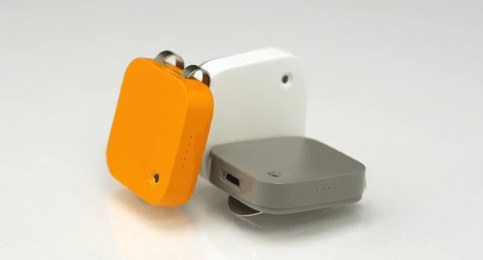
- At launch the camera was specced with 2 days of battery life and 2 days of on-device storage. Arthur Guy ▶ 3:23
Stretch goals and the $700K accessory line
Hitting 1,000% funding unlocked a $700,000 stretch goal built around three hardware accessories, laid out in detail in a Kickstarter update:
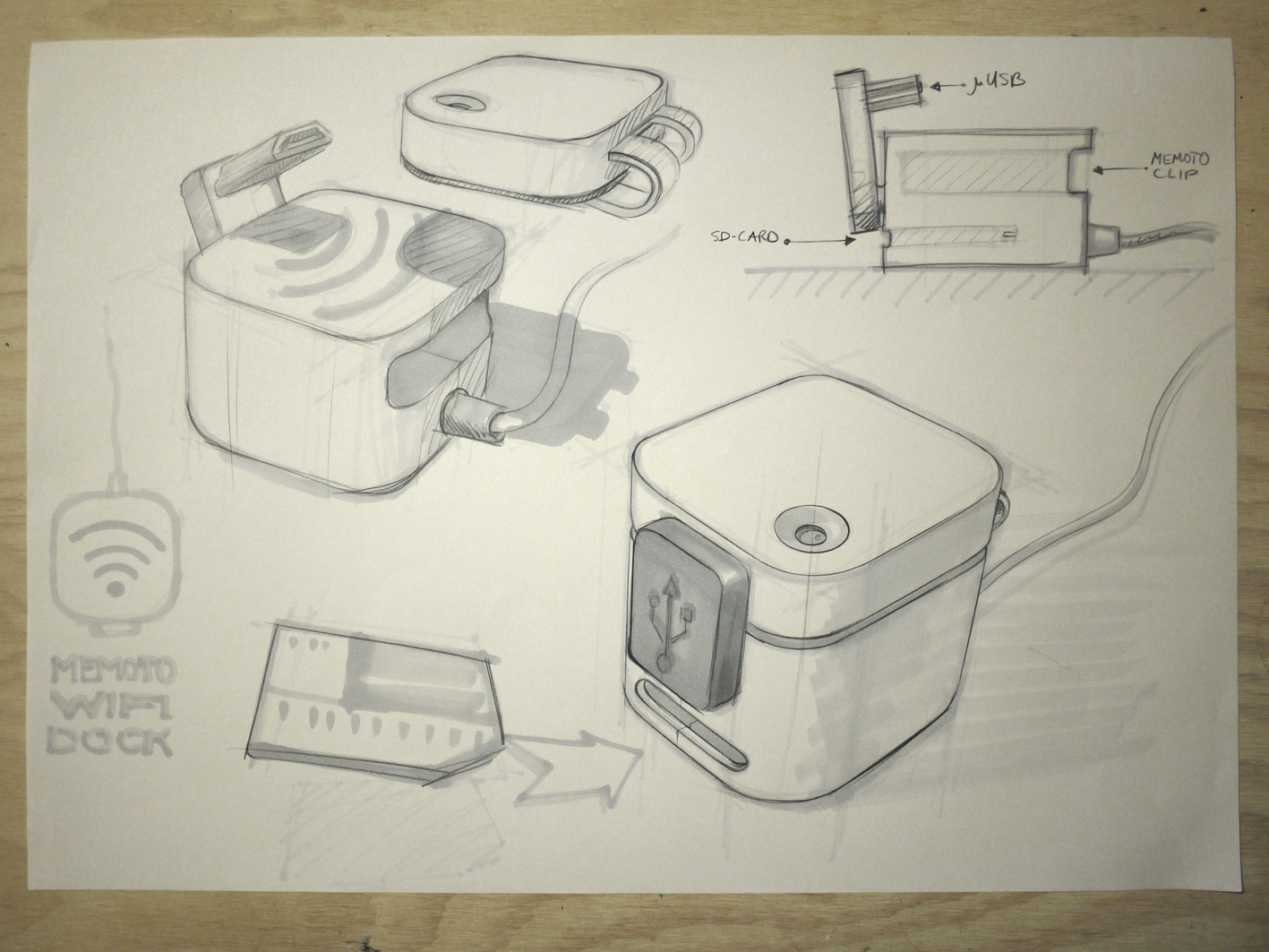
- A Wifi Dock (~$79 list, 10% off for backers) with wireless charging and syncing plus an SD-card slot for offline storage — in practice a near-standalone embedded computer (processor, WiFi chip, RAM, firmware flash, DC adapter), which is why it was costly and slow to build.
- A waterproof case (~$35 list, 10% off for backers).
- A 135-degree wide-angle lens add-on, offered either as a full front cover or a corner snap-on.
Rather than build these features into the core camera, Memoto chose to ship them as separate accessories — keeping the camera simple and avoiding a delay to the promised February 2013 ship date. By early February 2013 they were roughly 100 cameras short of the $700K mark, counting both Kickstarter pledges and continuing Memoto.com pre-orders (which the team kept open after the campaign specifically to help close that gap). Kickstarter ↗ · Narrative Blog ↗
Success brings a crisis
Narrative Kickstarter and the customer support crisis. Martin describes the campaign's success as exciting but not what the team was prepared for: the moment it closed, an overwhelming wave of customer-support requests hit, and the small team had to work around the clock just answering messages on Kickstarter and elsewhere. It became a formative lesson — that planning for a crowdfunding win has to cover post-launch support operations, not just product development and manufacturing. In Martin's words: "What we weren't at all prepared for was the overwhelming customer support load that immediately comes with a crowdfunding success. We had to spend 24 hours a day just answering messages on Kickstarter and outside." ▶ 11:33
What Martin took away
- Once a campaign is live, the product is frozen in practice. Backers have conflicting preferences, and trying to change the product mid-campaign just trades one group's satisfaction for another's. Web Summit ▶ 15:50
- Kickstarter's own rules shape what you can offer. By the time of Memoto's campaign, Kickstarter had tightened its hardware guidelines to stop reward tiers from bundling multiple units of the same product (a "Bride and Groom" two-camera package, for instance) — a rule change traced back to Pebble Watch backers circumventing quantity limits through bulk-purchase rewards. Crowdculture ▶ 10:02
- Kickstarter money isn't free money — treat it as a manufacturing bridge, not a runway. The campaign existed specifically because the seed round didn't cover full production of the first batch.
- Support load scales faster than the team does. The post-campaign crisis (above) reshaped how Martin thought about staffing for a launch.
- Years later, Martin was advising other hardware founders directly — running Skype calls on Kickstarter preparation and grouping the recurring problems into three buckets: getting pre-launch setup right, fixing an underperforming campaign mid-flight, and handling the customer-support wave after a win. Web Summit ▶ 12:38
Worth remembering
- The team got a plug on The Colbert Report during the campaign and actively encouraged backers to share it — an early, offbeat piece of the media strategy. Kickstarter ↗
- Just how consistently the numbers were repeated across the tech press — "$50K goal, five hours, ~$550K total, ~2,871 backers" shows up almost verbatim in dozens of outlets over the following two years — is itself a small case study in how one well-told crowdfunding story propagates through media coverage long after the campaign closed.
- The company (and camera) went by "Memoto" throughout the campaign; the rebrand to Narrative didn't come until the product was ready to ship, about a year later. See Narrative for what came next — the $3M and $8M rounds, the Narrative Clip launch, and the 2016 shutdown.