

AI adoption & society
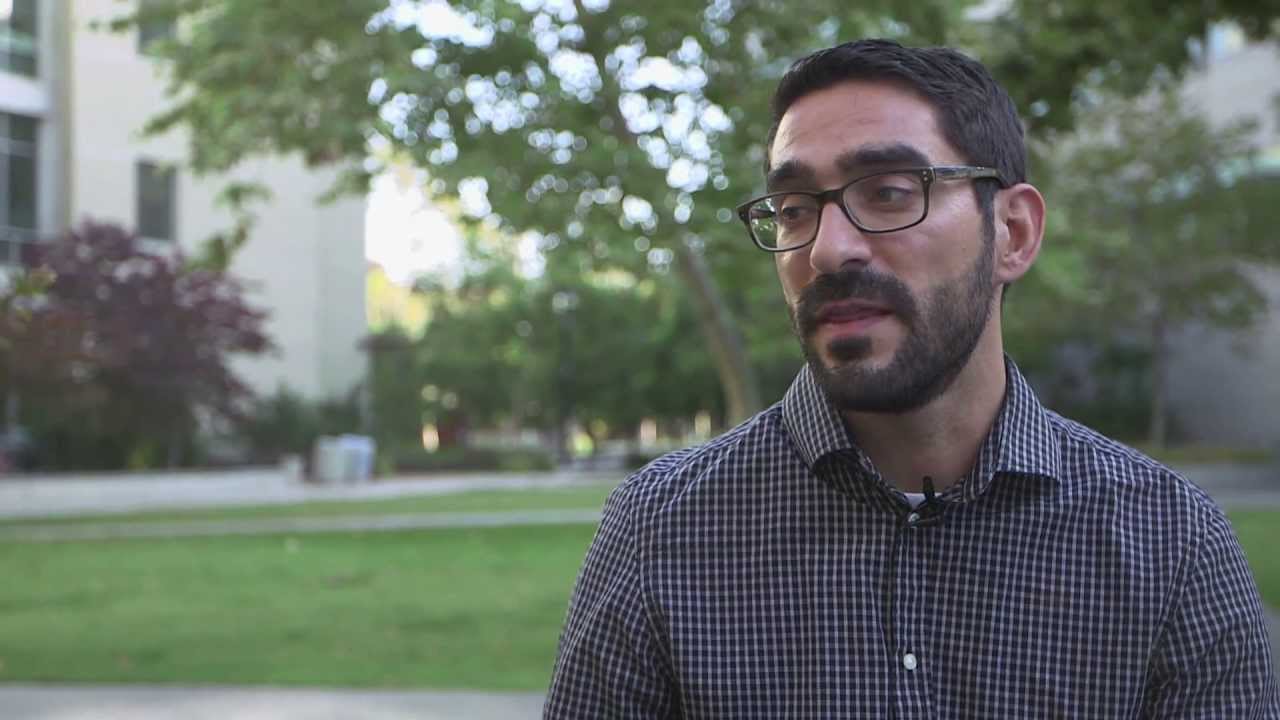
Martin has narrated AI's climb from novelty to infrastructure almost in real time, first as a weekly voice on Co-Creating with AI through 2023–2024 and, a decade earlier, as a lifelogging founder thinking about how the internet was reshaping human connection. The throughline across both eras is the same: hype consistently outruns real penetration, interfaces matter more than raw model capability, and the winners will be whoever builds the "glue" — process, structure, orchestration — around intelligence rather than the intelligence itself. Despite covering an industry that reinvents itself every few months, Martin's core claim barely moves: adoption is a human and organizational problem first, a technical one second, and staying optimistic about the outcome is "the only way to actually create positive change." ▶ 23:48
The hype gap: how fast is AI actually spreading
Martin's most repeated data point cuts against the mainstream narrative of an AI takeover: as late as mid-2023, only about 2% of the US population had even tried ChatGPT, and actual penetration among knowledge workers doing real work with AI was closer to 1–3%. ▶ 29:42 A year later ChatGPT had reached roughly 50% trial penetration in many Western age groups — but most trial users never converted to retained ones, largely because the quality of the first response wasn't good enough to earn a second visit. ▶ 8:01 He frames this with a general principle about transformative technology: it is reliably overestimated in the short term and underestimated in the long term. ▶ 13:01 Super Bowl 2024 was saturated with AI ads — Microsoft Copilot, Google Pixel, AI-generated recipes — yet the visible hype outpaced any actual change in daily behavior, the same trajectory crypto ads followed in 2022 before fading. ▶ 2:42
The gap between users and non-users isn't neutral, either. Martin argues AI adoption creates real inequality between early and late movers, and speculates that some people who've gained a competitive edge from AI may deliberately spread fear-based narratives to discourage others from catching up. ▶ 26:01 ▶ 26:26 He predicted laggards would shift from denial to fear through 2024 as capabilities proved themselves, requiring companies to communicate AI's human value more deliberately. ▶ 10:52 On the engineering side specifically, he later reported real resistance among engineers against adopting AI coding tools — some actively discouraging colleagues and dismissing AI-assisted engineers as "no longer real engineers" — which he reads through a Luddite lens: fear of a technology that's actually expanding the field, not shrinking it (Jevons' paradox: even at 10x individual output, total software demand is so large that hiring keeps rising). ▶ 15:38 ▶ 19:10 ▶ 13:34
Learning to see through the hype
One episode became a case study in Martin's method for separating real capability from marketing. He argues the central discipline for staying current on AI is distinguishing what's actually real from what's merely hyped — hype, by definition, means the promise exceeds the reality — and that hands-on testing is the only trustworthy way to evaluate a claim. ▶ 15:12 ▶ 30:54 The evidence he'd gathered that week was damning: he'd discovered a research paper where few-shot learning researchers hid expected results inside their own test code to inflate benchmarks — a fraud that came out of a "serious" university–Harvard collaboration, suggesting institutional pressure to publish drove the deception. ▶ 7:41 ▶ 8:32 A fine-tuned LLaMA model called "Reflection" turned out to actually be Claude wrapped behind an API with instructions to hide its identity, iteratively re-released to conceal the deception as it was caught. ▶ 14:19 Groq shipped Black Forest Labs' Flux model as if it were their own. ▶ 2:50 And after two weeks of hands-on testing, Martin found Cursor Composer genuinely reliable for single-file edits but prone to replacing working code with placeholders once a project grew complex — real capability and hype sitting side by side in the same product. ▶ 18:09 ▶ 20:22 Hype doesn't just mislead consumers, either — Martin and co-host Rasmus argue it distorts how startups implement AI, pushing teams toward architectures that feel reasonable under the hype but are irrational once you separate promise from reality. ▶ 27:19
From chat to voice to invisible interfaces
The chat interface was the innovation that mattered — but it won't be the last one. Martin traces mainstream AI adoption to a single UX decision: GPT-3 sat publicly available for roughly a year with no breakthrough, and only exploded once ChatGPT wrapped it in a chat interface that let humans and models share context in a format both understood. ▶ 35:37 But he's consistently argued chat is a floor, not a ceiling — like the command-line terminal before graphical interfaces, it has an inherently low upper adoption limit, and it's structurally misaligned for real collaborative work because it can't represent the structural and modal diversity that actual tasks require. ▶ 35:48 ▶ 10:26
His candidate for the next mass-market interface is voice: speech-to-text was already "solved," he argued in late 2023, with text-to-speech emotional expressiveness the remaining frontier, and voice would surpass chat's reach by leveraging humans' existing comfort with talking on the phone. ▶ 26:06 The open-source breakthroughs that made this possible — OpenAI's Whisper for speech-to-text and the Tortoise TTS library, later forked into commercial services like ElevenLabs — did the foundational work; ElevenLabs' own conversational API later matched OpenAI's Advanced Voice API at lower cost. ▶ 16:08 ▶ 18:09 When GPT-4o shipped a free voice tier with GPT-tool access in mid-2024, it effectively displaced an entire category of voice-AI startups (VAPI, Retell, SynthFlow, Bland) that had been charging around $12/hour for comparable capability. ▶ 24:54 ▶ 24:37 ▶ 31:59
Beyond voice, Martin's larger bet is that AI stops living in any dedicated window at all. He wants AI inside the platforms people already use — Slack, not a standalone chatbot — and expects command-based software to give way to intent-based interaction, with UIs commoditized and APIs (or no interface at all) replacing them as the functional layer. ▶ 23:37 When Anthropic shipped Computer Use in late 2024, he called it a genuinely game-changing capability — rendering many web-agent startups obsolete overnight by giving agents a stable way to operate the software built for humans — and sided with Anthropic's vision (APIs eventually disappear because agents can just use human software) over Auth0's competing bet on a purely API-driven future. ▶ 13:46 ▶ 17:02 That same shift, he and Rasmus argued, eliminates repetitive copy-paste work between systems, though genuinely high-throughput, machine-speed operations will keep needing traditional APIs. ▶ 11:11 ▶ 14:30
The economics of falling intelligence
The cost of AI intelligence has been falling by roughly an order of magnitude every year, with no end in sight — and that trend, more than any single model release, is the real story. ▶ 23:48 Andrew Ng put a number on it: generating an hour of reading material cost about 8 cents by late 2024, with a path to 0.1 cents within years. ▶ 5:04 Martin had already concluded a year earlier that cost optimization itself was becoming almost irrelevant next to just delivering value, given a ~90%-per-year price collapse. ▶ 5:26 Mistral's models reached GPT-3.5 Turbo parity at 40% lower cost; Meta committed $40 billion to AI in 2024 and released much of it as open weights — an unprecedented scale of open-source funding that let Martin marvel that models trained on hundreds of thousands of GPUs were nonetheless being matched by open alternatives. ▶ 7:52 ▶ 25:54 ▶ 9:49 ▶ 15:06
Underneath the cost curve sits a harder question Martin keeps returning to: who owns the data. He calls it the central economic and moral question of the AI era — a widening gap between legal frameworks and technological reality — and notes that "data is the new oil" only holds if the data stays privately owned and concentrated; once it's widely available, it loses its competitive value. ▶ 3:08 ▶ 14:44
Work reorganized: assistant today, coworker tomorrow
Through 2023, Martin was explicit that AI tools were assistants requiring one-off instructions, not autonomous coworkers — and that moving from the former to the latter was Multiply's actual product goal. ▶ 3:37 ▶ 15:36 He resisted framing this as pure replacement: AI dramatically lowers the threshold for acquiring specialized skills, letting one person become a "generalist specialist" competent across multiple domains without years of training — but competence still matters, because someone still has to evaluate, validate, and refine the output, and the bottleneck shifts from creation to judgment. ▶ 13:08 ▶ 13:52 ▶ 35:50
For professional services specifically, his consistent claim is acceleration, not automation: the disruption comes from acceleration of human expertise, and the real competitive threat isn't AI itself but competitors who deploy it faster. ▶ 3:17 A translation company he cites can hit 90% quality with AI assistance but still can't match human translators on brand voice and cultural nuance — the pattern he expects to repeat across law, accounting, and consulting: AI-native firms built with human oversight rather than full automation. ▶ 4:10 ▶ 18:53 ▶ 19:39 Klarna replacing Salesforce and other SaaS platforms with in-house AI automation is his go-to concrete example of this pattern already playing out. ▶ 27:16 His broader conclusion, echoed by a Kindship guest a year later: in nearly every job, human-AI collaboration outperforms either working alone. ▶ 29:26
Building AI that can be trusted: process over autonomy
Reliable AI applications come from strong human process wrapped around the model, not from the model alone. ▶ 21:02 Martin's engineering conviction — echoed across dozens of episodes — is that current industry incentives favor speed over quality, but AI systems need "permission to be slow": more compute budget and more time to reason produces more robust results than a single fast pass. ▶ 32:28 He treats hallucination as partly a terminology problem — AI producing creativity when facts were requested, rather than a fundamental technical flaw — and argues most "AI is unreliable" complaints actually trace back to weak prompts, too few iterations, or thin source material, i.e. procedural failure rather than inherent limitation. ▶ 14:13
This isn't abstract for him — he's hit the unreliability directly. Newer versions of Whisper (V3) hallucinated more than the older V2, leading him to recommend V2 or fine-tuning it instead of chasing the newest release, and Google's real-time speech-to-text API produced Swedish output that mixed in Norwegian and Dutch despite being documented as supporting Swedish. ▶ 34:18 ▶ 33:44 As models get smarter, though, he expects the scaffolding needed around them to get thinner — and is skeptical of multi-agent frameworks specifically, because errors compound across chained steps in ways a single more-capable model avoids. This is also why he sees OpenAI's original design choice to keep humans in the approval loop, rather than let agents act fully autonomously, as deliberate and correct.
Platform wars: who captures the AI layer
Martin reads OpenAI's strategy as platform-first: ChatGPT itself functions as an internal learning and testing engine for a company building tools directly into the ecosystem rather than waiting for third parties to integrate — reversing the usual pattern where toolmakers build AI in after the fact. ▶ 5:26 ▶ 30:01 That bet mostly paid off (Rasmus predicted AI capability would converge on a handful of dominant access points — ChatGPT, Gemini, Siri — with everything else supplementing them), though not everywhere: the ChatGPT plugin store launched with app-store-scale expectations and never became a meaningful acquisition channel. ▶ 28:12 ▶ 14:00 Big tech, more broadly, is building AI into the platform layer and operating system rather than leaving every company to bolt it on individually — which means smaller companies and service providers will need to actively maintain their own visibility so the platforms don't absorb them entirely. ▶ 9:10 ▶ 18:13
Search itself is the clearest casualty in Martin's telling. He frames the shift as one from "search" (finding) to "answer" (the completed transaction) — AI search engines becoming answer engines that execute purchases and bookings rather than surface links — with vertical AI applications able to outcompete generalized search precisely because they can go deeper into one domain's context. ▶ 4:51 ▶ 14:29 Social media companies face their own innovator's dilemma here: an ad-dependent business model can't easily coexist with conversational AI that users expect to give them direct, relevant answers instead of an ad-laden feed. ▶ 19:58 His overall prediction isn't that AI replaces existing infrastructure (Uber, Amazon, transport, commerce) but that it becomes a layer orchestrating it invisibly on the user's behalf. ▶ 21:57 In this landscape, he consistently argues that UI/UX — not the underlying model — is the most defensible layer of the stack, because foundation-model companies have little incentive to build consumer-grade interfaces themselves. ▶ 16:48
Echoes from the lifelogging years (2012–2014)
A decade before Co-Creating with AI, Martin was already making the case that society should manage the consequences of a communication technology rather than try to accelerate or halt it — a stance that reads, in hindsight, as a direct dry run for his later AI commentary. ▶ 18:31 He argued then that the internet doesn't make people smarter or dumber, it changes how the brain processes information, and that the categorical boundaries between work, school, and leisure no longer hold in a connected life. ▶ 18:06 ▶ 7:42 The real-time web, in his framing, wasn't a threat to human connection but an amplifier of an ancient impulse — the same impulse that made his grandmother furious when TV4 moved recipes off text-TV and onto a web she couldn't use, and that let his own rural childhood friendship (forced by having exactly one other child in the village) give way, for the next generation, to urban kids who could stay connected to distant friends regardless of geography. ▶ 16:44 ▶ 10:16 ▶ 9:00
His lifelogging work at Narrative (formerly Memoto) sat inside this same worldview: smart curation and algorithmic photography were framed as essential tools to extract meaningful "halo moments" from data overload, not optional extras — wearable camera technology would eventually become inevitable in society, even while it remained a genuine choice for the years immediately ahead. ▶ 11:03 ▶ 27:55 Lifelogging, he argued, was empowering precisely because it democratized the ability to create personal meaning — the kind of claim, about democratizing access to a previously scarce capability, that recurs almost verbatim in his later AI arguments about generalist specialists and the falling cost of intelligence. ▶ 21:48 See also: Narrative.
Staying human, staying optimistic
Martin treats optimism as a practical stance rather than a personality trait. Staying positive in the face of AI-driven disruption isn't just a disposition but, in his framing, a prerequisite for actually being useful — only someone who isn't paralyzed by dread can act as an instrument for shaping good outcomes, no matter how bad any particular downside turns out to be. ▶ 23:48 He'd made essentially the same argument over a year earlier: intelligence is now sufficient, and the real engineering challenge is enabling autonomy responsibly — optimism about AI futures isn't naïve, it's a precondition for creating good ones. ▶ 20:53 He does hold that AI is a different kind of technology in one respect: it brings existential and philosophical questions into mainstream discourse in a way earlier hype cycles like crypto never did. ▶ 6:41 That weight cuts both ways for builders specifically — the ease of building software with AI now carries real ethical responsibility about what actually gets built, a responsibility he pairs with an "iteration imperative": ship today, because the rate of improvement makes waiting for better tools strategically pointless. ▶ 31:27
Worth remembering
- A departing C-level executive at a large company was replaced with an AI trained on his own data; testing it, he found it remarkably reflective of his expertise but noted the AI "doesn't have bad days" — it consistently operates at his best quality, a difference Rasmus found philosophically uncomfortable in a way general workplace automation didn't trigger. ▶ 20:06 ▶ 26:18 ▶ 26:59
- Martin coined an "AI boss" concept with Rasmus: the speed and decisiveness of AI-generated product direction is pushing some companies to quietly delegate real strategic decision-making to AI systems. ▶ 3:30
- Watching a Waymo fail to handle a police officer's hand signal to swerve into a parking spot became his go-to concrete example of how far autonomous systems still are from handling social and authority cues that humans read instantly. ▶ 14:45
- Martin's philosophy of "deficient technology": skills like memorizing phone numbers or maintaining a sense of direction aren't fundamental human capacities worth preserving, they're artifacts of technology that hasn't caught up yet — Google Maps augments cognition rather than "amputating" it, even as Rasmus noted it had visibly eroded his own sense of direction while driving. ▶ 15:28 ▶ 12:35
- His warning about over-trusting AI guardrails borrows a road-safety analogy: four-wheel-drive cars are involved in 20–30% more wintertime collisions than two-wheel-drive cars, because capability breeds driver complacency — the same complacency risk he sees in leaning too hard on AI safety rails. ▶ 28:05
- He imagines "AI-native" children growing up with AI holding a complete record of their life decisions, accurate enough to predict choices 99% of the time — at which point it becomes genuinely unclear whether the person is choosing autonomously or just following the prediction. ▶ 21:12 ▶ 21:37
- Long before "agents" was industry vocabulary, Martin was picturing AI woven into daily life via an NPC metaphor: as agents get more capable and ambient, human-AI interaction starts to resemble a video game's relationship with its non-player characters. ▶ 23:37
See also: AI business & value, AI engineering practice, Kindship.