Heywear NoHo Studio
Heywear's flagship studio at 363 Lafayette Street, at Bond Street, in Manhattan's NoHo neighborhood, was the company's first public retail location and the proof-of-concept for its entire same-day model — eye exam, frame selection, and on-site lens edging compressed into a single 30-minute visit. It opened in March 2021, after roughly a year and a half of quiet friends-and-family testing, and by the end of its first year had processed over 12,000 customer visits and earned around 250 five-star Google reviews. Waitwhile ↗, French Morning ↗, INVISION Magazine ↗
Location and space
- Address: 363 Lafayette Street at Bond Street, NoHo, Manhattan — described consistently across coverage as the company's flagship. Research ↗, AC Magazine ↗
- The studio opened to the public in March 2021, following a friends-and-family beta studio the team had run since late 2019 specifically to refine the lens-cutting machinery before a public launch. Research ↗, French Morning ↗
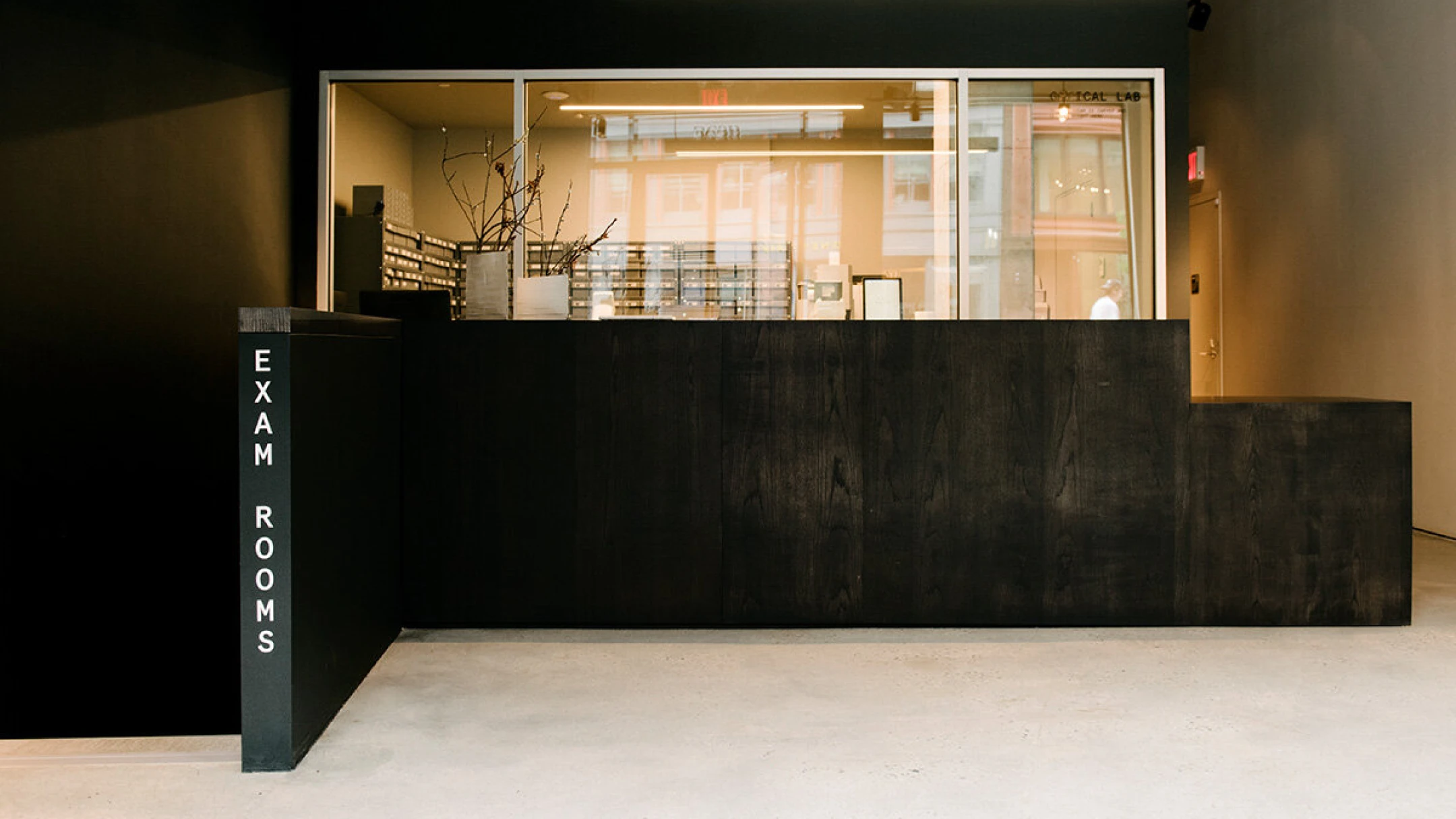
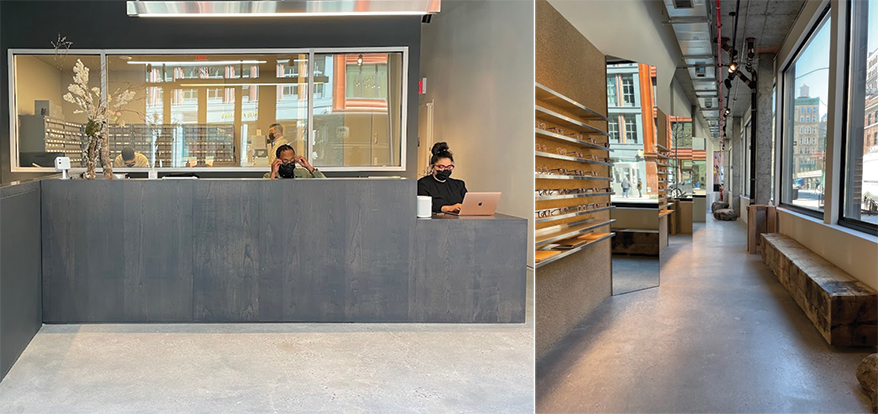
- The flagship spans 2,500 square feet across two floors, large enough to house the retail showroom, exam lanes, and a full on-site optical lab in one location — the lab itself occupies a comparatively compact footprint, about 250 square feet. WWD ↗
- Heywear ran a "hyper-local" model: the flagship's lab and inventory doubled as a manufacturing and fulfillment center for smaller satellite stores that opened later, rather than every location needing its own full lab. WWD ↗
- The studio stocked more than 3,000 distinct lens types on-site, letting it handle high walk-in volume without depending on outside suppliers mid-visit. French Morning ↗, Research ↗
- Per an AI research compilation, the interior was deliberately designed to read like a contemporary art gallery rather than a medical office, stripped of the clinical cues that make eye exams feel intimidating — a spatial-design choice credited to CENTER (and, per the same secondary source, Savvy Studio). Research ↗
- On opening, word of mouth ran ahead of capacity: customers reportedly waited several hours at the Lafayette Street studio during its first days open. French Morning ↗
The customer flow
Heywear's core operational trick was reversing the normal order of an optical visit. At a conventional store, a customer only picks out frames after finishing the eye exam. At the NoHo studio, customers selected their frames first; that let the on-site lab begin cutting and edging lenses to the prescription while the eye exam was still in progress elsewhere in the building — running frame selection, clinical diagnostics, and manufacturing in parallel rather than in sequence. Waitwhile ↗
- A walk-in customer could complete the entire process — exam, frame pick, dispatch of finished glasses — in roughly 30 to 60 minutes; WWD reported the range as "between 30 and 60 minutes of a customer walking through the door," while the Waitwhile case study described guests walking out "within the hour." WWD ↗, Waitwhile ↗
- No appointment was necessary — the studio operated as a walk-in business by design. AC Magazine ↗
- Staff used Heywear's own proprietary software (built in-house by CTO Alexandre Jais and his team) to measure each customer's face during fitting, feeding directly into how frames and lenses were prepared. AC Magazine ↗, WWD ↗
- Once a customer's frame was selected, it was sent immediately to the on-site lab, which manufactured the finished glasses to spec on the spot. AC Magazine ↗
Waitwhile and the virtual queue
Heywear partnered with Waitwhile, an outside digital queue-management platform, from the studio's opening day in March 2021, layering it on top of the company's own proprietary exam-room and lab-management software. Waitwhile ↗
- Waitwhile ran multiple simultaneous virtual queues inside a single visit, automating the hand-offs between retail associates, clinicians, and lab technicians and tracking which guest was in which channel — retail floor, exam room, or lab — at any given moment. Research ↗, WWD ↗
- Customers could choose how to spend the wait: stay in-store, or leave the building entirely — grab a coffee, run an errand — and return once notified. Waitwhile sent a text once the finished glasses were ready for pickup. Waitwhile ↗
- The stated design goal was a guest experience that was as low-touch and paperless as possible, with the queue system doing the coordination work that would otherwise fall to front-desk staff. Waitwhile ↗
- Derek Kastner, Heywear's Manager of Training and Development, praised how quickly staff could learn Waitwhile and how easily it slotted into day-to-day operations. Waitwhile ↗
Clinical equipment on the floor
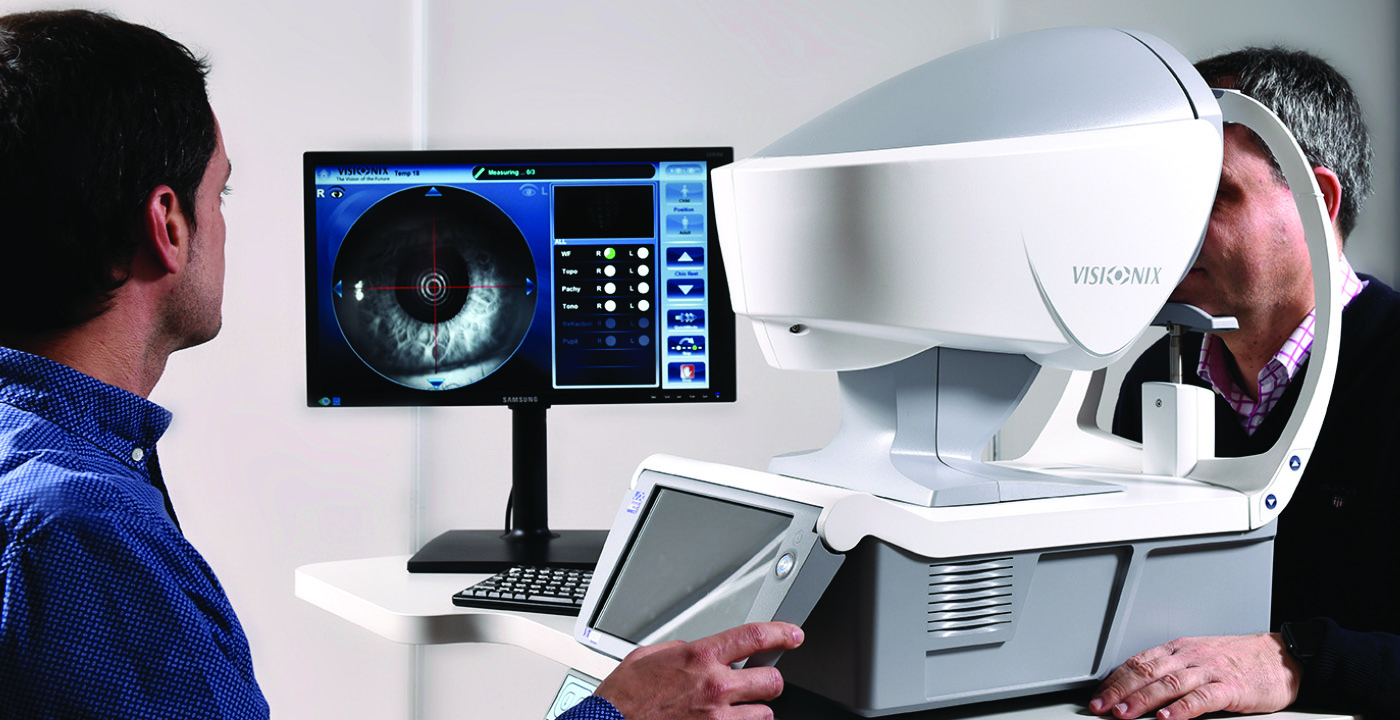
- A Visionix VX 120+ multimodal screener — installed as early as February 2019, ahead of the studio's public opening — mapped a customer's eyes in about 90 seconds: wavefront aberrometry for visual acuity, corneal topography for astigmatism, anterior-chamber-angle measurement for glaucoma risk, and cataract screening, all from one automated device. Review of Optometric Business ↗
- A second device, the Visionix VX 40 wavefront lens analyzer, sat at the service desk so staff could quickly verify a customer's existing prescription, recommend frames, and troubleshoot during high-traffic periods. Review of Optometric Business ↗
- Dr. Lilan Le, OD, Heywear's Director of Optometry Operations, held every exam lane to the same standard — identical equipment, identically trained staff, and a consistent service level — so the studio's speed promise didn't depend on which technician a customer happened to get. Review of Optometric Business ↗
What the studio couldn't do
The NoHo studio's speed was bought by deliberately narrowing scope. It did not accept insurance, did not perform contact-lens exams, did not dilate or treat eye disease, and could not fill bifocal, trifocal, or progressive-lens prescriptions on-site — nor did it serve children's eyewear. AC Magazine ↗, INVISION Magazine ↗
Frames on the floor
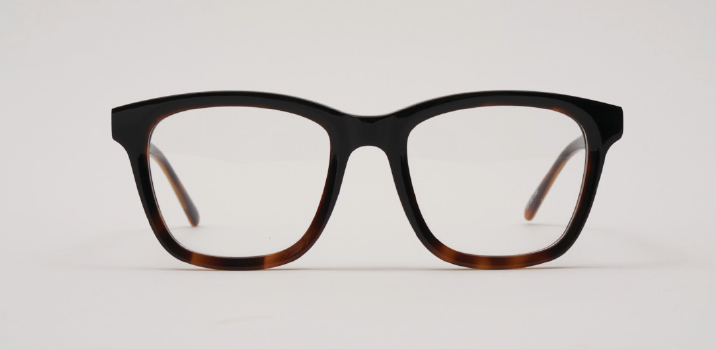
The studio launched with a proprietary collection of 33 exclusive frame designs by New York-based, ex-Warby Parker designer Selin Olmsted, available across enough color variations to yield more than 130 distinct style combinations — priced at $50–125 including prescription, with sunglasses running about $25 more and a stand-alone exam at $50. AC Magazine ↗, INVISION Magazine ↗
See Heywear for the full company story — founding, funding, leadership, and closure.