
Letters from users
Martin has a habit, when asked how Narrative was doing, of not answering with a number. He answers with a letter. Across a decade of talks the same small cast returns: a photographer in a wheelchair, a Greater Anglia train conductor, a father whose son has autism, a YouTube commenter describing a police stop, and, much later, a Dublin professor who never took the camera off. The company page carries five of these in its Real-world impact section; this page follows the letters from a train in spring 2013 to a podcast in 2023, sets them beside the usage numbers Martin was measuring underneath, and asks what they did to his definition of success.
The email that outweighed the sales figures
In October 2013, with Clip 1 about to ship, Chris Davies of SlashGear asked Martin what success would look like. He got a story: "I got an email from a photographer who'd been in a traffic accident, and she was in a wheelchair and couldn't operate her professional equipment", and the Clip meant she could express herself with photographs again. His conclusion was deliberately unbusinesslike: "if there's one user in Minnesota, whose life we have thoroughly changed, that's enough, then we're successful." SlashGear ↗
He also proposed a metric investors would wince at, "Perhaps the more interesting metric will be how many people are still using Narrative Clip in a year's time", and said what excited him most was that "The stuff people contacted us about, about how they will use the camera, has such variety". SlashGear ↗
The tellings: a train, a phone call, a comment thread
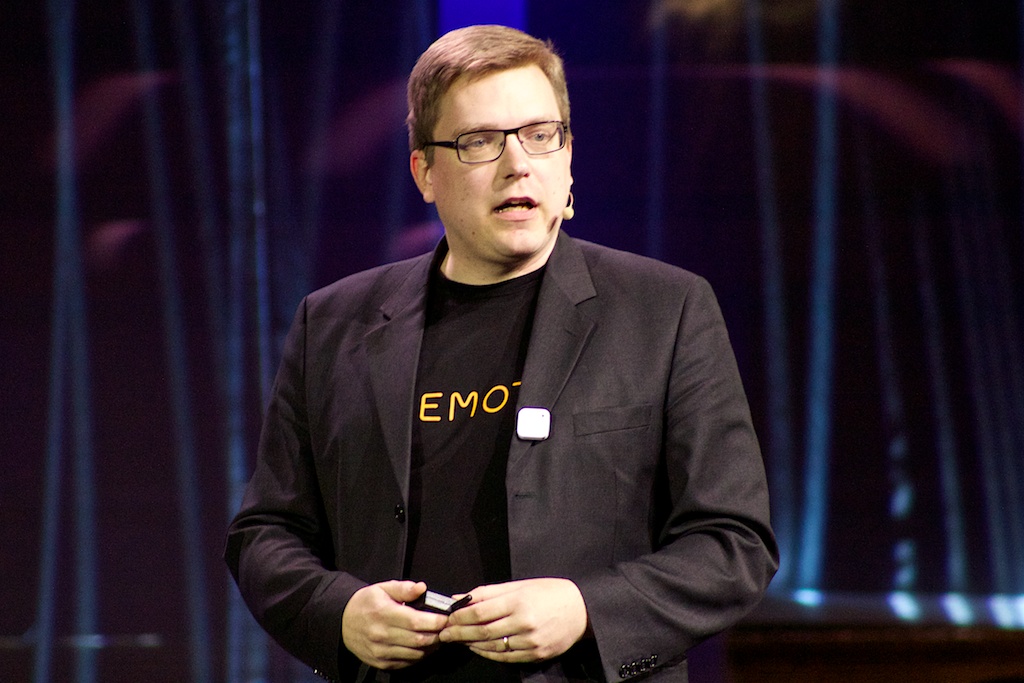
The stories were first assembled into a set piece at LeWeb London in June 2013, framed as the moment a founder stops pitching: "you go from that to a new way of life where you go around and people come up to you and pitch your idea to you". ▶ 10:44 Then the conductor. On a train from Stansted with prototypes on the table, "he actually sits down with us for 5 minutes talking about the Memoto camera" and told them to show it to his employer: "This would transform my life. Every day, or at least every week, On the train back and forth from Stansted, I am harassed by someone." ▶ 11:09 · ▶ 11:34 Next, a phone call from a father: "our son has autism, meaning that he cannot tell us in the evening what he did during the day". A digital camera in the boy's backpack had let the family have the after-school conversation others take for granted, on the rare days a photo came home. "But in reality, he never takes a photo. With Memoto, my son could start expressing what his life is like." ▶ 12:00 And a YouTube comment from a Black man in America, imagining a police officer asking where he was yesterday and answering with his Memoto photos: "I was at my sister's place playing video games. And he writes, boom, life transformed". ▶ 12:51 · ▶ 13:45 Martin used that one for a point he rarely made elsewhere: "Sometimes you really do have the right to take someone's picture without their consent". ▶ 13:45
The same three letters travelled with him. Adam Tinworth's LeWeb write-up repeated the train staff, the autistic son and the alibi. One Man & His Blog ↗ By the October 2013 rebrand they were launch boilerplate: AllThingsD listed the autistic child, a man who lost his memory to an army injury and the harassed conductor; True Ventures' Phil Black summarised "the incredible variety of use cases for the device: travel, memory disorders, security and so many more." AllThingsD ↗ · True Ventures ↗ On Startuppodden in 2014 the list had settled into three tiers: lifestyle gadget, protection for people who feel unsafe at work, and medical use "om man har någon i familjen med minnesstörning eller autism" (if someone in the family has a memory disorder or autism). ▶ 58:54
One camera in the wild, then a hundred million photos
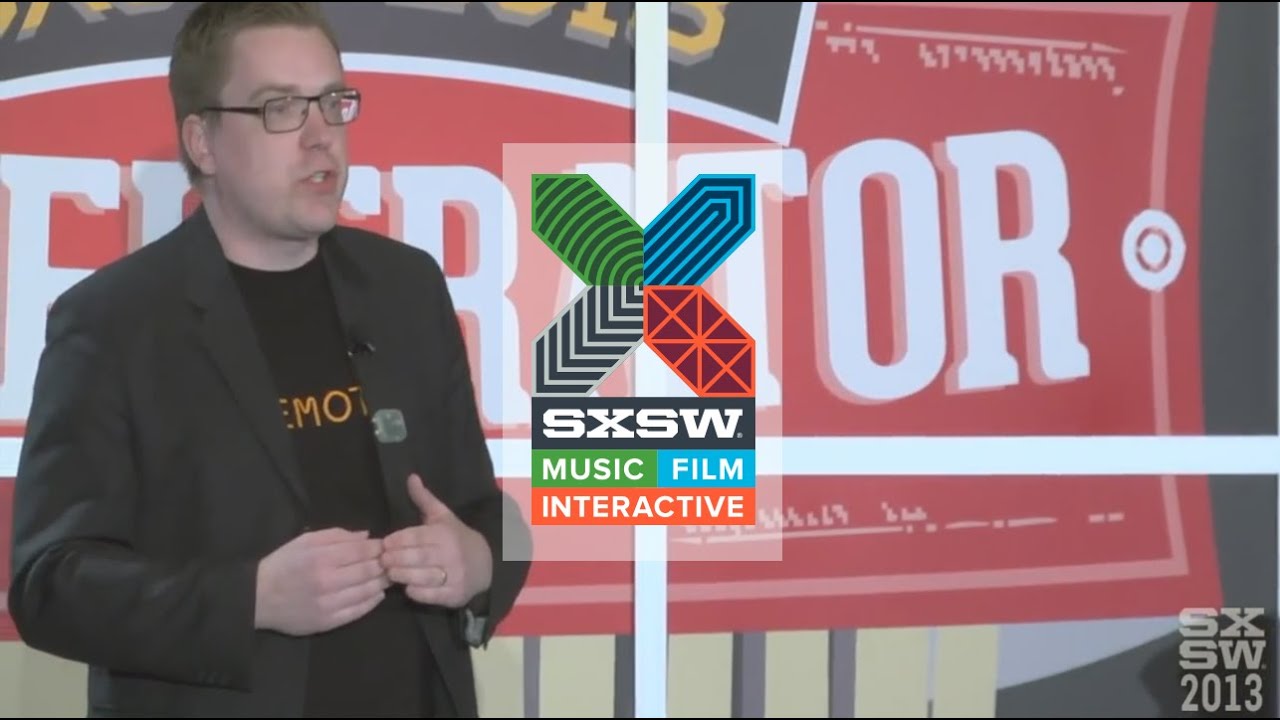
Few people had held one when these stories were told. At the SXSW Accelerator in March 2013 a judge asked whether that was really Stephen Wolfram wearing a Memoto all week; Martin confirmed it, and when asked how many cameras were out there answered "In the wild? One. Steven Wolfram." ▶ 5:33 · ▶ 12:12 Asked about churn, he was already managing expectations: perhaps 5% would wear it daily, while "most people will select the days that are worth capturing photos". ▶ 12:28
Once cameras shipped, the numbers arrived. By June 2014 the plan was to "focus on looking at exactly what are people doing with our product and enhance the use cases", and what they were doing was "putting it on their pets or using it for family outings or for travel or go kayaking or climbing". ▶ 3:06 · ▶ 3:30 To Paul Melcher at Kaptur he gave the retention figures he had said he cared about: "60% of our users use Narrative once per week, producing over 1000 photos in that session.", and 30% every other day or more, "which is a lot if you compare to GoPro owners of which many only use it twice a year or less". Kaptur ↗ When the $8 million round closed that September, ArcticStartup reported "over 100 million pictures uploaded in just 8 months since the device's launch", at 700,000 a day. ArcticStartup ↗
He kept counting after the company was gone. In Mark Wilson's 2016 post-mortem for Fast Company he reported that with better UX "the Clip 2 had a 40% long-term retention rate". Fast Company ↗ On a Silicon Valley Forum panel that year he argued the drawer of abandoned gadgets was an old consumer-goods problem finally made visible: "with wearable, we can actually track abandonment or retention". ▶ 35:49 The 2013 promise to measure who was still wearing it had been kept, even if the answer was not the one he wanted.
A thousand problems chasing us
As the company grew, the letters came from institutions. On the same 2016 panel Martin described a company that had defined itself by its technology and then watched the uses arrive on their own: "we have now dozens and dozens of universities doing research projects on ways to actually use this in medical research or medical treatment". ▶ 10:49 His summary: "We have 1,000 or so problems now chasing us to get their attention from our R&D team." ▶ 11:31 One research project is in the archive: a Linköping University team wore Clip 2 cameras for three days of fieldwork in 2017 and found the photos prompted as many recalled experiences as participants' own self-reports. Linköping University (IDA) ↗
The most affecting letter was never addressed to Martin. In the Lifeloggers documentary a mother describes documenting her daughter Sofia, born with a rare fatal genetic disease, in a Narrative scrapbook of photos, notes and video, up to the day she died. ▶ 14:10 To Startuppodden host Mikael Zachrisson in 2014, Martin described the feeling as relief: "Så det är en väldigt, väldigt skön känsla nu när jag fått ut kameran i folks händer och ser att den är värdefull på riktigt." (so it is a very, very good feeling now that the camera is in people's hands and I can see it is genuinely valuable). ▶ 1:03:18
Eight years on: Cathal's email
The last letter arrived in 2023, seven years after the bankruptcy. Opening an episode of Co-creating with AI, Martin told co-host Rasmus Adler Wahlberg about an email from Cathal Gurrin, deputy head of the School of Computing at Dublin University and a power user: "he's still using the Narrative Clip, recording his life in photos every day, like 7 years after I last spoke to him". ▶ 0:58 · ▶ 1:24 What struck Martin was not the loyalty but the data, "like 2 gigabytes of of photos of every day of your life", of breakfasts, screens and hallways. ▶ 1:24 By the end of the episode the letter had become a pitch: "There's still no better device for lifelogging than an 8-year-old Narrative Clip 2.", the IP was still with his former CTO, and for $2.5 million, the minimum run of 10,000 units, he would restart production. ▶ 27:28 · ▶ 27:48
In 2013, on the Guardian's Tech Weekly, Martin had said every user would have their own reasons, but that the main one was self-reflection: "You want to use the mirror to just check up on yourself and see how you're doing." ▶ 20:38 The people who wrote in had found reasons he had not thought of, and that, more than the 25,000 units of the first run, was his evidence that the thing had worked. ▶ 19:48 For the other side of the mailbag, see The reviewers.
Worth remembering
- Martin's stated success metric was one changed life, not a sales figure. "if there's one user in Minnesota, whose life we have thoroughly changed, that's enough, then we're successful." SlashGear ↗
- The three founding letters were told at LeWeb in 2013 and never changed: the harassed conductor, the son with autism, the police-stop commenter. ▶ 11:09
- The numbers backed the letters, up to a point: 60% weekly use in 2014, 100 million photos in eight months, 40% long-term retention for Clip 2. Kaptur ↗ · ArcticStartup ↗ · Fast Company ↗
- When exactly one camera was in the wild, it was on Stephen Wolfram. ▶ 12:12
- The last letter came eight years after launch and turned into a $2.5 million restart pitch. ▶ 27:48