Lifelogging as care
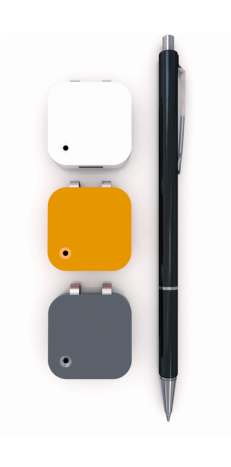
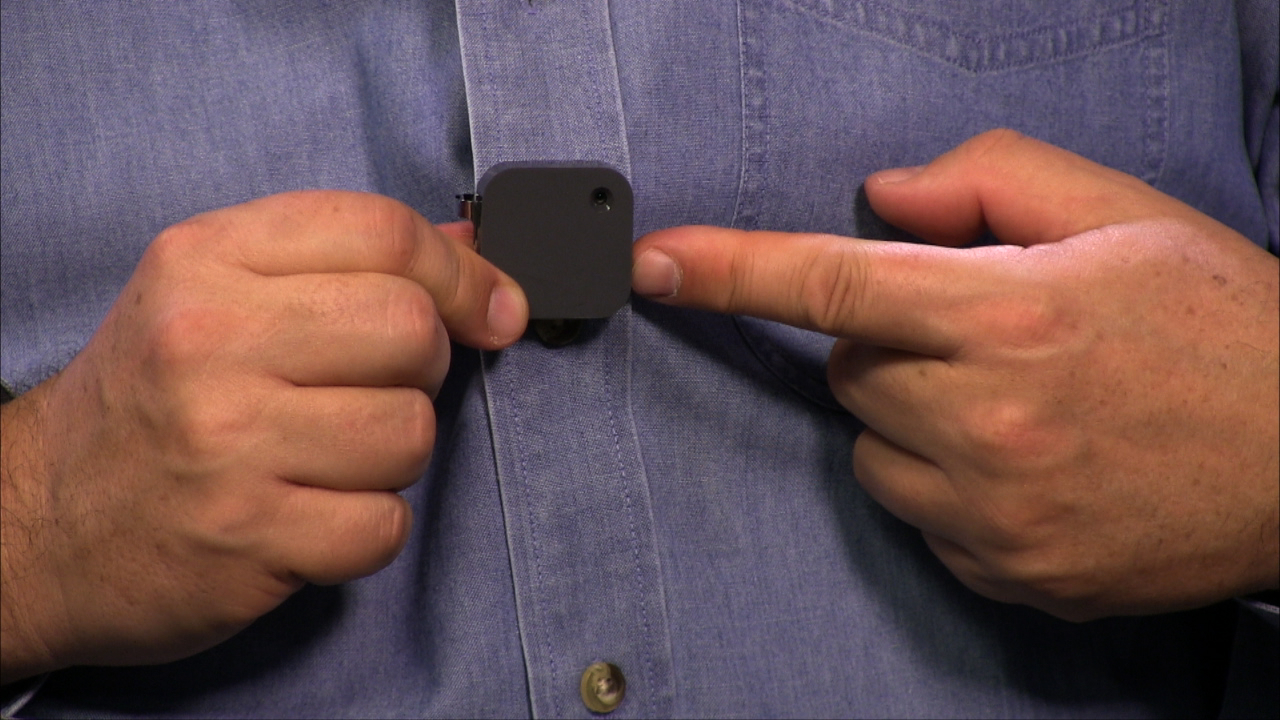
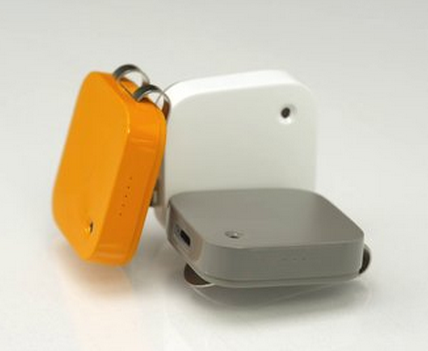
The gadget story of Narrative is well documented: a tiny clip-on camera, a Kickstarter, a bankruptcy. Less documented is what a camera that takes a photo every thirty seconds was actually for. The people who told Martin what they wanted it for were rarely early adopters: the parents of a dying child, a man whose wife had Alzheimer's, a harassed train conductor, a few dozen university labs. Martin's own reason for building it was grief. This page collects those uses, attributes each voice to the person who actually spoke, and traces the same instinct, technology as a way of caring for someone, into his later thinking about AI.
Where the idea came from: two dead parents and a photo album
Martin's origin story for the camera is consistent across tellings, and it is not a market. In a 2014 podcast he explains that he had always wanted to document his life and could not keep a diary: "Jag kan inte skriva dagbok för att jag glömmer bort att göra det." (I can't keep a diary because I forget to do it.) ▶ 39:41 Then he lost both parents, and looking through the family albums afterwards he noticed what was missing: "är bara de glada, roliga stunderna som blir dokumenterade" (only the happy, fun moments get documented). ▶ 40:32
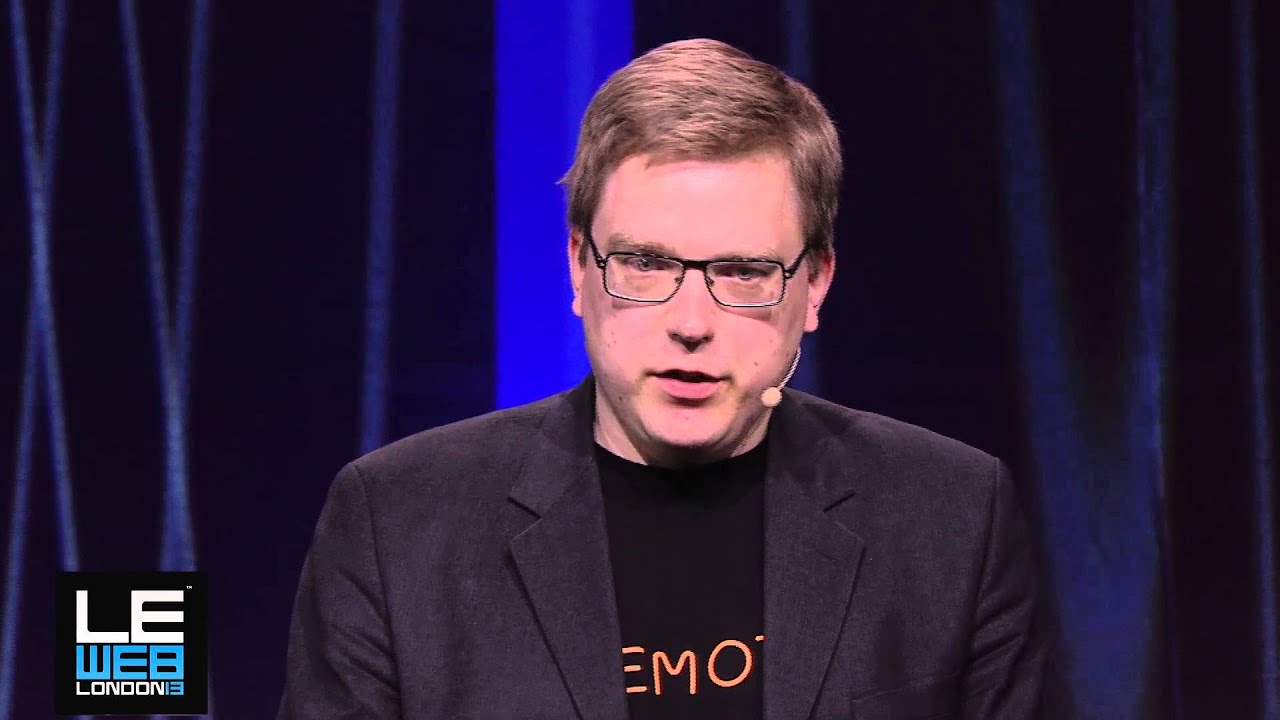
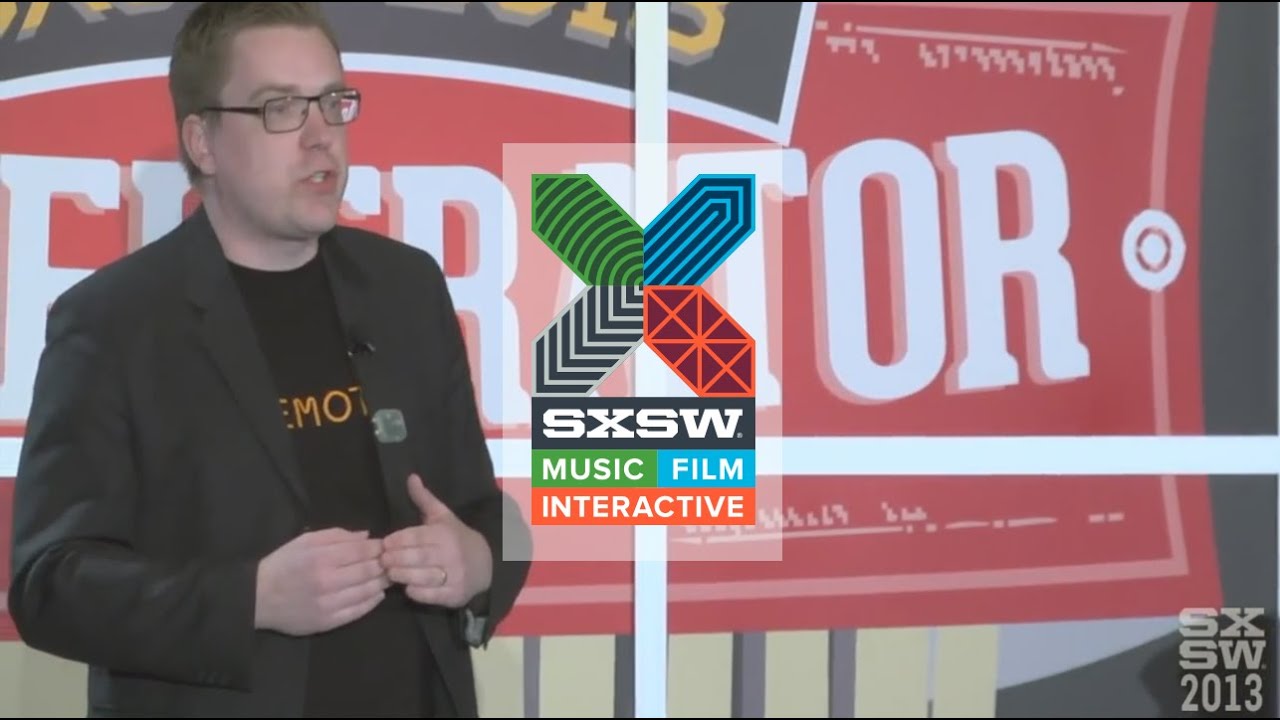
He opened his pitches the same way. At LeWeb London in 2013: “Many of us have kids that grow up far too quickly, and some of us have relatives or parents or friends that we've lost far too early.” ▶ 2:19 At the SXSW accelerator the same year he used his daughter Lynn's ninth birthday as the demo: instead of a few posed photos she had a full stretch of 200 from the couple of hours her friends were over. ▶ 0:18 ▶ 4:54 The idea he credited to Gordon Bell's lifelogging experiments at Microsoft TechCrunch ↗, and Bell returned the favour on the company blog, calling a small geo-aware camera with pictures going to the cloud “just what we need for lifelogging of life's events.” Narrative Blog ↗ See Memory & photography.
The lineage was medical before it was consumer
Reviewers in 2014 kept arriving at the same fact: this was Alzheimer's research before it was a product. Leo Laporte, demonstrating the camera on TWiT, traced the idea back through Steve Mann at MIT to Gordon Bell, “whose wife Gwen, founder of the Computer History Museum down in Mountain View, has Alzheimer's,” and suggested it was because of Gwen that Bell became interested in a camera that might help with memory. ▶ 24:34 His co-host's reaction is the most honest market research in the archive. Shannon Morse said on air: “Well, now I'm considering buying one because I know somebody who has Alzheimer's.” ▶ 25:13 Laporte agreed, then went straight back to the battery life. ▶ 25:16
Arthur Guy, reviewing the Clip on YouTube, made the same connection unprompted: the original research behind these devices “was done by Microsoft years ago for Alzheimer's research, for people kind of going out and having a visual memory of their day.” ▶ 11:27 The academics were more precise. Niamh Caprani, Noel O'Connor and Cathal Gurrin, writing up seven years of one person living with a SenseCam, noted the arrival of “the Memoto wearable camera and the Vicon Autographer, both of which operate as wearable cameras in a manner similar to the original SenseCam,” and predicted from Memoto's Kickstarter that lifelogging would become a more widespread activity. ResearchGate ↗
Martin told a Silicon Valley audience in 2016 that the company had defined itself from the technology rather than a use case, and that the result was “dozens and dozens of universities doing research projects on ways to actually use this in medical research or medical treatment.” ▶ 10:49 The requests that reached him directly were in the same register: AllThingsD listed the parents of an autistic boy who could not describe his school day, the family of a man who lost his memory to an army injury, and a train conductor who wanted a visible camera as a deterrent to harassment. AllThingsD ↗ The conductor was real: on a train from Stansted he saw the prototypes, sat down for five minutes, and told Martin “This would transform my life.” ▶ 11:09
Sofia
The company's own documentary, Lifeloggers, is what Martin pointed audiences to when he wanted the field taken seriously: a 25-minute film “that we made last year,” with Steve Mann in it. ▶ 24:37 Most of its interviewees are quantified-self enthusiasts. Its centre is not.
A mother introduces her daughter: Sofia, “Richard's and my daughter,” diagnosed with Niemann-Pick disease type A, “one of 8 to 10 children in the world at any given time that had this condition.” ▶ 14:10 No child had survived it. What she describes is lifelogging with none of the gadgetry: “Sofia wasn't improving, and I was just full of grief. So I started clipping magazines,” and the clippings became a book she calls a Narrative Scrapbook. ▶ 14:36 The record grew into a system: nurses' notes rewritten the family's way, filming, photographs, all of it organised to optimise Sofia's care, with a community that self-organised around the family. She turns a page: “This is actually showing the day she died right here. This is her last dose before she passed away.” ▶ 15:27 The documentation, she says, is what made the helpers feel like members of a community.
The rest of the film argues around her. A physician describes charting her own inflammation markers, going to her doctor, and being asked whether she felt bad: “He says, well, what are you bothering me with? You know, come back when you have a symptom.” ▶ 12:12 Steve Mann distinguishes surveillance from above from a record made “from the perspective of the self.” ▶ 19:59 Another interviewee explains why Sofia's parents kept every page and nobody else would: “the most boring thing in the world to look at is someone else's lifelog images, but the most amazing thing to look at is your own lifelog images.” ▶ 16:31 None of these are Martin's words; the film was his company's argument, made by other people.
What the researchers found when they measured it
The universities did use the camera, and their findings are more mixed than the pitch. Mattias Arvola, Johan Blomkvist and Fredrik Wahlman at Linköping put Narrative Clip 2 on four students for three days in April 2017, collected around 2,700 photos plus heart-rate data, and found that the experiences prompted by the camera's images “are as many as the self-reported data points,” but also that the method was “very time consuming, due to the sheer amount of data.” Linköping University (IDA) ↗ Evangelos Niforatos and colleagues at Università della Svizzera italiana were blunter: automated capture with the Clip produced large volumes of pictures that “did not help participants remember the experience better than manually captured pictures.” Università della Svizzera italiana (People-Centered Computing Lab) ↗ Jill Walker Rettberg, wearing one at chest height, downloaded “dozens of photos of trees and clouds, some obscured by my long hair partially covering the lens.” ResearchGate ↗
Martin ran his own small experiment: workshops in which he made teachers wearing Clip 2 set aside worry and look only for positive uses, and they came up with analysing their own classroom behaviour afterwards. ▶ 3:24 ▶ 3:49 The pattern is that the camera worked as care and as a research instrument, and much less well as a memory prosthetic for people not already motivated to look.
The same instinct, ten years later
The care framing survived the company. Talking about AI glasses in 2023, Martin's first application was not productivity: “perhaps if you have Alzheimer's and so on, it's going to have huge implications”, hopefully positive across the board. ▶ 4:43 In 2024, in a discussion otherwise wary of voice cloning, he brought up a YouTuber criticised for using an AI voice who then explained why: he has Parkinson's, and the logistics of producing videos with the disease were “just too burdensome.” In Martin's telling, “the AI voice clone is actually what allows him to do YouTube videos at all”, which he calls a really good use case. ▶ 7:20 ▶ 7:45 It is the train conductor again: intrusive from the outside, and to the person who needs it, permission to keep going.
Worth remembering
- The camera existed because of an absence in a photo album. Martin names losing both parents and the curated, happy-only family albums as the reason a device capturing ordinary moments would be worth so much. ▶ 39:41 ▶ 40:32
- One sentence about Alzheimer's sold the camera faster than any spec. Shannon Morse's on-air pivot from skepticism to “now I'm considering buying one” came the moment Leo Laporte mentioned Gordon Bell's wife. ▶ 25:13
- The most serious lifelog in the company's own film was made with scissors and nurses' notes. Sofia's mother documented her daughter's care through to the day she died, and the record is what bound the community that helped. ▶ 14:36 ▶ 15:27
- Researchers found the Clip rich, slow and no better than manual photos for recall. Linköping University (IDA) ↗ Università della Svizzera italiana (People-Centered Computing Lab) ↗
- Care is still the first use Martin reaches for in AI. A Parkinson's patient's voice clone is his example of a good use case, not a deceptive one. ▶ 7:20