
Multiply
Multiply is Martin's AI venture and agency of the 2020s: an AI-native "Creative Operating System" built around the idea that humans and AI should "co-create" inside shared workflows rather than trade prompts back and forth in a chat box. The operating company is Fluent Development AB, org.nr 559225-3768, registered in Stockholm; a research compilation dates the company's founding to 2020, with a public launch out of stealth in November 2022. Research ↗ Multiply is also the publisher of the Co-creating with AI podcast, which Martin co-hosted with co-founder Rasmus Adler Wahlberg and which doubles as a running, dated commentary on the company's own thinking across 2023–2024. (Not to be confused with an unrelated US B2B-ads agency of the same name, founded by Matt Jayson and Ashish Warty — a namesake research compilations have flagged as distinct from the company covered here.) Research ↗
The founding quartet
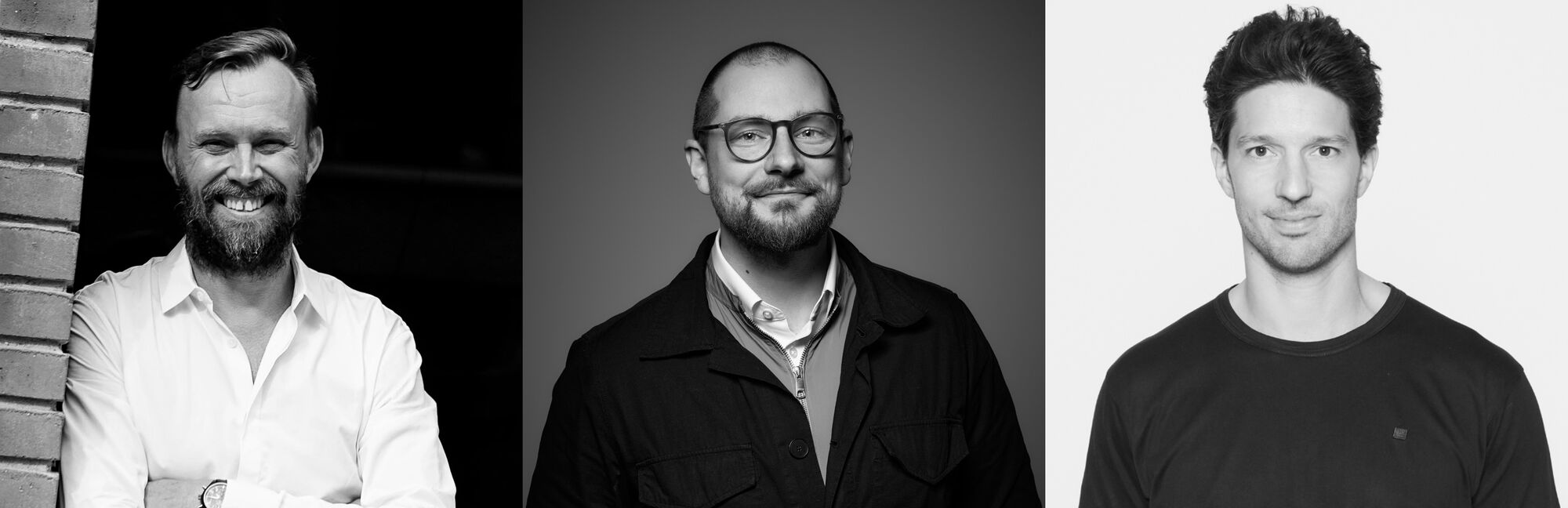
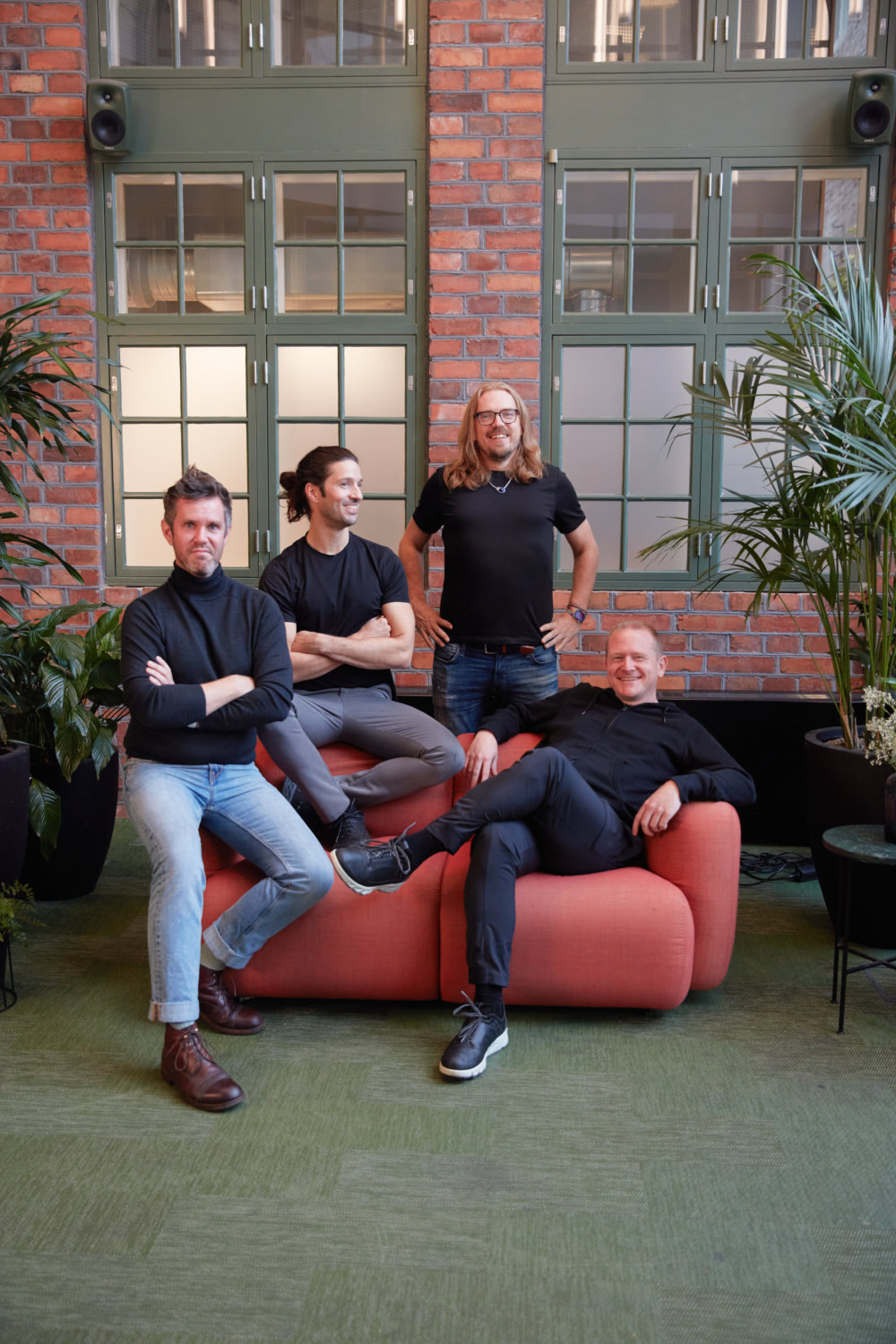
Martin co-founded Multiply with three others: Rasmus Adler Wahlberg, Henrik Eneroth, and Oskar Lissheim-Boëthius (also rendered "Oskar Boëthius Lissheim" and "Oskar Lissheim Boethius" across sources). A research compilation names all four together as co-founders: "Founded by Rasmus Adler Wahlberg, Henrik Eneroth, Martin Källström, and Oskar Lissheim Boethius, the firm represents a fascinating case study in category design, technical pivoting, and second-act entrepreneurial resilience." Research ↗ A later press release covering Multiply's 2026 NoA Group deal independently confirms the same three co-founders alongside Rasmus. Roastbrief ↗ On the podcast, Martin names Oskar and Henrik as fellow co-founders directly. ▶ 5:15
Titles vary across sources, and the record is worth reading honestly rather than smoothed over:
- Rasmus Adler Wahlberg — CEO, consistently, across every source: the podcast ▶ 0:00, Multiply's own launch press release EIN Presswire ↗, and every piece of 2026 agency-deal coverage. Mediashotz ↗ Before Multiply he founded Advisa; a research compilation adds an earlier venture, "FitnessCollection." Research ↗ Breakit's June 2024 funding story headlines Multiply as founded by people "from Advisa and Narrative" — Rasmus and Martin respectively. Breakit ↗
- Martin — CPO, and at times also CMO. Multiply's own 2023 podcast-launch post on multiply.co lists "Rasmus Adler Wahlberg (CEO) and Martin Källström (CPO)" as the show's founders. Multiply ↗ On the podcast itself Martin describes his own role as Chief of Product and, early on, interim CMO ▶ 2:57, later settling into CPO alongside Rasmus's CEO ▶ 4:13. A research compilation independently states he "operated in a dual capacity as both Chief Marketing Officer and Chief Product Officer" during the company's foundational phase, and separately notes his own LinkedIn listed him as CMO as well as CPO. Research ↗, Research ↗
- Henrik Eneroth — CPO, per the most detailed primary-adjacent source available: a March 2025 Red Planet Labs engineering case study identifies him directly as "Henrik Eneroth, Chief Product Officer (CPO) of Multiply." Red Planet Labs ↗ A research compilation separately calls him "Chief Product Officer and principal systems architect." Research ↗ This means two different co-founders — Martin and Henrik — are each independently described as "CPO" at different points, which this archive reads as the title moving with Martin's own gradual step-back rather than a contradiction to resolve. Within the archive's own podcast and profile material, Henrik is more often described functionally than titularly — as Multiply's "architectural visionary," deep in the Clojure ecosystem, maintaining open-source repositories and consulting on enterprise interaction design. Research ↗
- Oskar Lissheim-Boëthius — CTO, per the same Red Planet Labs case study, which quotes him directly on Rama's DevOps experience. Red Planet Labs ↗ Note: this is a different person from "Oskar Malm Wiklund," whom a research compilation separately places in Multiply's public-facing leadership from 2024–2026 (Multiply 3.0 help-center content, appearances at Techarenan/Almedalen) — the archive has no evidence connecting the two Oskars, and treats them as distinct individuals per the research pass. Research ↗
In its first months the company operated in stealth, with product concept and team composition kept secret pending an announcement (▶ 10:54). Breakit's own 2024 headline captured the same period in one word: "Doldisbolaget Multiply har agerat under radarn under två år" — "the stealth company Multiply has operated under the radar for two years." Breakit ↗ The founding story Rasmus tells is one of a leadership-style shift: coming from earlier fintech and fitness-tech startups where he'd been the strong directive founder, he found that building Multiply with Martin, Henrik and Oskar meant the actual product vision evolved substantially through collaboration even as the high-level purpose stayed constant — an "evolutionary purpose" model, borrowed from Reinventing Organizations, where goals and approach remain genuinely open to question rather than fixed from the top (▶ 11:10; ▶ 12:31).
The problem the founders kept running into. Even at the height of the 2023 AI boom, Martin describes becoming a "copy and paste master" — manually chaining AI tools together across browser windows and apps to get anything complex done, which he came to see as the exact opposite of what AI was supposed to deliver (▶ 20:56). That friction — fragmentation between AI-enabled systems even as each individual tool got more powerful — is the problem Multiply exists to remove.
The legal entity, and an open question about its name
Multiply's operating company is Fluent Development AB, org.nr 559225-3768, registered in Stockholm — the identity used in this archive's taxonomy and cited by a research compilation as the current legal entity behind the Multiply brand. Research ↗ That same research compilation adds a caveat: the company was "earlier also presented under the name 'Multiply Potential AB.'" Research ↗ But multiply.co's own "About" page — captured directly from the live site — carries a 2026 footer copyright line reading "© 2026 Multiply Potential AB," not Fluent Development AB. Multiply ↗ This archive flags the discrepancy openly rather than resolving it: either the "earlier" framing in the research compilation has the chronology backwards, or Multiply Potential AB and Fluent Development AB are two still-coexisting legal names (e.g., a holding entity versus an operating subsidiary) that the available sources don't distinguish clearly. Both names should be treated as live possibilities until a primary registry filing settles the question.
Public launch: November 2022, Slush, and the $1.8M pre-seed
Multiply came out of stealth in November 2022, timed to Slush 2022 in Helsinki — confirmed directly by the company's own launch press release, which invited Slush attendees to be "among the first to test the Multiply workspace." EIN Presswire ↗ The same release announced a $1.8 million pre-seed round led by Tera.vc, the Estonian venture firm — with Stanislav Ivanov, Tera.vc's co-founder and partner, quoted on the deal. EIN Presswire ↗ Martin authored the release and was its press contact, using the address martin@multiply.co — leaning on the media network he'd built during the Narrative years. EIN Presswire ↗, Research ↗ A reader-pass research narrative additionally names Antler as a co-investor in this same November 2022 round — that detail conflicts with this archive's taxonomy and a separate company-profile research pass, both of which instead place Antler in Multiply's 2024 follow-on round; it's flagged here as an open inconsistency in the secondary research rather than resolved one way or the other. Research ↗, Research ↗
At launch, Multiply pitched itself as "the first ever end-user app that includes generative AI for both text, images and data structures like templates and attributes," with Rasmus framing the pitch in blunt speed-and-magic terms: "The power of AI offers a 10x speed increase to any use case, so you can fast track project timelines and produce more work, ultimately increasing your bottom line... This technology is like magic at your fingertips." EIN Presswire ↗
Product evolution: workspace, then Creative Operating System
Multiply's own public description of itself shifted substantially between 2022 and 2026. A research compilation frames the arc as a version progression: an early "generative-AI workspace" for teams (v1.0/2.0, 2022–2023) evolving into a full "Creative Operating System" (v3.0+, 2024–2026), with Multiply 3.0 — announced October 2024 — introducing an AI agent builder and a "Playground" for building and testing custom agents. Research ↗ By November 2024, AI Sweden's own roundup of 26 new startups in the Swedish AI landscape described Multiply simply as "en skräddarsydd AI-plattform utan kod för team" — a customized no-code AI platform for teams. AI Sweden ↗
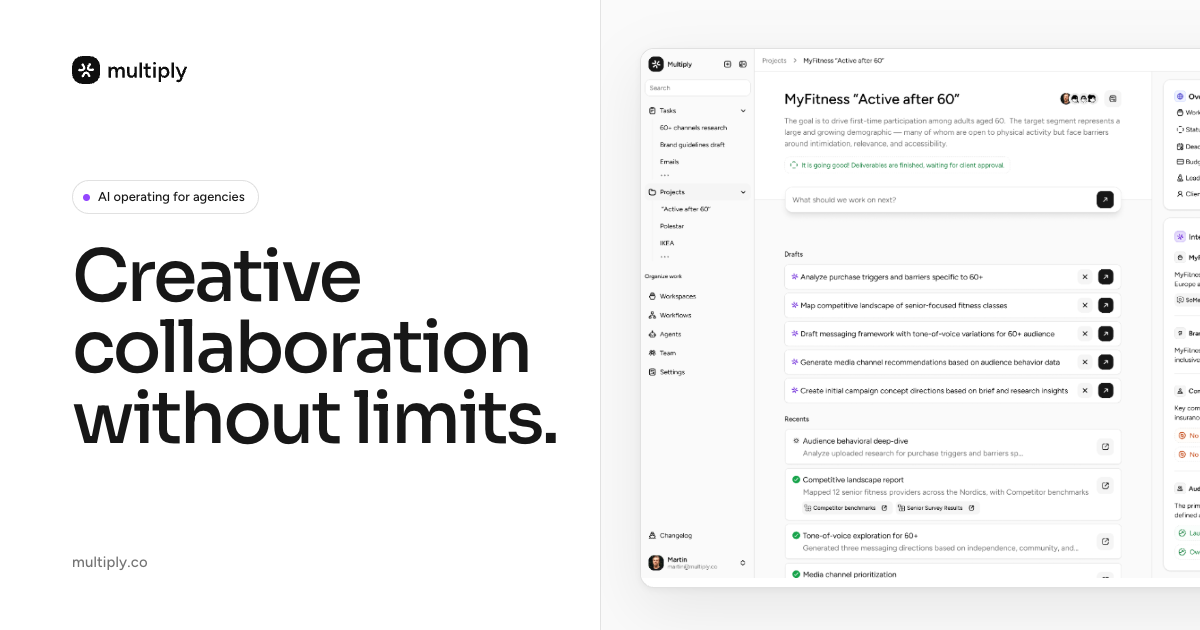
By 2024's AppRater listing, the framing had already sharpened into agency-specific language: "We're on a mission to build a Creative Operating System™, where humans and AI work together to push the boundaries of what's possible," rejecting "artificial, bland intelligence" in favor of "bespoke and customized Creative Intelligence that multiplies what makes your team unique, instead of watering it down." AppRater ↗ By 2026 the company's own site had fully committed to that positioning. multiply.co's homepage describes Multiply as "the shared AI platform for creative agencies and marketing teams — brief together, stay aligned, and deliver work the brand actually asked for," organized around a "collective brain" and a continuously-updated "living brain" per client account, pulling in brand guidelines, market data, and account history from every file, call and message. Multiply ↗ The "About" page frames the underlying philosophy as "Creative Intelligence" — "the powerful combination of human creativity and AI capabilities, working in harmony" — and explicitly rejects a pure-speed framing: "Creative Intelligence isn't about making you 3× faster. It's about making your work 3× more meaningful." Multiply ↗
Two named product features recur across the podcast era: the Multiply App Store, a community marketplace letting members build and share applications that could interconnect as a network of apps (▶ 25:16); and the Block Editor, which manages both AI output and the human–AI co-creation of input context in a single shared document (▶ 16:00; ▶ 29:24) — the interface answer to the "copy-paste master" problem described above. An early demo of the platform's reach was the Podcast Pro app, which automatically generated episode descriptions, Stable-Diffusion images, and social copy for Twitter, Instagram, LinkedIn and Facebook from a single transcript in one workflow — Multiply's first public proof of multimodal, multi-model automation (▶ 19:24).
The Co-creating with AI podcast
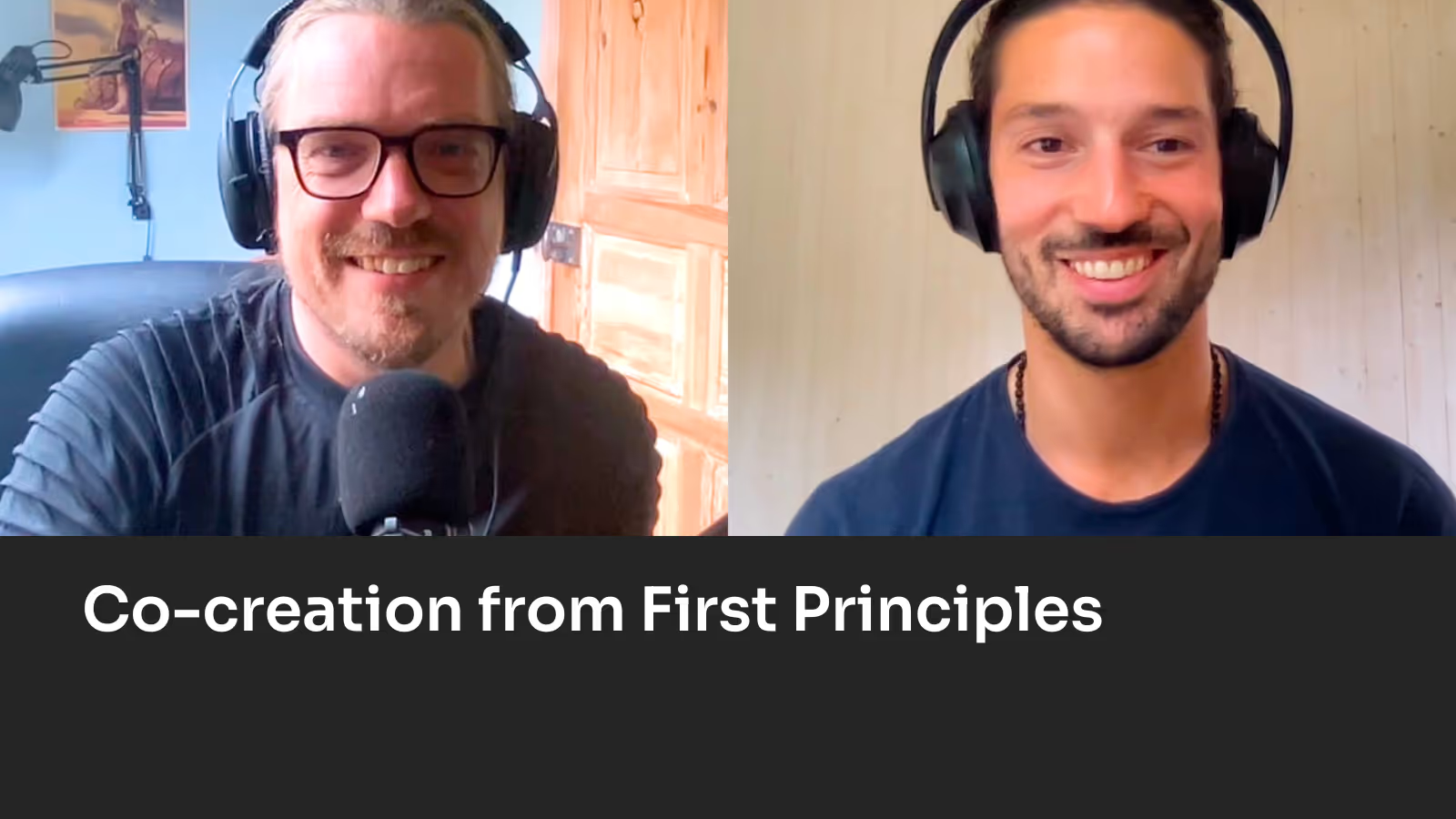
Multiply also publishes Co-creating with AI, co-hosted by Rasmus and Martin. Multiply's own June 2023 launch announcement (later removed from the live site, preserved via the Wayback Machine) frames the first episode, "Co-creation from First Principles," as diving into "the deeply personal nature of creation" and "the importance of presence and collaboration," including the idea of a "wisdom hierarchy" in which leadership is earned through competence and results rather than title. Multiply ↗ Podcast-derived material dates the show's actual on-air premiere to January 2023 (▶ 0:00), rebranded from its original working title "CoCast" specifically to foreground the human–AI partnership theme that defines the show (▶ 0:00). A research compilation frames the entire 60-episode run (through 2025) as "explicitly engineered as a vehicle for category design rather than direct software promotion" under the branded concept "Creative Intelligence" — a public research-and-development laboratory for the company's own brand messaging, ahead of the eventual hyper-vertical pivot into advertising agencies. Research ↗ The founding episode is itself a small meta-exercise: Martin and Rasmus set out to make a podcast about co-creation by co-creating the podcast's own format live, deliberately participatory rather than broadcast, uncertain of the outcome (▶ 0:07). See Co-creating with AI for the project in full.
Product philosophy: co-creation as the core idea
Multiply's founders treat "co-creation" not as a marketing word but as a specific design constraint. Martin's baseline claim is that co-creation is the key concept for understanding the AI revolution's impact on society (▶ 3:12), and that real co-creation requires AI-native interfaces where humans and AI have equal access to the same tools (▶ 2:49) — Rasmus's version of the same idea is the image of co-painters who both need "hands" to pick up the brush, dip into paint, and reach the canvas; AI can't just be a tool the human wields (▶ 2:01). Practically, this shows up as Multiply letting users edit AI-generated suggestions in-line, in contrast to a chat product where you prompt, get output, then copy-paste it elsewhere to actually work with it. Rasmus compares the experience to co-editing a Google Doc together rather than filing a request and waiting (▶ 23:14).
By 2026, Multiply's own site articulates the same instinct in product terms: "Multiply doesn't try to standardize your creativity. Instead, it learns from you, adapts to you, and enhances what makes you special." Multiply ↗ This philosophy has a fuller treatment in AI co-creation and AI-native interfaces & products, both drawn heavily from the podcast.
Platform architecture: data lake, graph, agents
The technical spine of Multiply, described consistently across 2023–2024, is: let companies aggregate their organizational data into one integrated data lake, then build multiple AI agents on top of that shared dataset to perform different roles (▶ 24:46). Martin describes the resulting data structure as graph-based, explicitly modeled on how the human brain organizes relationships and hierarchy (▶ 14:41), and elsewhere as a "global collaboration graph" where people and AI can co-create without data silos or friction (▶ 10:36). The platform is multimodal by design — text, images, video and audio, all created and accessible by both humans and AI (▶ 17:35).
By 2024 Multiply had also become both an MCP client (pulling data from external sources) and an MCP server (letting other LLMs access Multiply's own data through MCP), a direction the team prioritized because customers were explicitly demanding the ability to connect and access all their data, and because Multiply's existing vectorization and agent-search capabilities lined up naturally with MCP's data-connection model (▶ 23:10; ▶ 21:32).
Engineering: from Datomic to XTDB to Rama
Multi-agent systems and the shifting meaning of "agentic"
Multiply's agent architecture, as it matured in 2024, centers on a manager agent that delegates to specialized agents — researcher, strategist, copywriter — with the product deliberately designed to make it easy and conscious for the user to see which agent they're talking to (▶ 29:01). The same pattern is described as splitting workflow tasks across a research agent, a draft agent, a brand-voice agent and a legal agent, rather than one mega-agent holding all instructions and data at once — Martin and Rasmus argue this improves accuracy by keeping instructions and data per-request small, without materially higher cost or latency (▶ 8:36). Martin also describes this in terms of "sidekicks" — specialized agents that each excel at one task rather than one prompt trying to do everything (▶ 26:28).
Reliability, in this framework, comes from constraint rather than freedom: Rasmus's structural claim is that unreliable AI output can only be trusted once it's forced to follow defined processes with structured-output requirements — the opposite of just letting the model act autonomously (▶ 27:19). Concretely, Multiply forces AI-generated citations to reference only the sources actually consulted, by constraining the model's choices to the set of sources it used (▶ 24:27), and keeps a human reviewing AI-generated creative output as the final guardrail against hallucination (▶ 25:48). Memory is treated the same way — purpose-built rather than generalized: B2C memory is about knowing the user, B2B memory is about the agent's specific function, refined through an RLHF-style feedback loop (▶ 16:54).
By late 2024, Martin notes that the industry's working definition of "agentic AI" had itself shifted — from the 2023 vision of multiple agents collaborating together (the model Multiply had been building toward) to a narrower 2024 meaning: a single model that iteratively calls tools over several steps (▶ 7:01).
The company's early agentic research agent, tested in alpha with customers through mid-2024, drew strong feedback on quality (▶ 17:16). The marketing agency's AI celebrity search is the concrete story: a client's campaign lost its celebrity face and needed a fast replacement matching specific, nuanced criteria — similar appeal, not A-list budget, an existing following, the right audience overlap. The research agent returned ten candidates within a couple of prompts, three of them genuinely strong — a research task that would normally demand significant experience and time, compressed to minutes (▶ 19:28).
The 2023–2024 pivot: from content to the whole creative process
Multiply's strategy underwent a deliberate pivot around late 2023, expanding from a narrow focus on content production to covering the entire creative process — from client brief through strategy to creative concepts (▶ 4:53). The trigger was customer feedback plus outside expertise: Magnus, a business director experienced with major agencies, advised the team that they needed to expand holistically across the whole engagement rather than stop at content (▶ 6:08). Bigger creative agencies simply weren't excited by a content-only offering; once the team broadened the scope, senior creative leadership got interested for real (▶ 5:02). That reframing is what produced Multiply's clearest value proposition to date — streamlining an agency's entire creative process, not just producing copy (▶ 2:45).
The 5-minute workflow revelation. Rasmus's sharpest insight from customer demos: the most persuasive moment isn't showing a pre-built workflow, it's watching a workflow get built live, in real time, to the customer's own specification. Seeing the tool solve their specific problem — not a generic one — is what actually changes a prospect's mind (▶ 17:23).
Following the pivot, Multiply settled on larger communication agencies (50+ employees) in global networks as its primary customer segment (▶ 28:07), targeting CMO offices at mid-sized to large companies managing high volumes of research data (▶ 28:32). Enterprise sales surfaced a recurring blocker — concern that company data could "escape into the wild" through AI usage — which became a major sales requirement and pushed Multiply to pursue ISO certification (▶ 26:27; ▶ 25:49) and to report 100% uptime over a 90-day stretch as evidence of infrastructure maturity (▶ 25:34). The platform also began integrating the Perplexity API for research capability within workflows (▶ 21:38) and, separately, started building creatives.ai, a community platform aimed at learning and belief-building around AI-augmented creative collaboration (▶ 32:41). A research compilation's later, harder-edged reading of the same period frames it as data sovereignty becoming a competitive moat: Multiply explicitly prohibits training foundation models on proprietary customer data and pursued ISO 27001 certification as a market differentiator rather than a compliance checkbox. Research ↗
The GPT-4 Turbo shock and model choices
OpenAI Dev Day aftermath. Recorded the morning after OpenAI's first Dev Day in November 2023, this episode captures Rasmus and Martin genuinely rattled by the announcements: a 128K-token context window, a two-thirds price cut, and new capabilities (vision, function calling, the Assistants API) that reset what the entire industry considered possible overnight — forcing a real choice between seeing opportunity and seeing existential threat (▶ 0:00). Concretely: GPT-4 Turbo extended context to roughly 300 pages of text per prompt, cut pricing by 67% versus the previous GPT-4, and improved speed (▶ 2:28) — and Multiply, which had been running Claude experimentally and then in production specifically for its 100K context window, switched to GPT-4 once OpenAI matched and beat that on price and capability (▶ 8:03).
Compression work thrown away. The less comfortable half of the same story: Multiply had anticipated rising context windows and invested in its own compression techniques — chunking, summarization — specifically to keep GPT-4 from being overwhelmed by data. The overnight jump to 128K tokens nullified that investment. Rasmus's read, months later, is candid: it was a reasonable bet on the trend that simply didn't land in time — in AI, being six months early on infrastructure can cost you exactly like being wrong (▶ 7:20).
That same compression work produced one of the team's clearer architectural insights: the distinction between content (material to generate new output from) and context (the style or constraints the output must follow). Discovered through work with marketing agencies, it forced the team to rearchitect their system to specify each input's role explicitly — which improved output quality and reliability, but made compressing large context (like a brand-voice guide) risky, since compression can destroy exactly the stylistic patterns that define the brand (▶ 1:49).
Later model shifts followed the same pragmatic logic. Martin and Rasmus planned to fold OpenAI's O1 into Multiply's workflows, viewing it as a co-creator whose expensive-but-superior reasoning was worth the cost for creative and strategic tasks (▶ 8:07; ▶ 7:42) — though they noted almost immediately that an open-source model, G1 (built on Llama 3.1 and Groq), had already replicated O1's reasoning-chain approach, undercutting any sense that the capability was proprietary (▶ 21:25). The same price-compression story played out with Mistral, whose latest models reached GPT-3.5 Turbo-level performance at 40% lower cost (▶ 7:52).
Alongside the company's own API-based stack, Martin ran a parallel personal exploration into self-hosted models for a real-time conversational AI project — starting from commercial APIs, then discovering that chaining 6–7 different API calls became prohibitively expensive, and that flexibility (not just cost) was the real driver toward renting GPU compute and hosting models himself (▶ 2:17; ▶ 6:36). That optimization instinct — using cheaper models as pre-processing before an expensive GPT-4 call — carried directly into both Multiply and Kindship's engineering practice (see AI engineering practice).
Funding trajectory
- November 2022 — $1.8M pre-seed, led by Tera.vc (Estonia), announced at Slush 2022. EIN Presswire ↗
- June 2024 — 25M SEK follow-on round, reported by Breakit under the headline "Multiply fyller kassan – har plockat in 25 miljoner: 'Perfekt match'" ("Multiply fills the coffers — has raised 25 million: 'Perfect match'"). Breakit ↗ A research compilation puts a dollar figure on the same round (~US$2.33M, consistent with 25M SEK) and names its backers as Bust VC (the Swedish firm founded by David Klagsbrun), Tera Ventures, Antler, and unnamed angel investors. Research ↗
- FY2025 financials, per the same research compilation: Fluent Development AB reported revenue of roughly 5.0 MSEK against a result of about −7.0 MSEK — figures that have not been independently verified against a primary Bolagsverket filing in this archive. Research ↗
- The same research pass notes something conspicuous by its absence: unlike Narrative and Twingly, independent Swedish tech press (Di Digital, Techarenan, Realtid, Norrköpings Tidningar, Ny Teknik) does not appear to have published an article directly quoting Källström about Multiply — Breakit's coverage is the exception, and even there the quotes are Rasmus's. Research ↗
Agency traction: the 2026 client wins
Multiply's biggest publicly documented account wins arrived in early 2026, all covered directly by trade press rather than only via research compilations:
- Together Group — first international network client (February 2026). Multiply signed Together Group, a 14-agency luxury and lifestyle communications group, to roll out its platform starting with three of its agencies: Purple (luxury-lifestyle communications), The Future Laboratory (strategic foresight and consumer intelligence), and Seven Dials City (corporate and financial communications). Together Group CEO Christian Kurtzke framed the deal in explicitly human-first terms: "We use AI to empower our creative teams and enrich creative conversations — never to replace them. For us, technology amplifies exceptional human work, enabling our talent to focus on what truly matters in luxury and lifestyle: purpose-led ideas, human creativity, emotion, taste, and cultural intelligence." Rasmus, by then CEO of an established multi-year company, replied in kind: "Creative work is currently being reimagined in every way with AI, but what doesn't change is the value of good taste and engaging stories. In a world of increasing AI slop, Together Group's commitment to creative excellence and global reach makes them a perfect partner." Roastbrief ↗
- NoA Group — pilot to full Nordic multi-agency deal (March 2026). Following a successful trial at NoA | Åkestam Holst in Sweden, Multiply expanded to a partnership across NoA's agencies throughout the Nordic region: NoA | Åkestam Holst (Sweden), NoA | &Co. (Denmark), NoA | Bob the Robot (Finland), and NoA | Anorak (Norway), among others. Erik Årnell, CEO of NoA | Åkestam Holst, credited the pilot with letting the team "proactively deliver value beyond the expectations in the brief," and framed the goal as time, not headcount: "Thanks to new technology, we can now reduce time spent on operations and free up time for creativity. With Multiply, our goal is to give our team the gift of time." Mikael Jørgensen, Group CEO at NoA, added: "We're using a range of AI tools today, and we're developing our own too, because we want to remain at the forefront as our industry shifts." Rasmus positioned the platform's value explicitly against single-user AI assistants: "the real potential of AI is not everyone getting an assistant, but AI helping us work together better at scale." Roastbrief ↗
- Lotta Malm Hallqvist named Chair (March 2026). Multiply appointed advertising veteran Lotta Malm Hallqvist — co-founder of Propaganda (1997), with senior roles at Mother, McCann Worldgroup, Cheil Worldwide and MDC Partners, and a former Ad Age "Women to Watch Europe" honoree — as Chair of the board. The announcement recaps Multiply's client roster as of that date: NORD DDB, the NoA group across Scandinavia (including Åkestam Holst), Manifest globally, and Together Group. Mediashotz ↗ A research compilation, reading the same appointment for its strategic significance, argues the hire supplied intellectual cover for Multiply's vertical pivot into advertising: a "crisis of eroded strategic trust" between agencies and their clients, treated as content vendors rather than strategic partners, that Multiply's agent-driven workflow is positioned to repair. Research ↗
- Earlier Nordic clients named across these same sources include NORD DDB and Anorak, alongside testimonials on Multiply's own site from Manifest (Alex Myers, CEO & Founder; Isabel Tomson-Officer, Managing Partner), Hybrid (Karin Bäcklund), AWB (Andreas Sjöstrand), Edenvik Strategic Communication (Daniel Edenvik), and staff at Purple's Hong Kong and US offices. Multiply ↗, Roastbrief ↗
All of this — Together Group, the NoA Group rollout, and the Malm Hallqvist chairmanship — are post-Martin-era milestones: nothing in Multiply's own 2026 press coverage mentions Martin by name, and each release is fronted entirely by Rasmus and, in the NoA and Together deals, the client-side executives. Roastbrief ↗, Roastbrief ↗, Mediashotz ↗
Martin's transition, and Multiply after him
On the podcast itself, Martin says plainly that he stepped back from day-to-day involvement with Multiply in 2024 to focus on his new venture, Kindship (▶ 2:20). A research compilation extends that timeline in more detail, and its account should be read as research-sourced rather than established fact: it states that "Martin Källström, having successfully guided the product's interface formulation, initial brand identity, and early market education, stepped back from the active day-to-day Chief Marketing Officer and Chief Product Officer roles" by late 2024, with Magnus Wretblad (previously recognized in fintech marketing) emerging as active CMO and Lars Hygrell (former Electrolux global marketing director) taking on enterprise sales. Research ↗ A separate research compilation goes further, stating that by 2025–2026 Martin "has exited operational involvement and now runs Kindship.AI and Nūvai" — two ventures it places around Norrköping, with Nuvai described as a mental-healthcare AI venture. Research ↗ The Nuvai part has since been confirmed first-hand: Martin is co-founder and CTO of Nūvai, a precision-psychotherapy clinic in Malmö, since 2026 — though Nūvai is based in Malmö, not Norrköping. The full extent of his exit from Multiply remains the research passes' own synthesis rather than confirmed fact.
What's clearer from primary sources is the shape of the company Martin left behind: by 2026, Multiply's public-facing leadership was Rasmus as CEO, with Oskar Malm Wiklund appearing in public-facing and help-center roles, and Lotta Malm Hallqvist joining as Chair — a company that had, on the evidence of its own 2026 press releases, moved decisively from Martin's product-and-brand era into a next phase focused on agency-network sales. Research ↗, Mediashotz ↗
People
- Rasmus Adler Wahlberg — co-founder and CEO, throughout; Martin's co-host on the podcast and the source of much of Multiply's strategic and philosophical framing (▶ 0:00); previously founder of Advisa. Research ↗
- Henrik Eneroth — co-founder; titled CPO per Red Planet Labs' 2025 case study Red Planet Labs ↗, and described elsewhere as the team's architectural lead, deep in the Clojure ecosystem (▶ 5:15, Research ↗).
- Oskar Lissheim-Boëthius — co-founder and CTO, per Red Planet Labs. Red Planet Labs ↗
- Magnus — an experienced business director from major agencies who joined and advised the 2023 pivot toward a full-process offering (▶ 6:08).
- Elia — one of the first two people to test Multiply's software; Martin's line to him was "there's a guy in Africa and now it's you" (▶ 0:56).
- Lotta Malm Hallqvist — Chair of Multiply's board from March 2026; advertising veteran (Propaganda, Mother, McCann Worldgroup, Cheil Worldwide, MDC Partners). Mediashotz ↗
The community manager's growing autonomy. Rasmus describes onboarding a new community manager, starting with strict documentation of podcast and product-update workflows. Rather than following a fixed script indefinitely, the manager's autonomy grew naturally through iteration — his questions decreased not because he'd become a robot but because trust and shared understanding deepened, until he was taking initiative the way a proficient colleague would, with collaboration actually increasing rather than shrinking. Rasmus and Martin use this explicitly as the template for how they want AI agents to develop: specify role and context, iterate on feedback, let autonomy and partnership co-evolve (▶ 13:30).
Worth remembering
- "Turn the light off and go home." Martin's most vivid articulation of the multi-agent endgame: companies creating autonomous AI agents named after each employee, carrying their expertise and data, coordinating with each other while the humans are, functionally, not there (▶ 26:18).
- The Xbox NPC loop. Martin's kids left an Xbox game running, and a background NPC cycled the same three lines endlessly. The irritation became a springboard for the episode's whole discussion of autonomy: real intelligence doesn't just repeat a script — it asks clarifying questions, takes initiative when paused, and finds information on its own (▶ 8:57).
- Multiply's onsite exercise deliberately mapped which AI capabilities the industry would hand them for free versus what the team needed to build themselves — a startup-planning discipline distinct from just chasing features (▶ 7:39).
- Enterprise customers worried ChatGPT would train on their data even though OpenAI's own terms with Multiply prohibited it and required deletion within 30 days on request — the desire for guaranteed data ownership persisted as a driver toward self-hosting regardless of the paperwork (▶ 28:16).
- Martin credits an AI-generated product plan — an entire four-month roadmap aligned around ChatGPT's suggestions from survey and interview data — as a real example, told to him by Rasmus, of AI effectively replacing traditional product-manager decision-making at another startup (▶ 2:40).
- Per a research compilation, Multiply was a top-7 finalist (from roughly 500 applicants) in the Techarenan Challenge at Almedalen — an unverified detail included here as a research-sourced data point. Research ↗