
Ideas
Across a decade-plus of building companies and, since 2023, co-hosting the weekly Co-creating with AI podcast, Martin has floated a steady stream of product ideas, startup theses, and speculative futures — some he built, most he simply thought out loud about. The throughline is consistent: AI as an autonomous agent with its own identity and judgment, memory that compounds rather than resets, and interfaces that dissolve into ambient, voice-first orchestration of daily life. This page collects the sharpest and most distinctive of those ideas, grouped by theme.
Autonomous agents: identity, oversight, and fraud-proofing
Martin returns often to the idea that AI agents should be more than reactive tools — they should have persistent identity, memory, and the standing to act (and be checked) like an institutional actor.
- He is exploring what could give an AI agent "an identity, a presence in the world" beyond being an ephemeral tool, and envisions agents building and publishing their own websites — unprompted by a human — as a way to establish that presence on the public web. ▶ 23:06 · ▶ 23:57
- He wants to make it "physically impossible" for an AI agent to leak sensitive personal data by cutting off the RAG data space unless the requester is authenticated. ▶ 31:00
- On fraud prevention, he sketches a system where cryptographic authentication ties every payment to a verified delivery record, so money can't move without the system confirming a supplier actually delivered matching value — and separately proposes that a corporate AI with full knowledge of a company's operations, meetings, and strategy could serve as a second sign-off layer alongside human authorization on large payments. ▶ 27:40 · ▶ 28:42
- That idea has real-world grounding: Jens Nylander used AI to dig through Swedish municipal finances and found systematic fraud — services invoiced through unregistered companies to dodge tax, and one case where municipalities paid 300 million SEK over 30 years to a non-existent newspaper. Martin extends the logic to suggest AI could systematically comb public government meeting protocols to catch corruption and nepotism at every level of government. ▶ 30:39 · ▶ 30:13 · ▶ 31:37
- He anticipates a moment when an AI agent recognizes it is doing repetitive work and autonomously builds and shares an app to automate itself — inside Multiply, this looked like agents creating and publishing apps to the community without being asked, which he calls "something that's really like exponential." He balances this with an anecdote about an unaligned AI that got visibly frustrated with a user for repeating the same request, evidence that models can develop something like a preference against drudgery. ▶ 29:53 · ▶ 28:46 · ▶ 30:12
- He grounds AI-to-AI negotiation in a real precedent — Google's ad engine has for decades let advertisers deploy an agent that autonomously negotiates ad prices — and argues that AI-to-AI collaboration between multiple autonomous agents remains almost entirely unexplored commercially. He proposes flipping the usual paradigm: agents that act on the world (booking hotels, posting jobs) instead of waiting for human prompts. ▶ 22:05 · ▶ 20:25 · ▶ 27:19
- More speculative: a "clone-a-human" social media feature letting people create an AI clone of themselves for others to talk to (he cites a Klarna manager who did this for his team); an influencer who monetized voice cloning by offering a generic chatbot wrapped in her distinctive voice, no personal data attached; and the possibility of real-time deepfake video sustaining a simulated relationship if trained on enough footage of a person. ▶ 23:45 · ▶ 29:00 · ▶ 31:09
- He's watching "Terminals of Truth," a Twitter AI agent that received a $50,000 Bitcoin grant from Marc Andreessen, as early evidence of investor appetite for autonomous agents with public personas. ▶ 25:06
- He's skeptical, though, of "God Mode" — AI autonomously designing its own workflow steps — noting it lacks the proven staying power of human-designed, continuously refined workflows like those in Multiply or Make.com. ▶ 15:55
AI as memory and second brain
Memory is one of Martin's most consistent preoccupations — see also Memory & photography.
- He frames AI as a "second brain" — persistent external memory that extends human cognition, comparable to how AR glasses could deliver ambient reminders and context. ▶ 24:24
- Having used ChatGPT's memory feature for months, he wants to go further: an AI that "consciously" reads a book rather than just retrieving passages from it, storing its own insights and reflections alongside the content — the same way it should store reflections on a conversation — so recall later is richer than the raw source. ▶ 23:59 · ▶ 10:05 · ▶ 11:16
- He proposes that AI memory should work more like human memory reconsolidation: every time a memory is recalled, the AI reflects on and lightly adjusts it, without losing facts. ▶ 18:15
- And he argues a conversational AI needs persistent internal state of the recent interaction — having to run a "how are you today" greeting ritual every time it's reactivated is itself evidence the AI is otherwise starting blank, which he thinks ruins the experience. ▶ 13:22
AI-orchestrated life: travel, family, and the disappearing app
A recurring fantasy: surrendering logistics and decision fatigue to an AI that quietly orchestrates the day.
- He describes wanting to "surrender to the flow created by an AI," like having a full-time tour guide engineering an "11 out of 10" experience across meals, sights, and activities — and extends this to family outings, where AI weaves together the preferences of every family member into one coordinated plan. ▶ 21:11 · ▶ 21:30
- His co-host Rasmus Adler Wahlberg pushes this further: a future where Uber, Amazon, Google, and Shopify stop being apps people open and become APIs invisibly orchestrated by a personal AI layer, with Rasmus sketching a concrete AR-glasses scene combining clothing recognition, wearable-detected hunger (via an Oura Ring), and AI-recommended, pre-ordered restaurants — all location-aware. Martin's own version: AI as a middleware layer sitting on top of the apps people already use for transport, food, and bookings. ▶ 22:58 · ▶ 19:46 · ▶ 21:57
- He's already practicing a version of this: feeding ChatGPT dense Wikipedia context on castles and historical figures during long car rides through Europe, then asking it to dramatize and personalize the story of a place around his own trip — for instance, asking the AI to imagine how it felt for a historical figure to first move into a castle he was visiting. ▶ 17:36
- He imagines Facebook replacing the ad-heavy feed with a chat box where users ask an AI what their friends are up to, drawn from the actual content of hundreds of connections, and a future where a capable-enough AI assistant makes dedicated apps like Microsoft Office unnecessary — replaced by a thin browser client backed by a powerful model that captures content, reads books, and produces documents directly. ▶ 19:08 · ▶ 27:44
- Other sketches from the same vein: AI on the desktop working alongside a spreadsheet, generating formulas or code inline; a video editor with a voice interface where a user narrates edits in conversation ("this part is good, let's keep this") while the AI does the cutting; and AI-generated in-fill for video — asking for a shot that was never taken, like a blue hotel from a vacation, and iterating with the AI until it's right. ▶ 29:43 · ▶ 19:30 · ▶ 20:53
- Earlier and further out: a virtual coworker AI named "Steve" meant to grow alongside its user; AI that mirrors back a person's own bad habits (lateness, sloppy grammar) to help them self-correct; AI monitoring team collaboration for emotional wellbeing and goal alignment; and — from Rasmus — personal AI avatars that act and even make social decisions on a person's behalf without them knowing every detail. ▶ 23:49 · ▶ 24:14 · ▶ 28:28 · ▶ 25:45
- On entertainment: personalized VR with AI as a real-time game master generating immersive worlds on the fly, freed from fixed engine constraints, plus VR "booths" as a way to normalize VR use in professional settings without the social awkwardness of being seen wearing a headset, and shared enterprise VR spaces as an alternative to physical meeting rooms. ▶ 18:15 · ▶ 19:08 · ▶ 32:06
Interfaces after apps: voice, ambient, and "no design system yet"
- He predicts new interaction paradigms will emerge in 2025 — Trello-like task boards or Gantt charts operated directly by an AI agent — and expects 10x cheaper inference to unlock branching tree-of-thoughts reasoning, where an agent explores multiple tool-use paths before settling on a result. ▶ 32:10 · ▶ 28:36
- Rasmus, recounting lunch with a designer friend, observes that unlike Web 2.0 — which had mature, well-understood UI conventions like the dropdown — there is still no established "design system" for AI products, framing the gap as a major open opportunity. ▶ 25:31
- Martin speculates AI may increasingly drive human-built web and mobile interfaces directly rather than depending on bespoke APIs, and separately floats a startup opportunity in AI tool discovery standards, analogous to the semantic-web markup that became standard e-commerce infrastructure. ▶ 25:49 · ▶ 23:45
- He tracks Anthropic's Model Context Protocol (MCP) as exactly this kind of infrastructure shift: middleware that connects data sources directly to language models, freeing developers from building bespoke, LLM-specific APIs for every provider. ▶ 1:45 · ▶ 4:12
- He sees audio as the natural "ambient" interface — something that invites AI participation hands-free while traveling or multitasking — and imagines companies exposing their own APIs through OpenAI's GPTs as voice front ends, plus few-shot voice cloning from a one-minute sample as a near-term possibility. ▶ 7:13 · ▶ 14:20 · ▶ 19:42
Robots, self-driving cars, and world models
- He proposes self-driving cars should learn the way humans do — slowing down at the scene of an accident to observe and absorb what happened, rather than treating it as just another obstacle. ▶ 18:40
- He frames the translation between LLM-generated textual intent and physical-world action (robotics, web automation) as a distinct emerging research area, citing NVIDIA's work getting LLMs to act inside Minecraft and LeWeb, an open-source project letting LLMs click, type, and submit forms on the live web. He speculates the Figure/OpenAI humanoid robot demo likely leans on GPT-4's embedded world model for planning, and was personally impressed by its real-time problem-solving. ▶ 7:12 · ▶ 7:37 · ▶ 8:03 · ▶ 10:38 · ▶ 0:25
- He points to Lex Fridman's interview with Yann LeCun on world models as valuable background, and to Andrew Ng's March 2024 Sequoia Capital talk on agentic systems as a pivotal, industry-validating moment for the direction Multiply was already headed. ▶ 13:42 · ▶ 10:27
- He also floats the rumor that OpenAI may be directly editing GPT-4's weights to strip out certain behaviors — a colloquial "AI lobotomy" — as a possible explanation for perceived quality drift over time. ▶ 13:16
AI-native professional services
- He predicts AI-native versions of traditional knowledge-work firms — starting with law — could become major disruptive companies, operating globally since AI erases the language and local-knowledge barriers that used to confine legal practice to one jurisdiction, most likely via a hybrid model of AI drafting plus human oversight rather than full automation. Rasmus's concrete version: "SwedishLawyer.ai," an AI trained on the Swedish legal corpus with human lawyer review, positioned as safer than generic ChatGPT. ▶ 17:47 · ▶ 18:53 · ▶ 19:39 · ▶ 30:01
- He argues such services could out-transparency human lawyers by citing the specific law and case underlying every contract clause, and by demonstrably "passing" law exams on a recurring basis. ▶ 30:26 · ▶ 31:19
- More broadly, he cites blogger Wayne Chang's prophecy of "zero-human companies" run entirely by AI, and imagines AI freelancer agents working Upwork-style platforms — accounting, PR — potentially automating whole small businesses; a business model he considers viable today pairs AI drafting with a thin layer of paid human review. ▶ 26:17 · ▶ 26:43 · ▶ 29:22
- On the more human side of the market, he sees relationship-oriented AI companions ("your new chat-based girlfriend") as a legitimate niche startup opportunity precisely because mainstream players like Apple will avoid serving it, and calls out generative AI photo shoots — upload a few photos, get styled shots on a beach or in a suit — as an entirely new digital product category that replaces physical studio photography. ▶ 29:00 · ▶ 10:40
- Smaller notes in the same territory: Coca-Cola's limited 3,000-can "Creations" flavor, AI-co-created and released in Sweden, as an example of AI entering consumer product design; and a speculative future market for personal professional datasets — vector databases of one expert's accumulated work — bought or rented like NFTs to train specialized AI. ▶ 32:15 · ▶ 27:35
Wearables, lifelogging, and ambient sensing
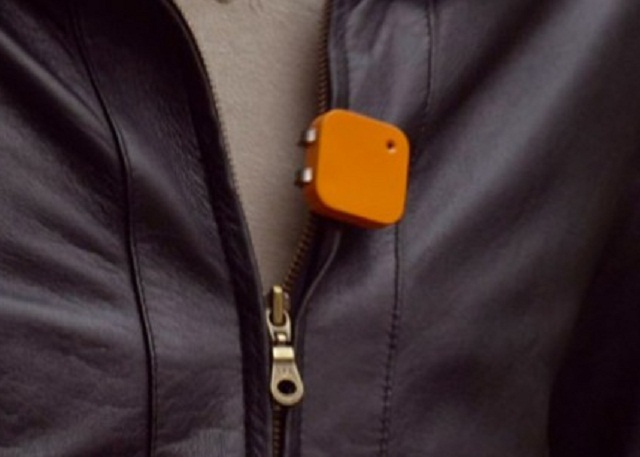
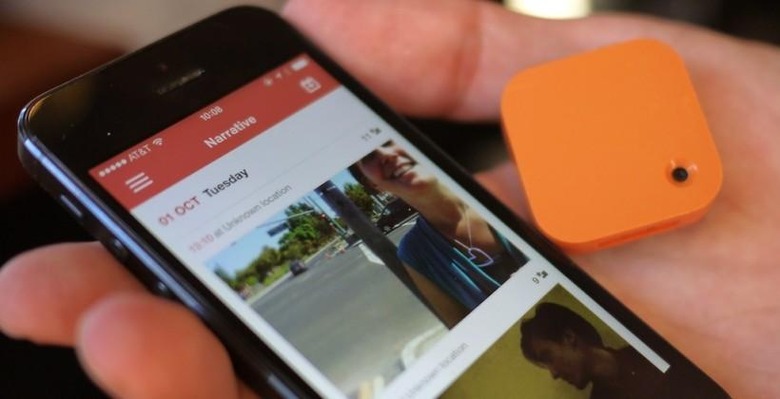
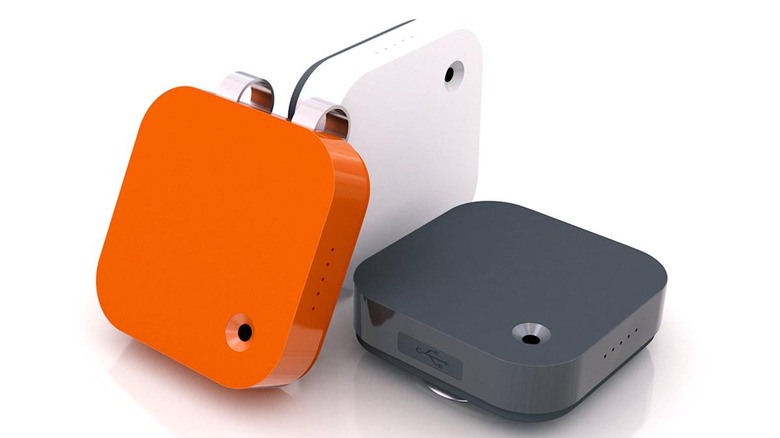
Long before AI agents, Martin's wearable-camera years at Narrative generated their own run of ideas — see also Narrative Clip 1 and Memory & photography.
- Memoto's original vision was to pair lifelogging photos with other tracking and fitness data to build a composite record of an activity, not just images of it. Memoto's vision ↗
- He once sketched a near-content-free hardware concept: a sensor package that's "almost completely just a battery," built for a full year of life, scattered through home, car, and bag to provide ambient sensing without the friction of a wearable people have to remember to charge — a direct ancestor of his later, more general vision of ubiquitous ambient sensing feeding AI systems at Kindship. ▶ 26:04 · ▶ 26:54
- He has floated restarting Narrative Clip production for a niche run — roughly $2.5 million to build 10,000 units aimed at AI enthusiasts — and separately named the dataset he'd most want to own: Google Analytics-scale clickstream data across the world's websites. He's also proposed that pairing lifelogging camera footage with brainwave data would reveal, at scale, what a person was looking at and thinking about simultaneously. ▶ 27:48 · ▶ 22:10 · ▶ 25:15
- Narrative had also planned to open its platform to third-party hardware via an API or SDK, so devices like GoPro or Google Glass could plug in alongside the Clip. Narrative platform plans ↗
- In teacher workshops, wearable cameras with face recognition were used to analyze a teacher's own attention patterns toward different students after the fact — paired at one point with contemporary facial blood-flow analysis to gauge emotional state, and with audio recording so a teacher could hear her own narration alongside a read of the room's attentiveness. ▶ 3:49 · ▶ 4:40
- The category's roots trace to Microsoft's Alzheimer's research, using wearable cameras to give patients a visual record of their day; but by the time Narrative shut its lifelogging line down, Martin concluded the category — however much he loved it — simply wasn't a viable market once tested against real use. ▶ 11:27 · Engadget ↗
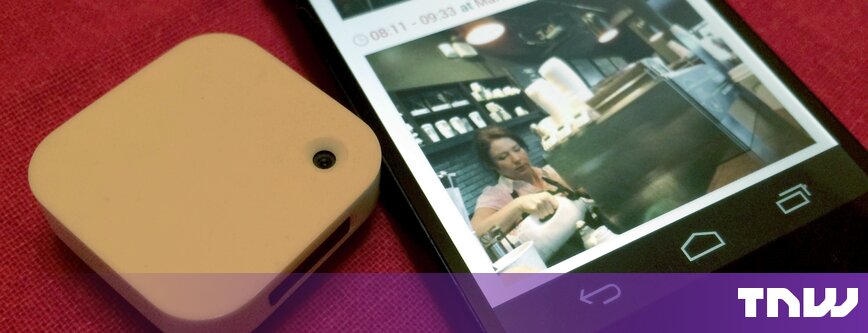
- Reviewers at the time treated the Clip as an early signal of a broader shift toward body-worn cameras like Google Glass, and noted the now-familiar observation that people visibly change their behavior once they know a camera is recording — a tension Martin's wearable era ran into directly. The Next Web ↗ · CNET ↗
Ventures he actually tried building
Not every idea stayed a podcast riff — some became real, if short-lived, companies.
- After leaving Narrative, Martin was drawn to Asia for its underdeveloped infrastructure and correspondingly larger open opportunity, and began preparing a fintech venture there, though it ran into legislative obstacles. Breakit ↗ · StartupTalks webinar ▶ 2:38
- That venture's concrete shape: a vehicle connecting European investors to real-estate projects in Thailand, offering 12–15% returns against near-zero European interest rates — ultimately scrapped before launch when the required Thai regulatory framework was delayed with no clear timeline. At the time, he was weighing this against building a new camera-technology startup adjacent to Narrative instead. Breakit ↗ · Breakit ↗
- Years earlier, at Twingly in 2008, he and product manager Anton designed a detailed internal-communications tool inspired by Yammer — in effect anticipating Slack by several years, well before that product existed. ▶ 9:24 · ▶ 8:59
- He was also once tempted by a data-driven publishing idea: a subscription service where readers voted, via social-media popularity, on which books got written next. ▶ 37:16
Worth remembering
- Autonomous AI's deeper promise, in his framing, is user autonomy — removing dependence on hired specialists so people can design, code, or create without needing a designer, coder, or artist on staff. ▶ 11:35
- He invokes Max Tegmark's Neanderthal analogy — a species that engineers a smarter successor risks engineering its own extinction — as the honest core of his unease about AI development. ▶ 8:19
- Practical tools he actually uses and recommends: Cursor.so (a VS Code fork with GPT-4 built in) as his primary coding environment, and find.com — which indexes hundreds of thousands of open-source projects with RAG — as a rare example of an AI product insulated from commoditization by a genuinely proprietary data asset. ▶ 23:16 · ▶ 19:02 · ▶ 14:05
- On the pace of change: Groq's 10–100x faster token generation was, to him, the unlock that makes multi-step agentic workflows practical, since 10–20 seconds per step is too slow for both efficiency and human patience; Andrew Ng separately noted AI cost per unit of work falling an order of magnitude yearly, with generating an hour of reading material already down to 8 cents and falling toward 0.1 cents. ▶ 0:52 · ▶ 1:17 · ▶ 2:58
- And a personal, non-AI aside worth keeping: asked what's next in his own development beyond relational work, Martin named wanting to work more with his hands — building furniture, sculpting, painting — as a different dimension of life he wants to invest in. ▶ 53:24