

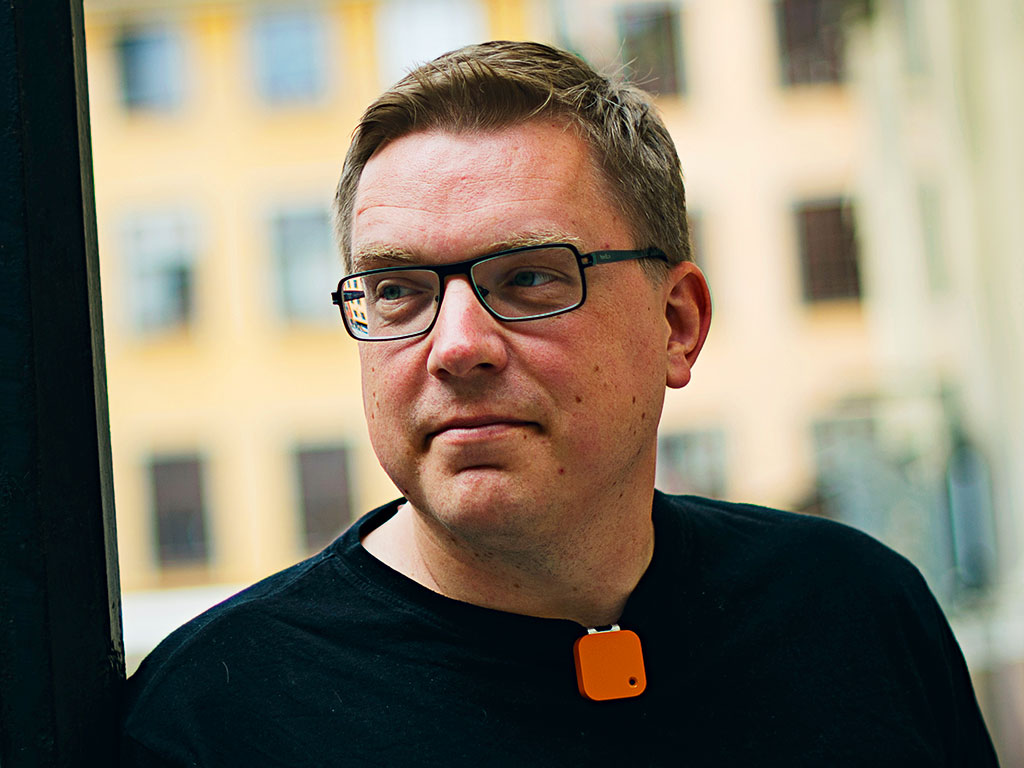
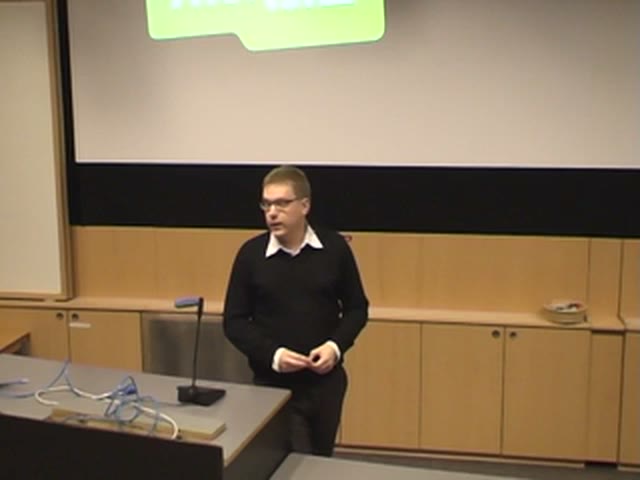
Martin Källström
Martin Källström is a Swedish technology entrepreneur, born in 1975 to parents who were "green wave" farmers (Wikipedia ↗) — a start in life that set the pattern for everything after: bootstrapped, self-reliant, and restless. He has founded or co-founded a run of companies spanning two decades — Polyester, Twingly, Memoto/Narrative, a fintech venture in Asia, Heywear, Multiply, Kindship, and now Nūvai, where he is co-founder and CTO since 2026 — while living for stretches in Tokyo, New York, and Sweden, and describes himself as "an entrepreneur and founder, mostly CEO of companies, for the past 15 years" (▶ 2:32). The losses of both parents, a public bankruptcy, and a later personal crisis inside a polyamorous relationship each reshaped how he works and lives, and he now describes himself simply as an engineer who has spent about 25 years building things (▶ 5:11).
Childhood: a bootstrapped farm in Femsjö (1970s–early 1990s)
Martin's parents came from academic families but became "green pioneers" (gröna vågare) — they left their social circles in the 1970s to run a farm in the forest, pursuing self-reliance on their own terms (▶ 2:12, ▶ 16:47). When Martin was five or six, they moved the family to Femsjö, a village of about 100 people, in what he has described as "a bootstrapped startup with no external financing" (▶ 3:25). He grew up a farmer's son with almost total freedom to roam — able to walk or cycle for kilometers without any sense of danger — around animals and nature, with only a black-and-white television for media exposure (▶ 16:22; Der Spiegel ↗). He values that farming meant his parents worked seven days a week but were always home (Breakit ↗).
The village's isolation produced a small, telling contradiction: with only one other child in Femsjö, Martin had nothing in common with him yet became his best friend for lack of any alternative (▶ 8:09). Entrepreneurship was in the air at home from both sides — his biological father was "always seeking good business ideas to start a company around," and his stepfather later recalled a teenage Martin regularly coming home with business pitches, something Martin himself has no memory of (▶ 3:28, ▶ 3:02). He traces his solution-focused instincts directly to growing up inside his parents' bootstrapped farm startup, and later formalized the same instinct through 14 years of Aikido practice (▶ 5:32, ▶ 7:16). Data classes in middle school were the moment technology clicked as the interesting subject (Breakit ↗).
Linköping, agents, and a first job (1994–2000)
After high school Martin moved to Linköping to study computer science, entering the D-linje (engineering programme) at Linköping University in 1994 and earning a Master of Science in computer science (▶ 1:16; European CEO ↗). Sources differ on the ending: one account has him graduating in 1999, another places him in the V94 cohort but leaving without finishing his degree to start his career (▶ 1:36). Either way, university left a lasting mark he'd only appreciate decades later — in 1998 he was taught agent technology and studied multi-agent frameworks where software agents negotiated prices autonomously, a subject that wouldn't become central to the AI industry for another 25 years (▶ 20:59, ▶ 21:40). After graduating, he worked as a programmer at Framfab, Jonas Birgersson's Swedish e-consultancy, in Linköping from 1999–2000 (Wikipedia ↗; Lysator ↗).
Tokyo, blogging, and the road back (2000–2006)
Martin and his then-wife Sandra left for Tokyo in 2000, just before the dot-com bust, where he worked as a freelance web and graphics designer while she worked for Ericsson (▶ 10:28; Breakit ↗). He calls the year "enormously educational" and culturally rich, and it satisfied a wanderlust that let him later settle down and build something long-term (▶ 3:50, ▶ 4:15). In 2001 he worked for Gadelius, a Swedish sales company in Japan (▶ 6:06). Isolated in Japan, he first encountered blogging there, and his friend Rickard Öberg's blog — started in late 2002 — helped him understand what the medium was (▶ 2:02). One formative Tokyo memory he returns to in talks: watching a Japanese girl wait alone on a train platform in harsh weather, not for the train but for someone on it, and feeling powerless to help — an early lesson in the limits of solving other people's problems (▶ 0:54).
After Tokyo, both Stockholm and Linköping felt small by comparison — the choice between them mattered less than simply leaving Tokyo — and he and Sandra chose to settle in Linköping, buy a house, and start a family (Breakit ↗). He ran an independent web consulting business from 2002–2004, then co-founded the consulting firm Polyester (spun out of a development department) in 2004 — his own account calls it "his first real business," a web consultancy (▶ 0:48; torefriskopp.se ↗).
The same years made him a father. His daughters Linn and Julia were born in 2004 and 2006 — the "2 daughters that are 7 and 9" he would introduce from the CES stage in January 2014 (▶ 1:02), and the two children of 11 and 9 Breakit noted in its 2015 profile (Breakit ↗). Watching them grow up too fast became, in his own account, the wish that turned into Narrative (kaptur-co ↗, ▶ 16:54), and Linn's ninth birthday, photographed with a Memoto prototype, opened his pitches in 2013 (▶ 0:48).
Twingly: CEO for six years (2006–2012)
→ see companies/twingly.md
In 2006, Martin was one of four Swedish co-founders — alongside Niklas, Björn, and Figge — who started Twingly, one of Europe's early blog-search and social-data companies, and he served as CEO until 2012 (Swedish Wikipedia ↗; ▶ 26:56). Twingly (operating through Primelabs, its parent) ended up serving hundreds of media websites as customers and became the premier aggregator of social-media content in the Nordics, revolutionizing how bloggers and traditional media connected across Europe (TrueVentures ↗; TechCrunch ↗). Early scrappiness stuck with him: the four founders once rented a minivan and drove through European snowstorms on the autobahn to reach a media conference in Vienna (▶ 26:56).
Six years running Twingly took the company from an innovation-driven culture to a sales-driven one, and along the way Martin experienced winter depression that told him — even while the company was still growing — that he needed a change (▶ 24:29; ▶ 14:48). Rather than leave outright, he negotiated with Twingly's board to step down as CEO while staying on part-time to build his next idea, securing a 25% salary increase to offset the reduced hours — and over nine months, using one day a week, built Memoto's team, financing model, and product concept (▶ 25:20).
Memoto → Narrative: hardware, a Kickstarter, and a bankruptcy (2011–2016)
→ see companies/narrative.md, projects/narrative-clip-1.md, projects/memoto-kickstarter-campaign.md, life-events/narrative-bankruptcy.md
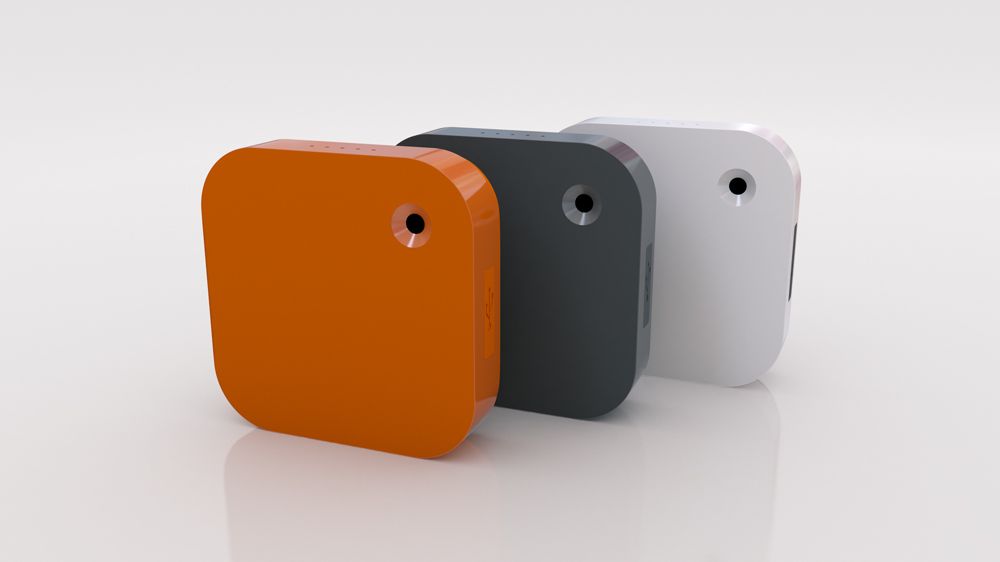
The idea surfaced during a summer 2011 brainstorm that generated 30–40 startup concepts, of which Memoto — a tiny wearable camera that would passively log your life — was the one Martin kept thinking about (▶ 25:46). He co-founded it with Oskar Kalmaru and other Linköping/Norrköping-connected collaborators, including Björn Wesén, who brought over a decade's experience as a lead camera developer at a major camera company and later owned the copyright and IP on the Clip technology as CTO (TrueVentures ↗; ▶ 28:28). Kickstarter launched October 23, 2012; the company later rebranded from Memoto to Narrative (fredrikwass.se ↗; Weartested ↗).
The project's motivation was personal, not just technical: Martin has said his idea for Narrative came from losing both parents suddenly, leaving no one left to tell him about his own childhood — a loss that, as he put it, teaches you "you don't live forever" (▶ 5:23; European CEO ↗). (See life-events/father-s-death.md and life-events/mother-s-death.md.) Closer to home, he used his own daughter Lynn's 9th birthday party — captured on the Clip — as a recurring case study for why lifelogging mattered: everyday, mundane moments fade from memory faster than staged ones, and he wanted to keep them (▶ 2:08, ▶ 17:19).
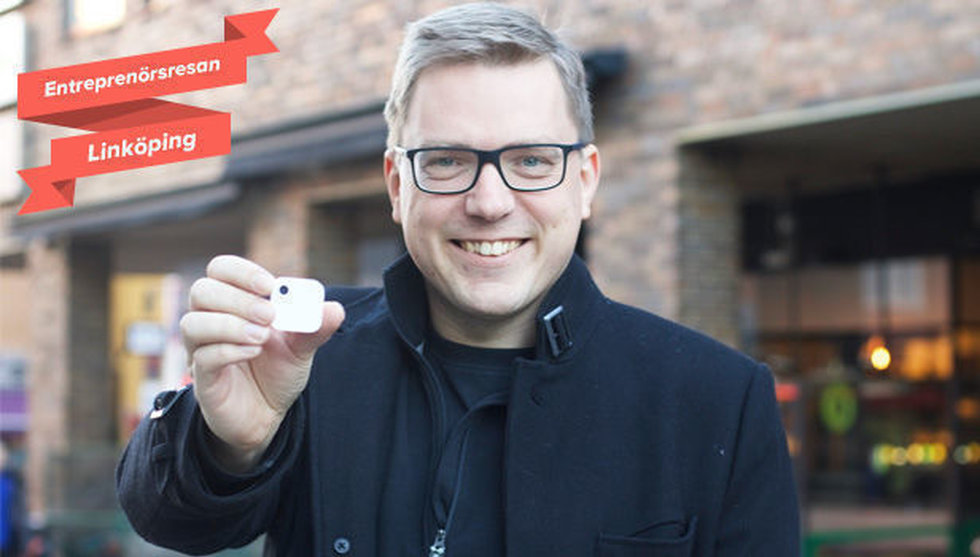
Narrative was Martin's first venture into hardware after a career purely in software, and he later wore a Clip on and off for roughly five years, asked to turn it off only twice (▶ 1:33; ▶ 19:27). The company drew acquisition interest — Martin visited Snapchat's Los Angeles offices three or four times in spring 2016 during discussions (Breakit ↗) — but Narrative ultimately went bankrupt. Martin chose not to join the group that continued the company, opting instead to start something entirely new, and by most accounts appeared resilient rather than depressed in the aftermath, immediately signaling plans for a next venture (Breakit ↗; Breakit ↗).
Fintech in Asia and a false start (2016–2019)
Within months of Narrative's collapse, Martin had pivoted to fintech — an idea he'd been considering since summer 2016 — and split his time between Sweden, Thailand, and Japan to build it (Breakit ↗). This period also included a stint as entrepreneur-in-residence at Exploria, a Singapore- and Bangkok-based VC, where he gained hands-on blockchain experience (▶ 3:39; ▶ 2:13). He scrapped the fintech venture after about six months of work, just before launch — but treated it as a valuable learning experience rather than wasted time, and went looking broadly for the next idea (Breakit ↗). In the interim he ran his own consulting firm, helping other companies with financing and digital strategy while validating multiple new startup concepts in parallel (▶ 1:37).
Heywear: a glasses shop in Manhattan (2019)
→ see companies/heywear.md
In 2019 Martin built Heywear, an eyewear business, moving to New York to operate a glasses store on Manhattan (▶ 2:35; ▶ 5:44). Between Heywear and the earlier Narrative Clip, he now has direct, hands-on experience building wearable eyewear devices twice over (▶ 2:35).
A personal crisis and its aftermath (2019–2023)
Splitting time between New York and Sweden pushed Martin to locate his sense of home inside himself rather than in any external place (▶ 6:09). Around 2020 he met a polyamorous partner on Tinder after opening himself to new relationship possibilities; she had years of experience being openly poly and became his guide into that world (▶ 7:54, ▶ 10:22). Because she already lived with another partner when they got together, there was no "curtain" behind which to hide difficult feelings — he had to face both the joy and the difficulty of open relating from the very start (▶ 11:22).
About a year into that relationship, a specific boundary-crossing episode became the hinge of a real crisis: Martin encouraged his partner to be intimate with her other partner (his metamour) despite her own unease, and when it happened he was overwhelmed by feelings of abandonment and exclusion, escalating into what he describes as existential dread or death anxiety (▶ 18:46, ▶ 20:03). He went into therapy with psychologist Tanja Suhina — someone he says much of the Swedish poly community has also turned to — and, on a friend's (Gustav's) unusually strong recommendation, attended a Mankind Project men's retreat despite feeling no initial pull toward the course description (▶ 20:28, ▶ 50:03). He had already had other transformative experiences — a tantra massage course he calls "a huge eye-opener" as an engineer, and shamanic drum journeys — but says nothing compared to the depth of the men's retreat (▶ 50:28, ▶ 50:59). Reading Eckhart Tolle's Power of Now — specifically the idea that one is not one's thoughts or body — was also transformative for him during this stretch (▶ 6:59).
By 2022 the work was visibly paying off: connecting with new people had gotten easier, he was attending cuddle parties in Stockholm and a polyfika at Finspång Pride, and one date's blunt, unembarrassed observation mid-encounter — "where did you go?" — was a revelation precisely because she noticed his absence before he did (▶ 55:21, ▶ 60:34).
Multiply, Co-creating with AI, Kindship and Nūvai (2023–present)
→ see companies/multiply.md, companies/kindship.md, companies/nuvai.md, projects/co-creating-with-ai.md
By mid-2023 Martin was Chief Product Officer at Multiply, working alongside co-founder and CEO Rasmus Adler Wahlberg, and the two began co-hosting the podcast Co-creating with AI together starting July 2023 (▶ 6:47; ▶ 33:15). He describes his own background at this point as roughly 25 years as a professional engineer, mostly as a startup CEO (▶ 5:11).
In April 2024 he traveled to San Francisco to demo a conversational-voice-AI project he'd built over the winter, but found the trip disorienting rather than energizing — well-funded teams were working on similar ideas, and OpenAI's advanced-voice demo that same window became, in his own account, the decisive reason he abandoned the project only about two months from beta, a decision he says he deeply regrets (▶ 11:19, ▶ 13:27, ▶ 14:19). Months later he'd note pointedly that OpenAI still hadn't shipped what it demoed that April — the "hype" had not become "reality" (▶ 14:19).
By 2024 Martin had stepped back from day-to-day Multiply work to focus on Kindship, his new base venture, positioning a geographic-search product called Loci as a complement to Multiply's workflow-oriented approach (▶ 2:20, ▶ 14:29). His email, martin@kindship.ai, marks the shift (▶ 32:14). He now works largely as a solo developer alongside AI coding assistants — and his cats, whom he counts as coworkers — from a home office facing the garden, with as few as one or two meetings a week (▶ 0:43, ▶ 1:10).
In 2026 he co-founded Nūvai, a precision-psychotherapy company and clinic in Hyllie, Malmö, and took the role of CTO — his first venture in regulated healthcare. He leads the clinical platform (app.nuvai.se) and the AI-supported tools behind it: recorded and AI-summarised therapy sessions with therapist sign-off, screening with crisis detection, therapist matching, and a decision-support tool that reads baseline and outcome data against the evidence. The clinic opened in June 2026, and the company's team page presents him through Twingly, Narrative and his wearable-camera patents (Nūvai ↗); the role itself is stated on his own authority on this site. A research compilation on Multiply had already noted that he had moved on to Kindship and Nūvai (Research ↗).
Worth remembering
- Martin's oldest daughter, 19 in 2023, began a five-year computer science master's — the same field he studied — just as he was telling her she'd graduate into a "vastly different world" than the one she was entering (▶ 20:08).
- He benchmarks technology adoption personally — first by whether the Beatles were on Spotify yet, more recently by putting every new AI model through a standardized "pineapples in a suitcase" test question (▶ 29:37).
- He has deliberately reduced the number of physical objects he has to track: his wallet now lives attached to his phone, and he no longer carries keys — down to one device (▶ 22:34).
- In 2024 he took up continuous blood-glucose monitoring (via CBionics, on a tip from Multiply colleague Žygis) and a ketogenic diet to keep his glucose curve smooth, arguing that visualizing data about your own body teaches more than reading books (▶ 0:55, ▶ 38:20).
- He replaced city running with a new routine of driving to the forest to run 5 km — removing the psychological hurdle of running through town (▶ 0:39).
- At a 2024 conference in San Francisco he watched delivery robots that popped their lids open to dispense soda cans, and — separately — a robot dog fitted with a flamethrower autonomously setting fires in a forest (▶ 6:19, ▶ 7:35).
- He missed one Co-creating with AI episode (49) in 2024 due to illness, with Rasmus hosting solo — a small data point in an otherwise near-unbroken co-hosting run (▶ 0:01).